
Fox Tail Agave Identification Guide
Identify the Fox Tail Agave (Agave attenuata) by its soft, spineless, pale green leaves in a large rosette and its curving, fox-tail-like flower stalk.
Read the full Fox Tail Agave encyclopedia entry →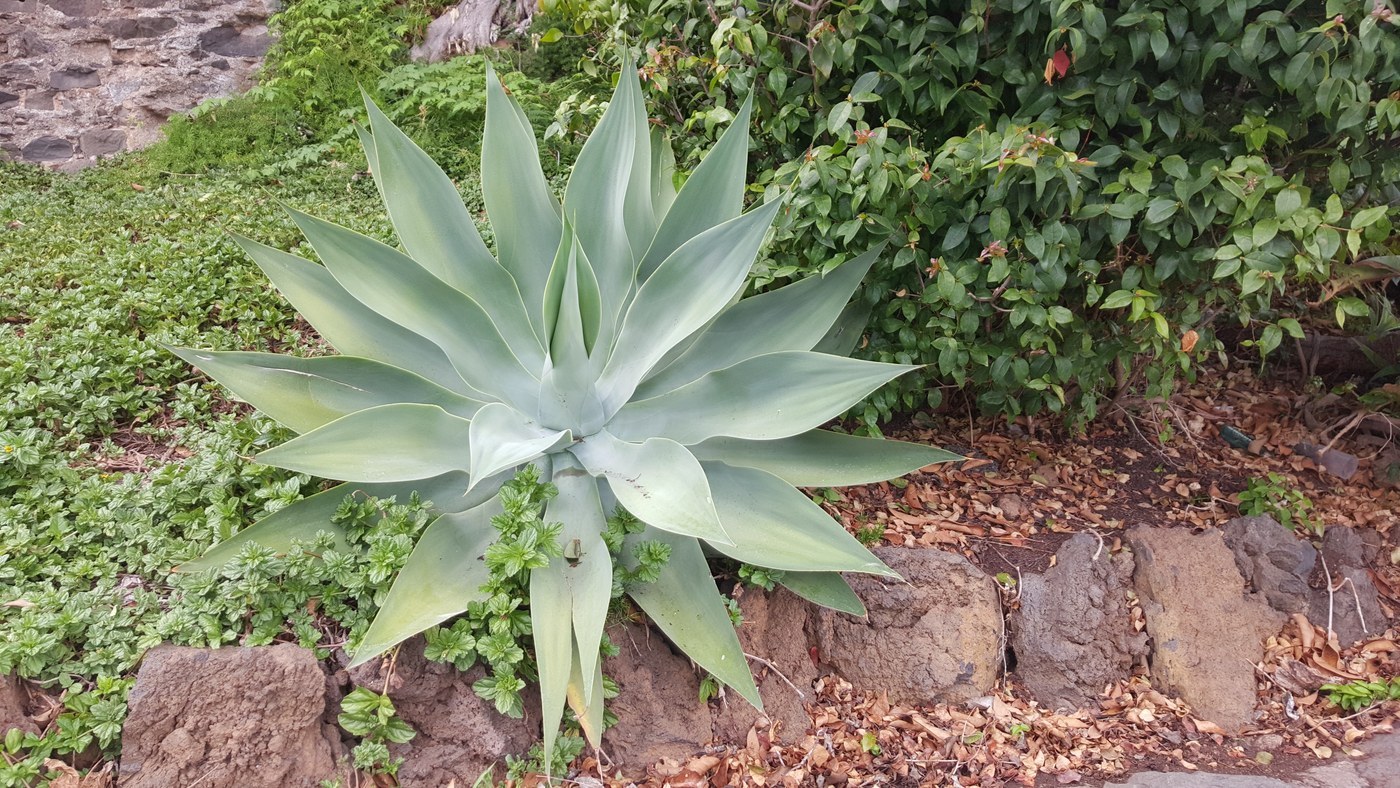
Key Identifying Features
The Fox Tail Agave (Agave attenuata) is unusual among agaves for being soft, spineless, and gentle to handle. It forms a large rosette of smooth, pale gray-green to celadon leaves with no marginal teeth and no sharp terminal spine, and it eventually produces a tall, gracefully curving flower spike that arcs over like a fox's tail — the source of its name.
- Soft, fleshy, spineless leaves (no teeth, no terminal spike)
- Pale gray-green to light blue-green rosette, often 2-4 feet across
- Develops a visible above-ground trunk/stem with age
- Arching, fox-tail-shaped flower stalk
Leaves & Stems
The leaves are broad, ovate to lance-shaped, thick but pliable, and smooth-edged — you can run a hand along them without injury, which is rare for agaves and a strong ID clue. Color is a soft, almost powdery pale green to grayish-green. Unlike most agaves, A. attenuata forms a thickened trunk-like stem (caudex) as lower leaves drop, lifting the rosette off the ground over time. The plant offsets at the base to form clumps.
Flowers & Fruit
The inflorescence is the most distinctive feature: a dense, 8-10+ foot flower spike that curves and arches downward rather than standing rigidly upright, lined with greenish-yellow to cream flowers. This drooping, tapering spike resembles a raised animal tail, giving the plant its "fox tail" and "swan's neck" names. Like all agaves, the rosette is monocarpic — it flowers once, then that rosette dies, while offsets carry on. Small bulbils sometimes form on the old stalk.
How to Tell It Apart from Look-Alikes
- Most other agaves (e.g., A. americana): have stiff, rigid leaves with sharp marginal teeth and a vicious terminal spine; Fox Tail Agave's soft, toothless, spineless leaves immediately set it apart.
- Furcraea species: also large, soft rosettes, but Furcraea usually has some marginal teeth or filaments and an upright flower stalk.
- Agave celsii / mitis: can look similar in color but typically have small marginal teeth, unlike the perfectly smooth A. attenuata.
Where You'll Find It
Native to central Mexico, Fox Tail Agave is one of the most popular landscape agaves in mild, frost-free climates (USDA zones 9-11), prized for being safe around walkways and children. Look for it in coastal California and Mediterranean-climate gardens, in mass plantings, and as a container specimen.
Quick ID Checklist
- Large rosette of soft, spineless, smooth-edged leaves
- No marginal teeth and no sharp tip spine (key trait)
- Pale gray-green to celadon color
- Forms a trunk-like stem with age
- Arching, fox-tail-shaped cream/green flower spike
- Clumping; rosette dies after flowering
Tip: The smooth, harmless leaves are the fastest way to confirm Fox Tail Agave versus the dangerously spiny leaves of nearly every other agave.
Frequently asked questions
Why doesn't this agave have spines?
Agave attenuata is naturally soft and spineless, lacking both marginal teeth and a terminal spike. This makes it safe to plant near walkways and is the easiest way to identify it among agaves.
Why is it called Fox Tail Agave?
Its tall flower spike curves and arches downward like a raised fox's tail (it's also called Swan's Neck Agave), which is its most distinctive feature when in bloom.
Does the whole plant die after it flowers?
Only the individual rosette that flowers dies, because agaves are monocarpic. The plant produces offsets (pups) at the base that continue growing, so the clump lives on.
How do I tell it from a regular agave like Agave americana?
Agave americana has rigid leaves with sharp marginal teeth and a dangerous terminal spine, while Fox Tail Agave has soft, smooth-edged, spineless leaves you can safely touch.