
Foxtail Fern Identification Guide
Identify the Foxtail Fern (Asparagus densiflorus 'Myersii') by its upright, plume-like stems densely covered in needle-like 'leaves.' Covers its structure, why it isn't a true fern, and look-alikes.
Read the full Foxtail Fern encyclopedia entry →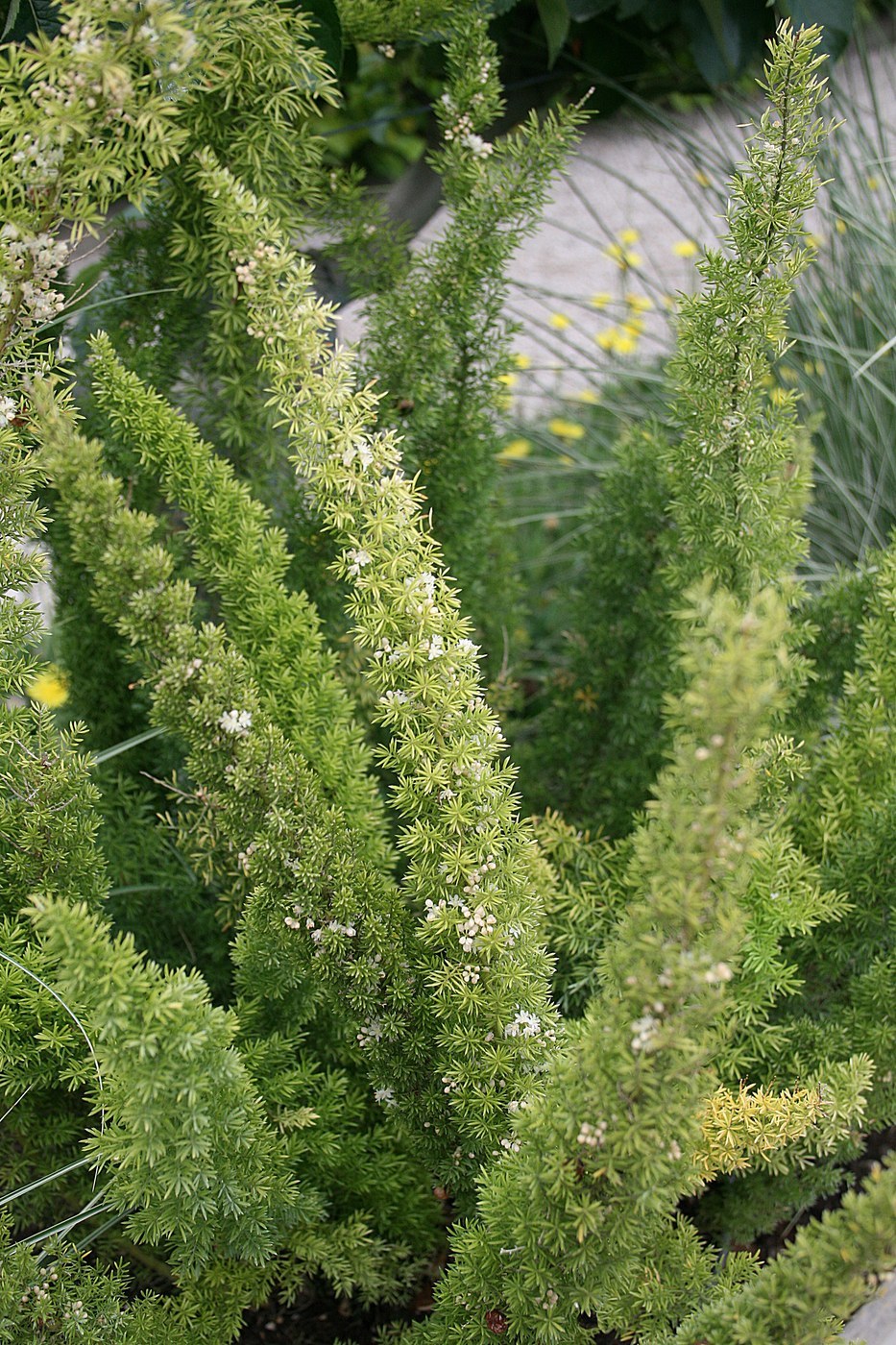
Key Identifying Features
Despite its name, the Foxtail Fern (Asparagus densiflorus 'Myersii') is not a true fern it's a member of the asparagus family (Asparagaceae). It's grown for its striking, fluffy upright plumes. Identify it by:
- Upright, dense, cylindrical plumes that taper to a point, resembling a fox's tail or a bottlebrush
- Bright emerald-green, needle-like structures packed tightly around each stem
- A mounded, fountain-like clump of several plumes radiating from the base
- No fronds and no spore patches (unlike real ferns)
Leaves & Stems
What look like soft needles are actually cladodes flattened, leaf-like stems while the true leaves are reduced to tiny scales. These cladodes are short, narrow, soft, and bright green, densely whorled around the central stems to create the plush, bottlebrush plume. Each plume is a stiff, upright stem 1-2 feet long, gently tapering, and the whole plant forms a symmetrical mound. The plant grows from fleshy tuberous roots that store water (a clue to its drought tolerance). Unlike the related asparagus fern (A. setaceus) or sprengeri, the stems here are notably firm and erect rather than arching.
Flowers & Fruit
In season it produces small white-to-pinkish flowers tucked among the cladodes, followed by round red berries. The berries are decorative but contain seeds; they confirm the asparagus relationship. Note: the plant has small spines on some forms.
How to Tell It Apart from Look-Alikes
- True ferns: reproduce by spores (look for brown sori under fronds) and have flat, divided fronds Foxtail Fern has no spores, no true fronds, and makes flowers and berries.
- Sprenger's asparagus fern (A. densiflorus 'Sprengeri'): same species but arching, loose, trailing stems with sparser needles, not the dense upright plume of 'Myersii.'
- Common asparagus fern (A. setaceus): soft, feathery, lacy horizontal sprays much finer and flatter than the foxtail's dense vertical plume.
The stiff, dense, upright tapering plume is the signature of the Foxtail Fern.
Where You'll Find It
Native to southern Africa, it's grown worldwide as a houseplant, in containers, and as a landscape groundcover/border in warm climates (USDA zones 9-11). It tolerates drought, heat, and partial shade, thriving in bright indirect light indoors and in well-drained soil outdoors. In mild regions it can naturalize and is considered weedy in some areas.
Quick ID Checklist
- Upright, dense, tapering plumes like a fox's tail or bottlebrush
- Bright-green needle-like cladodes (not true leaves)
- Mounded, fountain-shaped clump from tuberous roots
- No spores or fronds (so not a real fern)
- Red berries and tiny white flowers in season
- Firm, erect stems (not arching like 'Sprengeri')
Frequently asked questions
Is the Foxtail Fern actually a fern?
No. It is Asparagus densiflorus 'Myersii' in the asparagus family. It reproduces with flowers and berries, not spores, so it is not a true fern despite the common name.
What's the difference between Foxtail Fern and Sprengeri asparagus fern?
They are cultivars of the same species. 'Myersii' (foxtail) has stiff, dense, upright plumes, while 'Sprengeri' has loose, arching, trailing stems with sparser needles.
What are the soft green 'needles'?
They are cladodes flattened, leaf-like stems. The plant's true leaves are reduced to tiny scales, which is typical of ornamental asparagus species.