
Freesia Identification Guide
Identify freesia by its sharply bent, one-sided horizontal flower spike of fragrant funnel-shaped blooms above narrow sword-like leaves from a corm.
Read the full Freesia encyclopedia entry →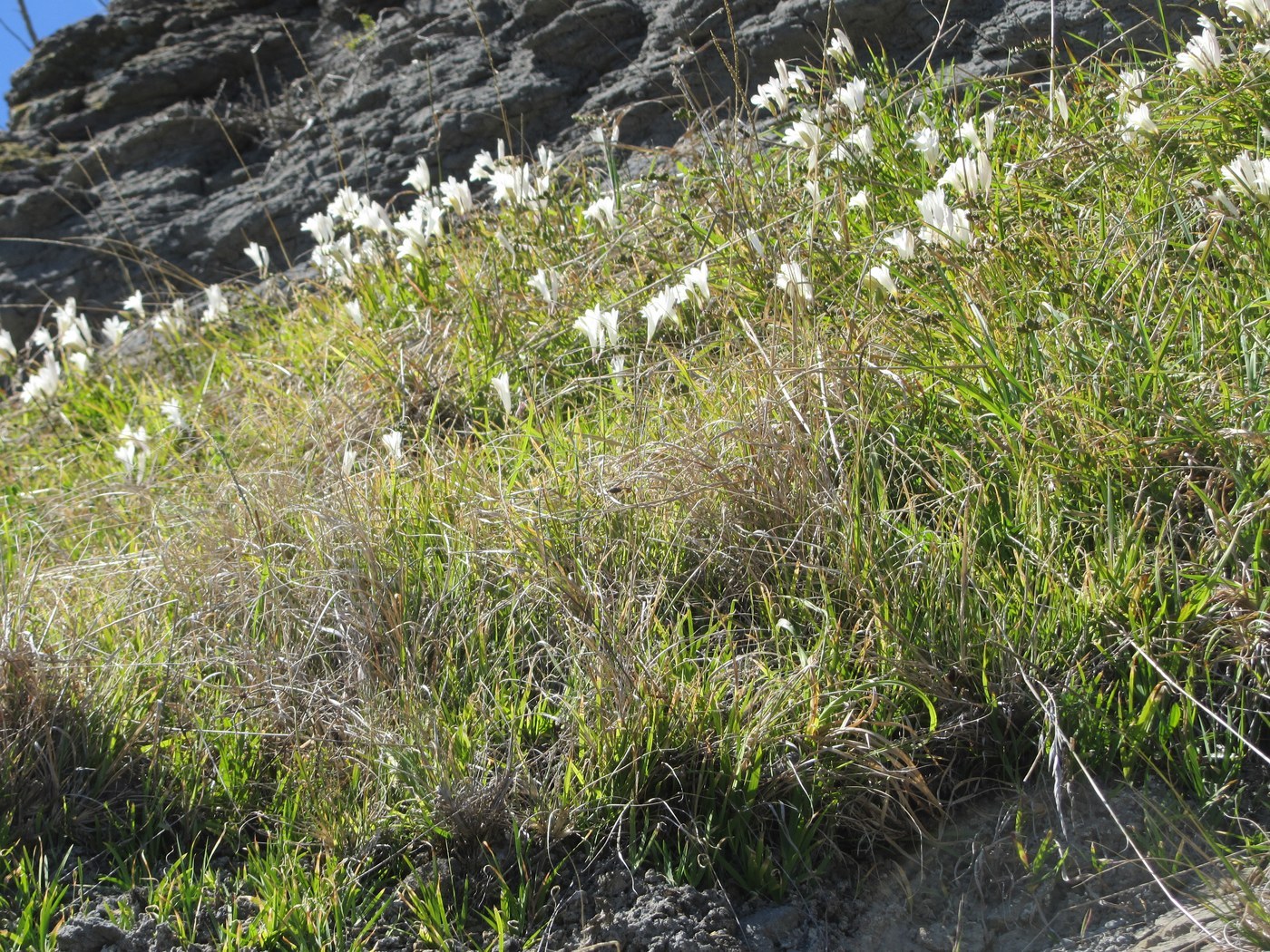
Key Identifying Features
Freesia is a genus of cormous plants in the iris family (Iridaceae) from South Africa, famous for fragrance. The standout trait is the flowering stem that bends sharply at nearly a right angle near the top, so the funnel-shaped flowers line up along the upper side of a horizontal spike, all facing up and out. The blooms are intensely and sweetly fragrant.
- A flower stalk that kinks horizontally, holding flowers in a one-sided row
- Funnel/trumpet flowers opening in sequence along the bent spike
- Narrow, flat, sword-shaped leaves arranged in a fan
- Grows from a small corm
Leaves & Stems
Leaves are long, narrow, flat, and sword- or strap-shaped, arranged in a flat fan at the base in the manner typical of irises and gladiolus. They are green and somewhat stiff, usually 6-12 inches long. The flowering stem is slender and wiry, rising above the leaves before making its characteristic abrupt near-horizontal bend just below the flower cluster.
Flowers & Fruit
Flowers are funnel- to trumpet-shaped with six tepals (petal-like segments), opening 1-2 inches across along the upper side of the bent spike so they all face the same way. Colors include white, cream, yellow, orange, pink, red, lavender, and purple, often with a contrasting yellow throat. The defining quality is the rich, sweet, citrus-and-spice perfume. Buds open progressively from the base of the bend toward the tip. After bloom, a small three-parted seed capsule may form.
How to Tell It Apart from Look-Alikes
- Gladiolus: also iris-family with a fan of sword leaves, but flowers are larger and arranged up a tall straight vertical spike, not a one-sided horizontal bend, and gladiolus is unscented.
- Ixia (corn lily): related with wiry stems and star-shaped flowers, but blooms are flatter and the stem is not sharply bent.
- Iris: has the fan of leaves but large flowers with falls and standards, very different shape.
- Sparaxis: similar corm plant but with flat, open, often boldly marked flowers.
The combination of a right-angle bent stem with one-sided fragrant funnel flowers over a fan of sword leaves is diagnostic for freesia.
Where You'll Find It
Native to the Cape region of South Africa, freesia is grown worldwide as a cut flower, container plant, and (in mild climates) garden bulb. It is a major florist crop. In gardens it grows from corms planted in well-drained soil and full sun to light shade, blooming in late winter and spring in mild regions or forced indoors elsewhere.
Quick ID Checklist
- Flower stem bends sharply to near-horizontal below the blooms
- Funnel-shaped flowers in a one-sided row, all facing up
- Strong sweet fragrance
- Narrow sword-shaped leaves in a basal fan
- Grows from a small corm; many flower colors with yellow throats
Frequently asked questions
What is the easiest way to recognize a freesia?
Look for the flower stem that bends almost at a right angle near the top so the fragrant funnel-shaped flowers line up along the upper side of a horizontal spike, all facing the same direction.
How is freesia different from gladiolus?
Both are iris-family corm plants with fans of sword leaves, but gladiolus has large flowers arranged up a tall straight vertical spike and is unscented, while freesia has smaller fragrant flowers on a sharply bent horizontal stem.
Are all freesias fragrant?
Most freesias, especially white and yellow types, are strongly and sweetly scented, though some heavily bred colored cultivars have less fragrance.
Does freesia grow from a bulb?
It grows from a corm, a swollen underground stem base similar to that of gladiolus and crocus, rather than a true layered bulb.