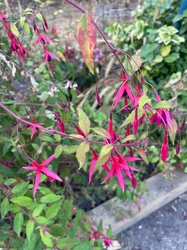
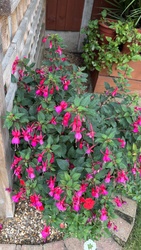
Fuchsia Identification Guide
Identify fuchsia by its distinctive pendant, two-tone, lantern-like flowers with flared sepals and a tube of protruding stamens.
Read the full Fuchsia encyclopedia entry →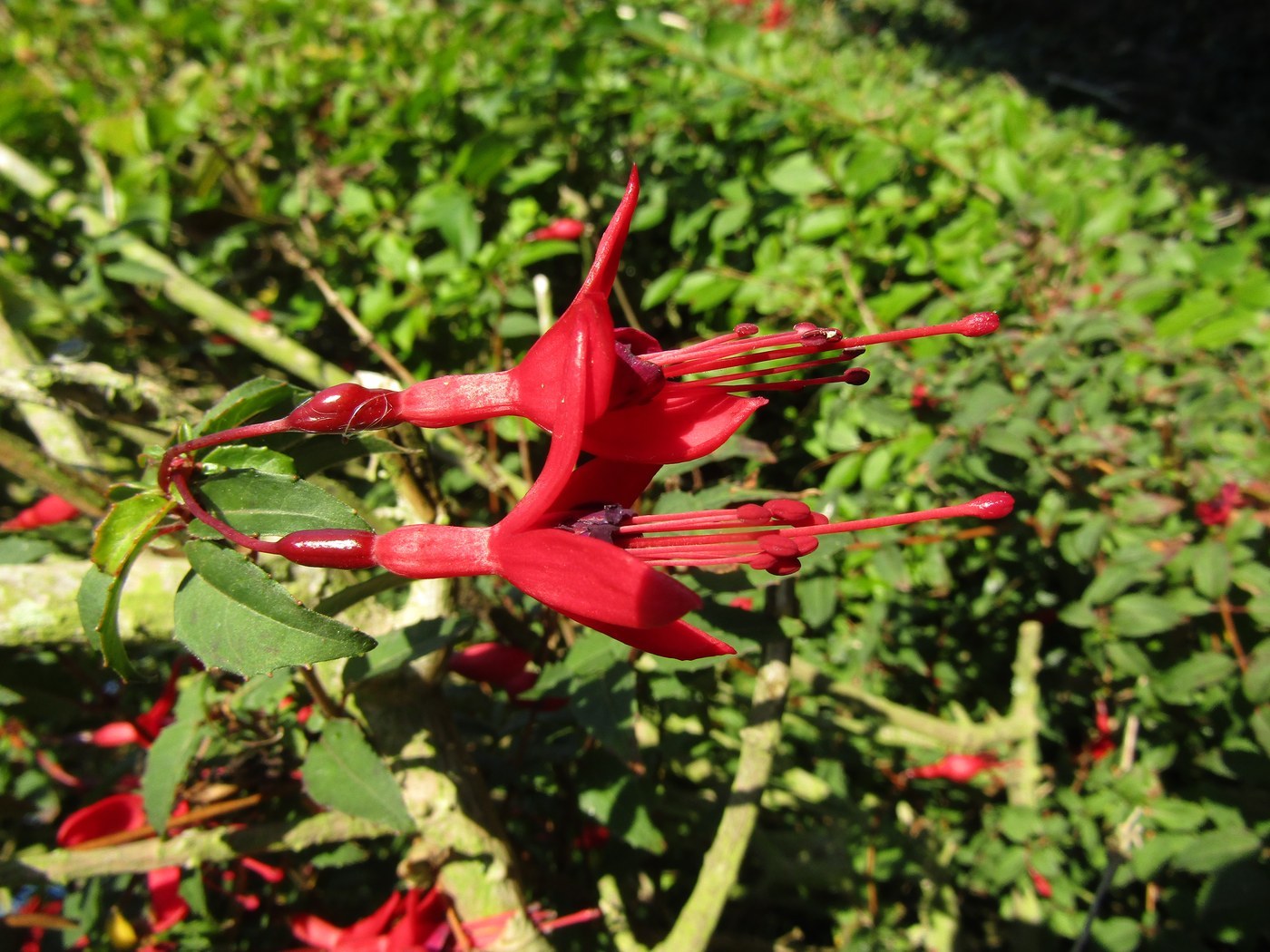
Key Identifying Features
Fuchsia is a genus of shrubs in the evening primrose family (Onagraceae) prized for its unmistakable dangling, lantern-shaped flowers. The single most reliable clue is the pendant two-tone flower: a tube and four swept-back sepals of one color above a skirt of petals in a contrasting color, with long stamens and a style hanging well below.
- Drooping (pendant) flowers held on slender stalks
- Four flared, often reflexed sepals of one color over a bell of petals in another
- Conspicuous stamens and a single style protruding beyond the petals
- Opposite leaves on reddish, often arching stems
Leaves & Stems
Leaves are usually opposite or in whorls of three, oval to lance-shaped, with a pointed tip and finely toothed margins. They are typically 1-4 inches long, medium to dark green, sometimes with reddish veins or red-tinged undersides. Stems are slender, often reddish or burgundy when young, and frequently arch or trail, which is why many fuchsias are grown in hanging baskets. Shrubby types can become woody at the base.
Flowers & Fruit
The flower is the signature feature. It hangs downward and is built in two parts: an upper tube ending in four pointed sepals that flare or curl back, and a lower corolla of petals forming a bell or skirt. The two parts are usually different colors, most classically red sepals with a purple skirt, but cultivars span white, pink, magenta, lavender, and orange. Eight long stamens and a slender style dangle below the petals. After flowering, many fuchsias produce small, smooth, dark purple-red berries.
How to Tell It Apart from Look-Alikes
- Columbine (Aquilegia): also has nodding flowers, but they have backward-projecting spurs and lobed fern-like foliage, not the sepal-over-skirt lantern shape.
- Bleeding heart (Lamprocapnos): heart-shaped pendant flowers along an arching stem, but lacks the protruding stamens and tubular structure.
- Abutilon (flowering maple): has bell-shaped drooping flowers but maple-like lobed leaves and no contrasting reflexed sepals.
The pendant, two-tone lantern flower with flared sepals and dangling stamens is diagnostic for fuchsia.
Where You'll Find It
Most ornamental fuchsias derive from species native to Central and South America and New Zealand. They are grown worldwide as garden shrubs, bedding plants, and especially in hanging baskets and shaded patio containers. They favor cool, moist, partly shaded spots and are popular in temperate gardens; in mild climates some grow into large shrubs or are visited by hummingbirds.
Quick ID Checklist
- Flowers hang downward like little lanterns
- Four flared/reflexed sepals over a skirt of petals in a contrasting color
- Long stamens and style dangling below the petals
- Opposite or whorled toothed leaves on slender reddish stems
- Small dark berries after flowering
Frequently asked questions
What makes fuchsia flowers so recognizable?
They hang downward and have a two-part, two-tone structure: four swept-back sepals of one color above a bell of petals in a contrasting color, with stamens dangling below, like a tiny lantern or ballerina.
Why is fuchsia often grown in hanging baskets?
Its arching, trailing stems and downward-facing flowers display beautifully when allowed to spill over the edge of a basket, and it prefers the cool, shaded conditions baskets on a porch provide.
Could I confuse fuchsia with columbine?
Both nod downward, but columbine has spurred flowers and lobed fern-like leaves, while fuchsia has the distinctive flared-sepal-over-skirt lantern shape and opposite toothed leaves.
Fuchsia identified by the community
Recent Fuchsia specimens identified with Plant Identifier.