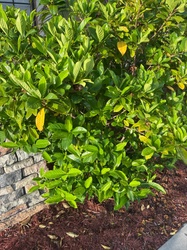
Gardenia Identification Guide
Identify gardenias by their intensely fragrant waxy white flowers, glossy dark evergreen leaves, and dense rounded shrub form.
Read the full Gardenia encyclopedia entry →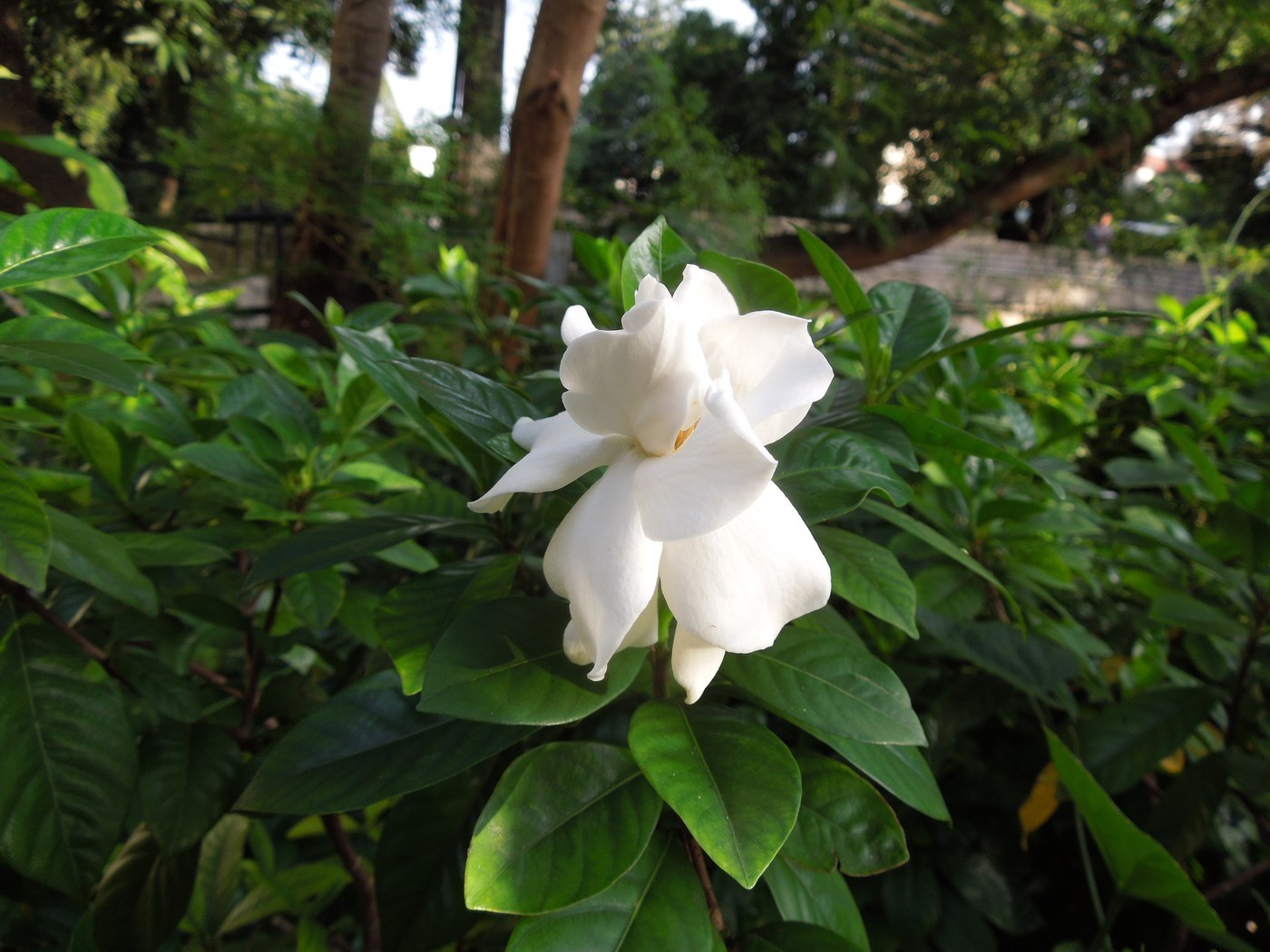
Key Identifying Features
Gardenia (Gardenia jasminoides and relatives) is an evergreen shrub in the coffee family (Rubiaceae), prized for perfume and glossy foliage. Recognize it by:
- Thick, waxy, creamy-white flowers with an intense sweet fragrance.
- Glossy, dark green, leathery leaves.
- A dense, rounded evergreen shrub habit.
Leaves & Stems
Leaves are opposite or in whorls of three, elliptic to oval with a pointed tip, 2–4 inches long, and notably thick, glossy, and dark green with a smooth leathery surface and prominent veins. There are small stipules between the leaf bases (a Rubiaceae trait). Stems are woody, smooth, and well-branched, forming a compact rounded shrub usually 2–6 feet tall. The rich glossy foliage stays evergreen year-round in mild climates.
Flowers & Fruit
Flowers are the highlight: solitary or paired at branch tips, opening pure white and aging to creamy yellow, with thick, waxy, spiral-arranged petals in single (pinwheel) or double (rose-like) forms 2–4 inches across. The fragrance is powerful and sweet, one of the most recognizable in horticulture. Bloom peaks in late spring and summer. The fruit is an oval, orange-fleshed berry with ridges, used historically as a yellow dye, though many cultivars rarely fruit. Foliage is evergreen and flowers may rebloom in flushes.
How to Tell It Apart from Look-Alikes
- Camellia: Similar glossy leaves and rose-like flowers, but camellia leaves are alternate, flowers are not strongly fragrant, and bloom is fall through spring.
- Star jasmine (Trachelospermum): Fragrant white flowers too, but a twining vine with smaller pinwheel flowers, not a shrub with large waxy blooms.
- Mock orange: Fragrant white flowers but deciduous with thinner leaves and four-petaled blooms.
The waxy white intensely fragrant flower + glossy leathery opposite/whorled leaves identifies gardenia.
Where You'll Find It
Gardenias are popular landscape and container shrubs in warm, humid climates, planted near patios and entries where their scent can be enjoyed. They need acidic, moist, well-drained soil and warmth, and partial shade in hot regions. In cooler climates they are grown as houseplants or greenhouse subjects. Look for them in southern gardens and around fragrant garden plantings.
Quick ID Checklist
- Waxy, creamy-white flowers aging to yellow
- Intense sweet fragrance
- Glossy, dark green leathery leaves, opposite or whorled
- Dense rounded evergreen shrub
- Late spring to summer bloom
- Ridged orange berry fruit (when produced)
Frequently asked questions
How do I tell a gardenia from a camellia?
Both have glossy dark leaves and rose-like flowers, but gardenias are powerfully fragrant with opposite or whorled leaves and bloom in late spring and summer. Camellias have alternate leaves, little scent, and bloom from fall to spring.
Why are my gardenia leaves turning yellow?
Gardenias require acidic, well-drained soil. Yellowing leaves often signal high soil pH causing iron or magnesium deficiency, overwatering, or cold stress rather than a disease.
Do gardenias produce fruit?
They can produce ridged orange berries that were historically used as a yellow dye, but many ornamental double-flowered cultivars rarely set fruit.
Why is gardenia fragrance so distinctive?
Gardenia flowers release a rich, heady, sweet scent from their waxy petals, especially in the evening. That powerful perfume is one of the most reliable ways to identify the plant.
Gardenia identified by the community
Recent Gardenia specimens identified with Plant Identifier.