
Gasteria Identification Guide
Identify Gasteria by its thick, tongue-shaped, often stacked succulent leaves with a rough warty surface and its curved, stomach-shaped flowers.
Read the full Gasteria encyclopedia entry →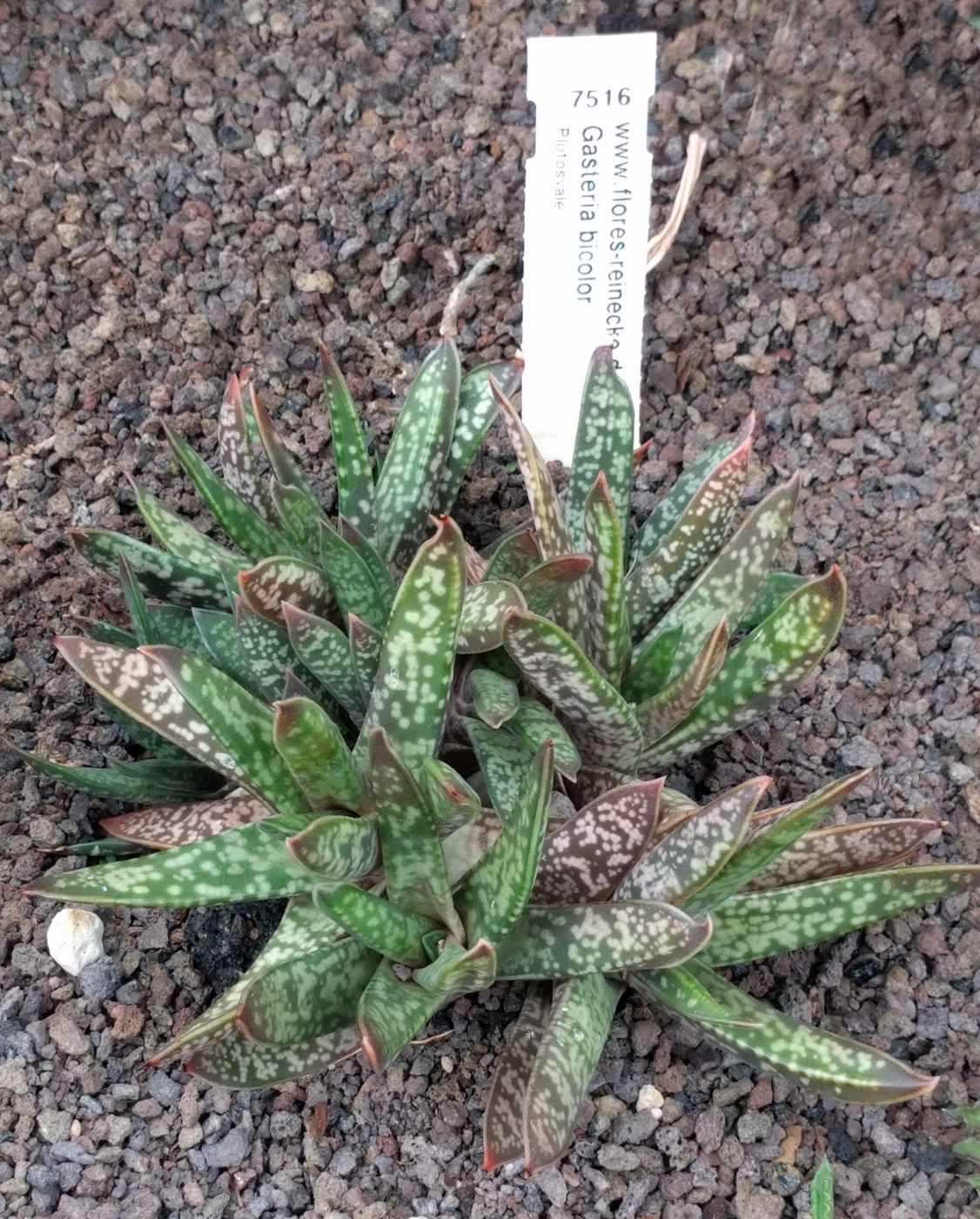
Key Identifying Features
Gasteria is a South African succulent genus recognized by thick, strap- or tongue-shaped leaves that are often arranged in two flat ranks (distichous) like an open book when young, with a rough, warty, mottled surface. The genus name comes from the stomach-shaped (gastric) flowers.
- Thick, tongue/strap-shaped fleshy leaves, blunt-tipped
- Young plants fan out in two opposite rows (a flat, stacked look)
- Rough, bumpy (tuberculate) surface with pale speckles or bands
- Curved, pinkish, pot-bellied flowers on a tall stalk
Leaves & Stems
Leaves are dark green, often mottled with white spots or rough white tubercles, thick and rigid, with smooth or slightly toothed margins and rounded to bluntly pointed tips. In juveniles the leaves are stacked in two opposite ranks forming a flattened fan; as plants mature many species spiral into a loose rosette. The surface texture ranges from smooth-speckled to distinctly warty and sandpapery. Plants are usually small (10–30 cm) and slowly offset to form clumps. There is essentially no visible stem.
Flowers & Fruit
The diagnostic flowers appear on a tall, arching raceme and are tubular, curved, and swollen at the base like a tiny stomach or sausage, colored pink to coral with green tips. This pot-bellied shape is the surest way to confirm Gasteria over similar succulents. Fruit is a small dry capsule.
How to Tell It Apart from Look-Alikes
- vs. Aloe: aloes have toothed/spiny leaf margins and tubular straight flowers; gasteria leaves are usually smooth-edged and flowers are stomach-shaped
- vs. Haworthia: haworthias are smaller with translucent leaf windows or stripes and white tubular flowers; gasteria leaves are thicker, tongue-like and pink-flowered
- vs. × Gasteraloe: hybrids between Gasteria and Aloe show intermediate traits; check for the curved pot-bellied flower
The two-ranked, tongue-shaped, warty leaves plus pot-bellied pink flowers clinch the ID.
Where You'll Find It
A popular, tough windowsill succulent that tolerates lower light than most. Native to the dry, often partly shaded scrub and rocky slopes of South Africa.
Quick ID Checklist
- Thick, tongue-shaped, blunt fleshy leaves
- Young plants in two flat opposite ranks
- Rough warty surface with white speckles/bands
- Smooth (not spiny) leaf margins
- Curved, stomach-shaped pink flowers on a tall stalk
Frequently asked questions
How do I tell Gasteria from Aloe?
Gasteria leaves usually have smooth margins and the flowers are curved and pot-bellied (stomach-shaped). Aloes have toothed or spiny leaf edges and straighter tubular flowers.
Why are the leaves arranged in two flat rows?
Young Gasterias grow leaves in two opposite ranks (distichous), giving a fanned, stacked look. Many mature into a loose spiral rosette.
What are the white bumps on the leaves?
They are tubercles — small raised warty spots that give many Gasteria species their rough, sandpapery texture and help identify the genus.
How is Gasteria different from Haworthia?
Haworthias are smaller with translucent leaf windows or white stripes and white flowers. Gasteria has thicker tongue-shaped leaves and curved pink, stomach-shaped flowers.