Gazania Identification Guide
Identify gazania (Gazania rigens) by its large, daisy-like flowers with bold contrasting rings or stripes that open in sunshine and close at night, above silvery, rosette foliage.
Read the full Gazania encyclopedia entry →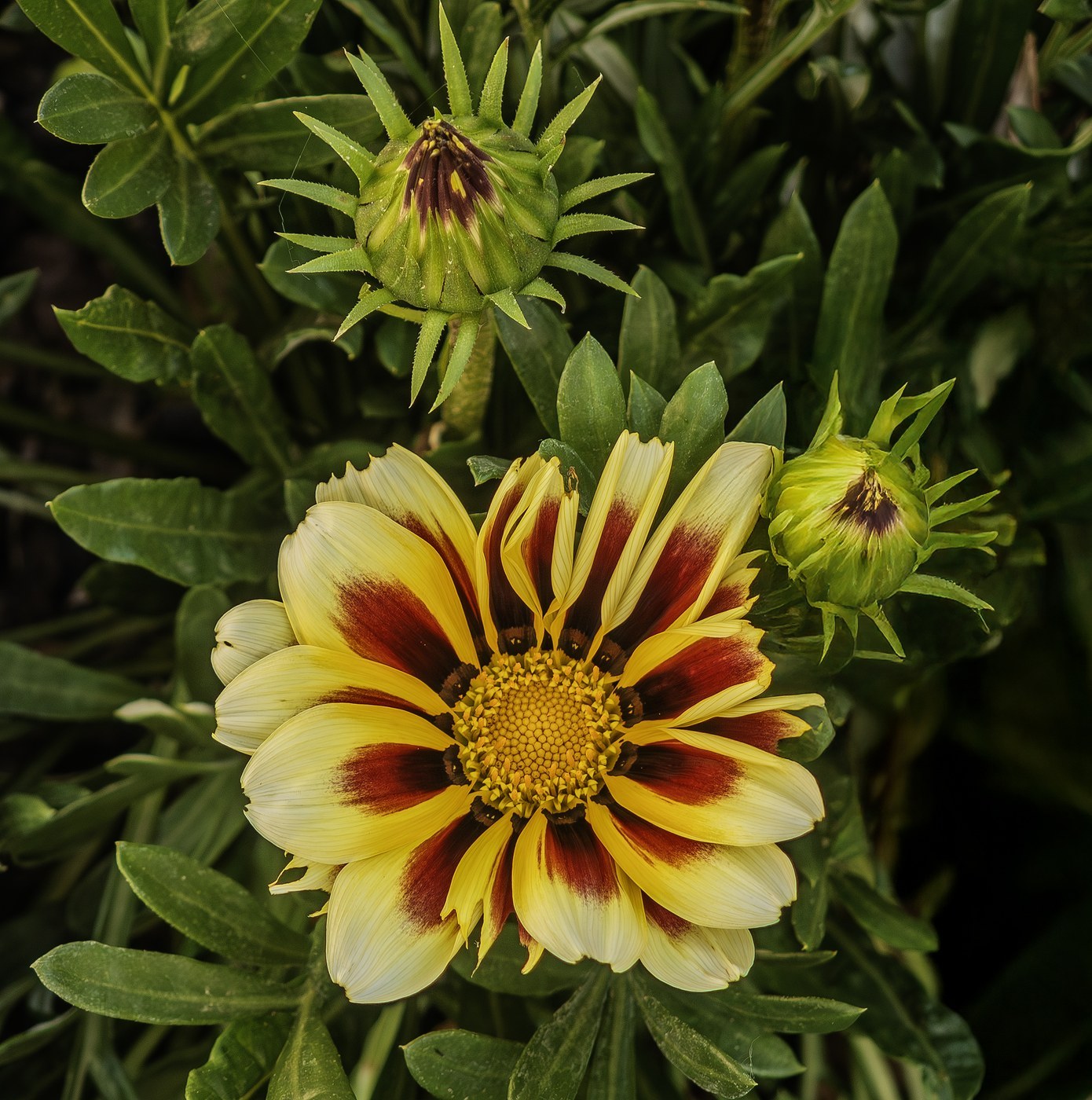
Key Identifying Features
Gazania (Gazania rigens and hybrids), often called treasure flower, is recognized by its large, brilliantly colored daisy flowers — frequently marked with contrasting bands, stripes, or dark spots at the petal bases forming a ring around the center. The flowers open in bright sun and close at night and in cloudy weather, atop a low rosette of often silvery-backed leaves.
- Daisy-like heads 2–4 inches across
- Bold colors with contrasting rings/stripes near the center
- Flowers that open in sun, close when dark or overcast
- Low, ground-hugging rosette 6–10 inches tall
Leaves & Stems
Leaves form a basal rosette and are lance-shaped or lobed, dark green on top and noticeably silvery-white and woolly underneath (and sometimes on both sides). Each flower is held on its own leafless stalk rising just above the foliage. The plant spreads into a low, mat-like clump, making it a good groundcover.
Flowers & Fruit
Each head is a classic composite daisy: a ring of strap-shaped ray petals around a central disc. The defining feature is the bold patterning — petals in orange, yellow, red, pink, cream, or bronze often bear a darker stripe down the middle or a dark, sometimes white-dotted ring at the base of the rays. Flowers track and respond to sunlight, closing at night. Bloom runs through the warm season; small seeds with fluffy pappus follow.
How to Tell It Apart from Look-Alikes
- Gerbera daisy: Larger, on tall single stems, lacks the contrasting basal ring and the silvery leaf undersides, and flowers do not close at night like gazania.
- Osteospermum (African daisy): Similar low daisy, but its flowers often have a metallic blue/purple center and bluish disc; gazania centers are typically green/yellow with patterned ray bases.
- The sun-responsive daisy with contrasting petal rings + silvery rosette leaves identifies gazania.
Where You'll Find It
Gazania is a tough, drought- and heat-tolerant plant from South Africa, used as bedding, edging, groundcover, and container color, especially in hot, sunny, coastal, or xeriscape gardens. It thrives in full sun and sandy, well-drained soil and tolerates salt and poor soil. It is grown as an annual in cold climates and a perennial where winters are mild.
Quick ID Checklist
- Large daisy flowers with contrasting rings or stripes near the center
- Flowers open in sun, close at night/clouds
- Low basal rosette of leaves, often silvery underneath
- Flowers on individual leafless stalks
- Thrives in hot, dry, sunny spots
Frequently asked questions
Why do gazania flowers close up?
Gazania blooms open in bright sunshine and close at night and on cloudy or overcast days. This sun-tracking behavior is normal and a helpful clue for identifying the plant.
What makes gazania flowers so distinctive?
Most gazanias have bold contrasting markings, such as a dark stripe down each petal or a ring of dark, sometimes white-dotted spots around the center, which set them apart from plain daisies.
How do I tell gazania from a gerbera daisy?
Gazania is low-growing with silvery-backed rosette leaves and patterned petals, and its flowers close at night, while gerberas are taller on single stems with plain petals and do not close up the same way.
Is gazania drought tolerant?
Yes. It is native to dry regions of South Africa and thrives in hot, sunny, sandy conditions, making it a popular choice for xeriscapes, coastal gardens, and low-water plantings.
Gazania identified by the community
Recent Gazania specimens identified with Plant Identifier.