Geranium Identification Guide
A practical guide to identifying the popular bedding geranium (Pelargonium) by its rounded scalloped leaves, zoned banding, scented foliage, and clustered flower heads.
Read the full Geranium encyclopedia entry →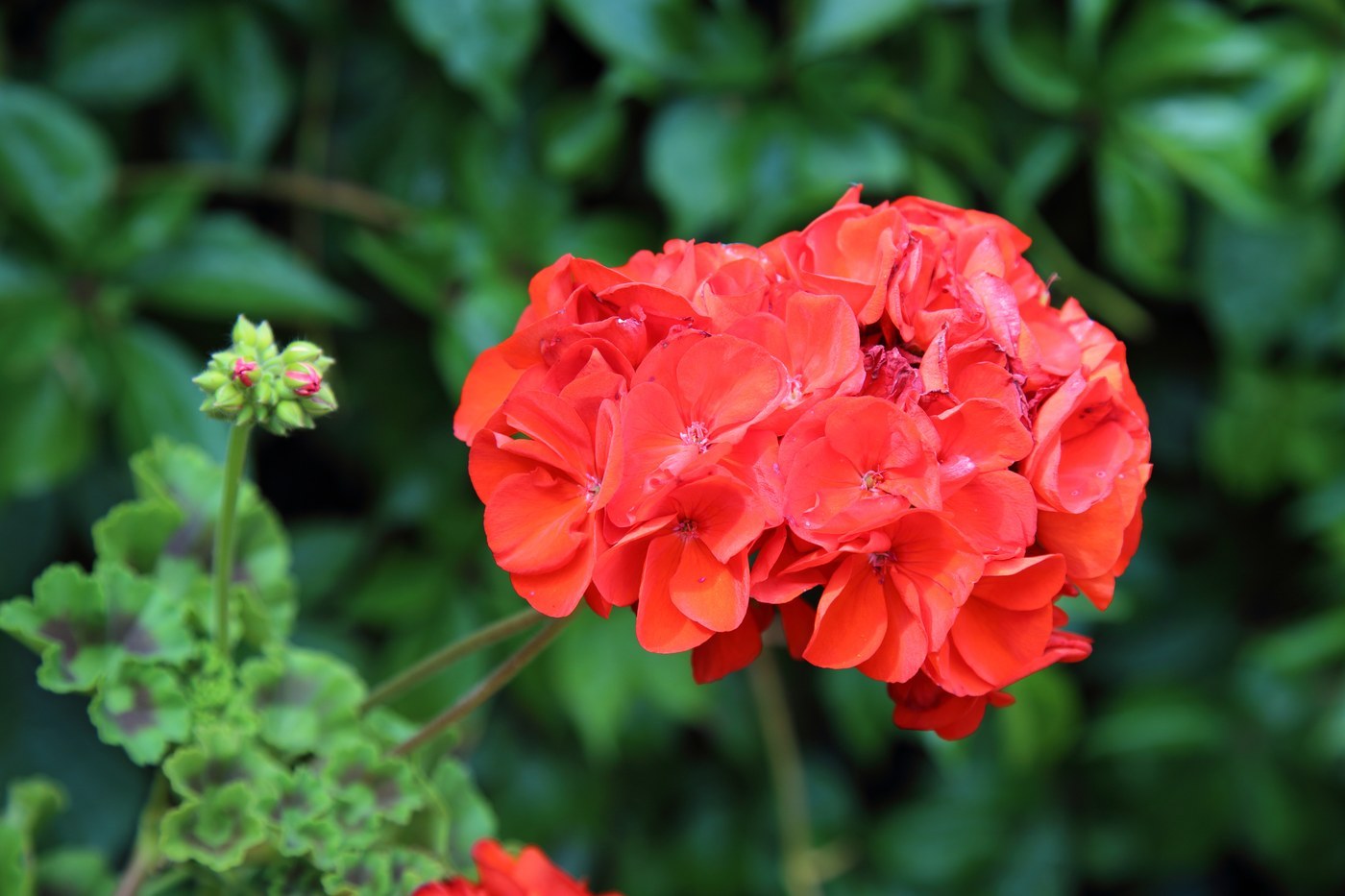
Key Identifying Features
The common garden "geranium" sold in nurseries is usually a Pelargonium (zonal or ivy geranium), distinct from true hardy Geranium (cranesbill). This guide covers the popular bedding Pelargonium. Look for:
- Rounded, lobed leaves with a soft, velvety texture and a strong pungent scent when rubbed.
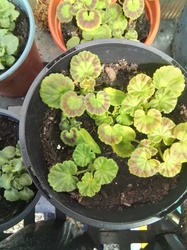
- A distinctive dark horseshoe-shaped "zone" banded across the leaf in zonal types.
- Domed clusters (umbels) of flowers held above the foliage on long stalks.
Leaves & Stems
Leaves are palmately rounded to kidney-shaped, 2–4 inches wide, with shallow scalloped or wavy lobes and finely toothed edges. Many varieties show a conspicuous reddish-brown or burgundy ring (the zone) circling the center of the leaf. The surface is soft-hairy and releases a sharp, musky aroma when touched. Stems are thick, succulent, and jointed, becoming woody and knobby with age. Ivy-leaved types instead have glossy, fleshy, ivy-shaped leaves and trail rather than mound.
Flowers & Fruit
Flowers cluster into a rounded umbel of many individual blooms atop a long bare stalk. Each flower has five petals, often with the upper two slightly marked or differently shaped. Colors include red, pink, salmon, white, magenta, and bicolors. After flowering, a slender beak-like seed capsule forms — the trait that gives the family its "cranesbill"/"storksbill" names, since the fruit resembles a bird's bill. Bloom is heaviest in summer and continues if deadheaded.
How to Tell It Apart from Look-Alikes
- True hardy Geranium (cranesbill): Has more deeply cut, fern-like leaves, flowers borne singly or in loose pairs rather than dense domes, and is winter-hardy. Pelargonium leaves are rounder and scalloped.
- Begonia: Asymmetrical, often glossy leaves and waxy flowers; lacks the pungent scent and leaf zone.
- Scented geraniums: Same genus but grown for intensely rose-, lemon-, or mint-scented deeply divided foliage with smaller flowers.
The pungent aroma plus zoned, scalloped round leaf and domed flower cluster confirm a zonal Pelargonium.
Where You'll Find It
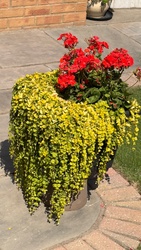
Geraniums are classic container, window-box, and bedding plants loved for heat tolerance and long bloom. They favor full sun and well-drained soil and are common on balconies, patios, and in summer borders. In frost-free climates they grow year-round; elsewhere they are annuals or overwintered indoors.
Quick ID Checklist
- Rounded, scalloped, soft-hairy leaves
- Strong musky scent when crushed
- Dark horseshoe zone banding on many leaves
- Domed umbel of five-petaled flowers on a long stalk
- Thick jointed stems, woody at the base
- Beak-like seed capsule after bloom
Frequently asked questions
Is the garden geranium a true Geranium?
Usually not. The popular bedding and window-box geranium is a Pelargonium. True Geranium, called cranesbill, is a separate hardy perennial with more deeply divided leaves and looser flowers.
What is the dark ring on geranium leaves?
It is called the leaf zone, a horseshoe-shaped band of darker pigment found in zonal Pelargoniums. Its presence is a quick way to confirm you have a zonal geranium.
Why do geranium leaves smell when touched?
The foliage contains aromatic oils in its glandular hairs that release a pungent, musky scent when rubbed. This odor is a dependable identification trait.
How do I tell ivy geranium from zonal geranium?
Ivy geraniums have glossy, fleshy, five-pointed ivy-shaped leaves and a trailing habit, while zonal types have rounded scalloped leaves, often with a dark zone, and grow upright in mounds.
Geranium identified by the community
Recent Geranium specimens identified with Plant Identifier.