
How to Care for Golden Barrel Cactus
Grow a Golden Barrel Cactus with full sun, gritty soil, and very sparing water for a healthy, ribbed golden globe.
Read the full Golden Barrel Cactus encyclopedia entry →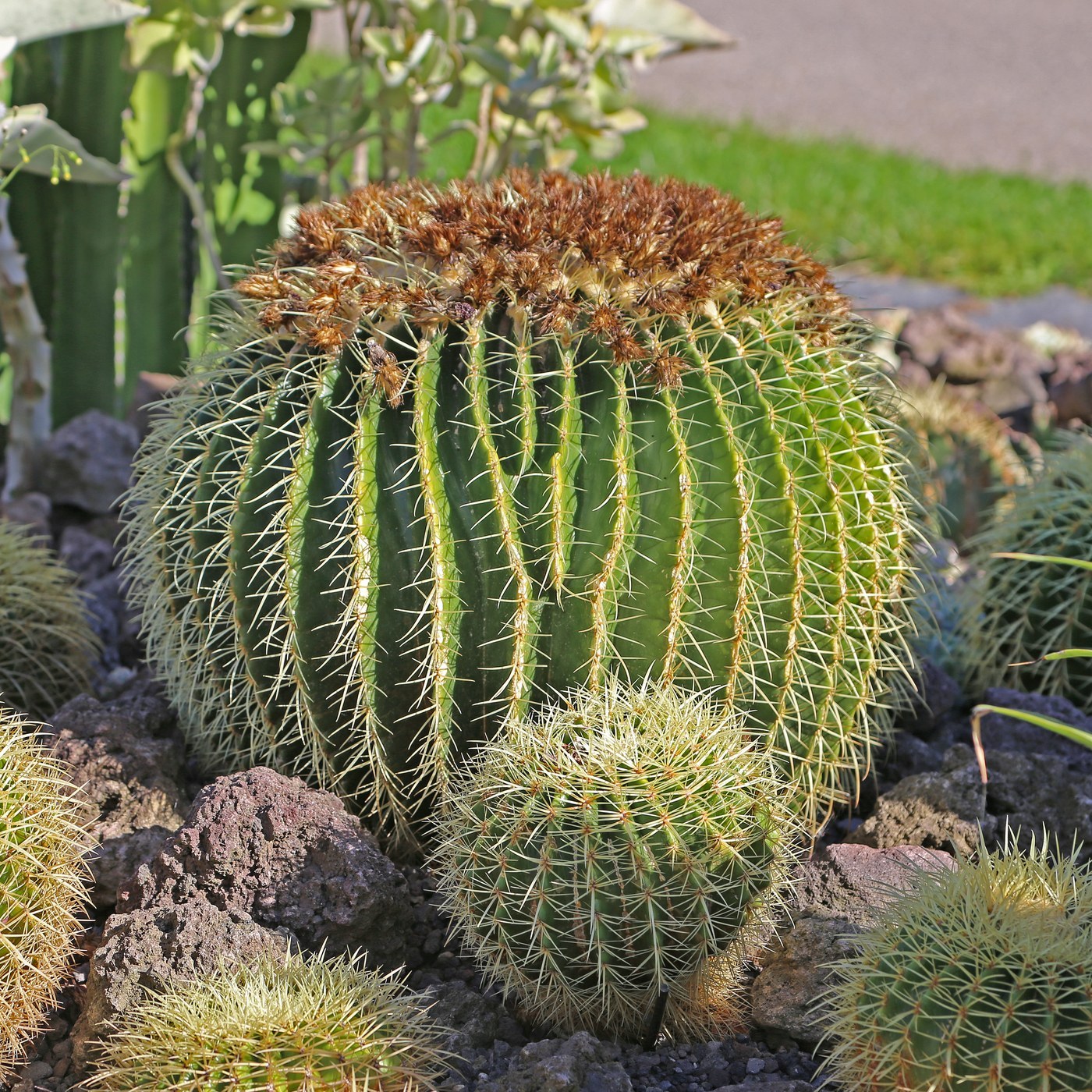
The Golden Barrel Cactus (Echinocactus grusonii) is a slow-growing globe cactus prized for its symmetrical ribs and dense golden-yellow spines. It is one of the most forgiving cacti for beginners, asking mainly for strong light and restraint with the watering can.
Light
Give this cactus as much light as you can. Full sun to very bright light is essential; a south- or west-facing window indoors, or an open sunny spot outdoors, keeps the body compact and the spines rich gold. In dim conditions the plant etiolates, growing pale, narrow, and lopsided as it stretches toward the light. If moving a plant that has been indoors out into direct sun, acclimate it over one to two weeks to prevent the sun-stressed pale patches that can develop on tender tissue.
Water
Water sparingly and always let the soil dry out completely between waterings. During the warm growing season, a thorough soak every two to three weeks is usually plenty; let excess drain away fully and never leave the pot standing in water. In winter, when the plant is dormant, cut back to almost nothing, watering only lightly every four to six weeks or not at all in cold conditions. Overwatering and cold, wet soil are by far the most common causes of failure, leading to soft, browning tissue at the base.
Soil & Potting
Use a fast-draining mineral mix. A dedicated cactus and succulent soil amended with extra coarse material, such as pumice, perlite, or coarse grit, gives the sharp drainage the roots need. Aim for a blend that is roughly half to two-thirds gritty mineral matter. Always plant in a container with drainage holes; unglazed terracotta is ideal because it wicks moisture from the soil and dries quickly.
Humidity & Temperature
This is a desert plant that thrives in warm, dry air and dislikes damp cold. Normal household humidity is more than adequate. It enjoys heat in summer and appreciates a cool, dry winter rest around 50 to 55 degrees F, which supports future flowering in mature plants. Protect it from hard frost, which damages the tissue, and keep it out of cold drafts and consistently soggy conditions.
Feeding
Feed lightly. During spring and summer, apply a diluted low-nitrogen cactus fertilizer roughly once a month, or a couple of times over the season. Too much nitrogen produces soft, distorted growth. Do not feed at all during the winter dormancy.
Propagation
Mature clumping specimens occasionally produce offsets (pups) at the base, which can be carefully removed with a clean, sharp knife, left to callus over for several days, and then potted into dry cactus mix. Solitary barrels are most often grown from seed, which germinates readily in warm, bright conditions but produces very slow-growing seedlings that take years to reach any size.
Repotting / Pruning
Repot infrequently, only every three to four years or when the plant has clearly outgrown its container. Do this in spring, handling the spiny body with folded newspaper, thick gloves, or foam to protect your hands. Let the plant settle for a week in dry soil before resuming watering so any disturbed roots can heal. No pruning is needed; simply remove any shriveled or damaged tissue at repotting time.
Common Problems & Pests
Soft, discolored, or collapsing tissue almost always signals overwatering and root rot; correct by drying out and improving drainage. Corky brown patches can come from sunburn on unacclimated plants or from old age at the base. Watch for mealybugs, which appear as white cottony tufts between the ribs, and scale insects on the body; treat with a cotton swab dipped in alcohol or an appropriate insecticidal spray. Spider mites may appear in hot, dry indoor conditions.
Seasonal Care Tips
In spring, resume watering gradually and begin light feeding as growth restarts. Through summer, provide maximum light and water only when the soil is bone dry. In autumn, taper watering and feeding. In winter, keep the plant cool, bright, and nearly dry to give it the dormant rest that keeps it healthy and, in older plants, encourages the ring of yellow flowers at the crown.
Frequently asked questions
Why is my Golden Barrel Cactus turning pale and stretching?
This is etiolation from too little light. Move it to the brightest spot you have, ideally full sun, so new growth returns to a compact, richly golden form.
How often should I water a Golden Barrel Cactus?
Water only when the soil is completely dry, roughly every two to three weeks in summer and much less or not at all in winter. When in doubt, wait longer.
Why is the base of my cactus going soft and brown?
Soft, browning tissue usually means overwatering and rot. Let the soil dry out fully, improve drainage with a grittier mix, and reduce how often you water.
How fast does a Golden Barrel Cactus grow?
Very slowly. It can take many years to reach a substantial size, so buy the size you want or be patient with seedlings.