
How to Care for Golden Shower Tree
Grow Cassia fistula, a tropical flowering tree, in full sun and warm conditions for cascading golden flower chains.
Read the full Golden Shower Tree encyclopedia entry →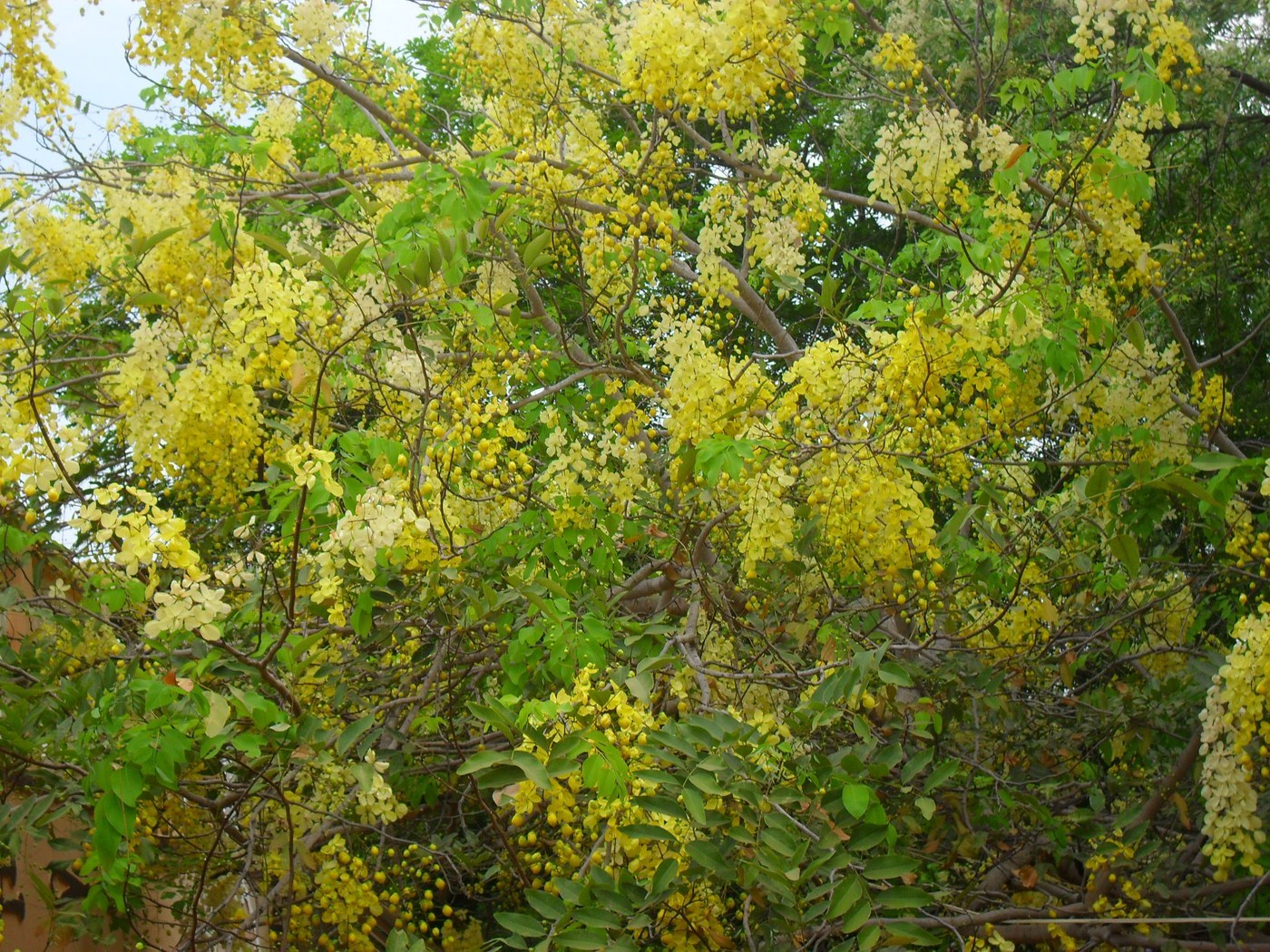
The Golden Shower Tree (Cassia fistula) is a spectacular tropical to subtropical flowering tree famed for the long, pendulous chains of bright golden-yellow flowers that drape its canopy in late spring and summer. A medium-sized, spreading deciduous tree with pinnate leaves, it is an easy, fast-growing ornamental where winters are frost-free.
Light
Golden Shower Tree demands full sun. Give it the brightest, most open position available, with at least six to eight hours of direct sunlight daily. Abundant light drives the profuse flowering the tree is grown for; in shade or crowded plantings it grows sparse, leans, and blooms poorly. It is an ideal specimen for open lawns, wide borders, and sunny streetscapes.
Water
Water moderately. Young trees need regular watering through their first few seasons to establish a strong root system, keeping the soil moist but not waterlogged. Once established, the tree is notably drought-tolerant and gets by on natural rainfall in most climates, needing supplemental water mainly during extended dry periods. A pronounced dry season followed by warmth actually helps trigger heavy flowering. Avoid constantly saturated soil.
Soil & Potting
This tree adapts to a wide range of soils, including sandy, loamy, and even poorer ground, provided drainage is good. It tolerates a broad pH range and some salinity. Deep, well-drained soil produces the best growth. Amend heavy clay with organic matter and grit before planting. Young trees can be grown in large containers for a few years, but the species ultimately develops a large root system and canopy suited to open ground.
Humidity & Temperature
Golden Shower Tree is a warm-climate plant that thrives in tropical and subtropical heat and humidity. It is frost-sensitive: young trees can be killed by freezing temperatures, and even mature trees suffer dieback in hard frost. Grow it only in reliably frost-free regions, or in a large container that can be sheltered indoors or in a greenhouse over winter in cooler climates. It handles high heat well.
Feeding
Feed young, establishing trees a balanced, slow-release fertilizer in spring to support vigorous growth. Mature trees generally need little supplemental feeding in decent soil; an annual spring application of balanced fertilizer or a top-dressing of compost is sufficient. Avoid excessive nitrogen, which can promote foliage at the expense of the prized flower display.
Propagation
Golden Shower Tree is most commonly propagated from seed, which is produced abundantly in long cylindrical pods. The hard seed coat needs scarification (nicking, sanding, or a hot-water soak) to germinate well; treated seed sprouts readily in warm conditions. Sow in deep pots to accommodate the developing taproot and grow on in bright warmth. Semi-hardwood cuttings and air-layering are possible but less reliable than seed.
Repotting / Pruning
Container-grown young trees should be potted up into progressively larger containers each spring until planted out. In the landscape, prune in the dormant or early period to establish a strong central leader and well-spaced scaffold branches, and to remove crossing, dead, or damaged wood. Because it flowers on the current framework in the warm season, avoid heavy pruning right before the bloom period. Remove spent pods if you wish to tidy the canopy.
Common Problems & Pests
Golden Shower Tree is generally robust and low-maintenance. Root rot from waterlogged soil is the main cultural problem, so ensure good drainage. Leaf spot and mildew can occur in stagnant, humid conditions. Caterpillars (including leaf-feeding larvae) and occasional scale or mealybugs may appear on foliage; minor infestations can be managed with horticultural soap or by encouraging natural predators. Frost damage is the most serious threat in marginal climates.
Seasonal Care Tips
In spring, feed establishing trees and enjoy the buildup to flowering. The signature golden flower chains cascade in late spring into summer, often most heavily after a warm dry spell. Through summer, water young trees during droughts and let mature trees largely fend for themselves. In fall the tree may begin dropping leaves as it heads toward its brief deciduous period. In winter, protect young or container trees from any frost and reduce watering during dormancy.
Frequently asked questions
Why won't my Golden Shower Tree bloom?
The usual causes are insufficient sun, excess nitrogen fertilizer, or youth, since seedlings take several years to reach flowering size. Grow it in full sun, ease off high-nitrogen feeding, and be patient; a warm dry spell often triggers heavy bloom.
How cold can a Golden Shower Tree tolerate?
Very little. It is frost-sensitive; young trees can be killed by freezing temperatures and mature trees suffer dieback in hard frost. Grow it only in frost-free climates or keep young trees in containers to shelter over winter.
How do I grow a Golden Shower Tree from seed?
Scarify the hard-coated seed by nicking, sanding, or soaking it in hot water, then sow in deep pots of well-drained mix and keep warm. Treated seed germinates readily; grow seedlings in bright warmth before planting out.
How much water does an established Golden Shower Tree need?
Little once established. It is drought-tolerant and usually relies on rainfall, needing extra water only during prolonged dry periods. Water young trees regularly for the first few seasons, but avoid constantly waterlogged soil at any age.