
Goldfish Plant Identification Guide
Identify the Goldfish Plant (Nematanthus) by its arching, glossy dark leaves and pouched orange-red flowers shaped like leaping goldfish.
Read the full Goldfish Plant encyclopedia entry →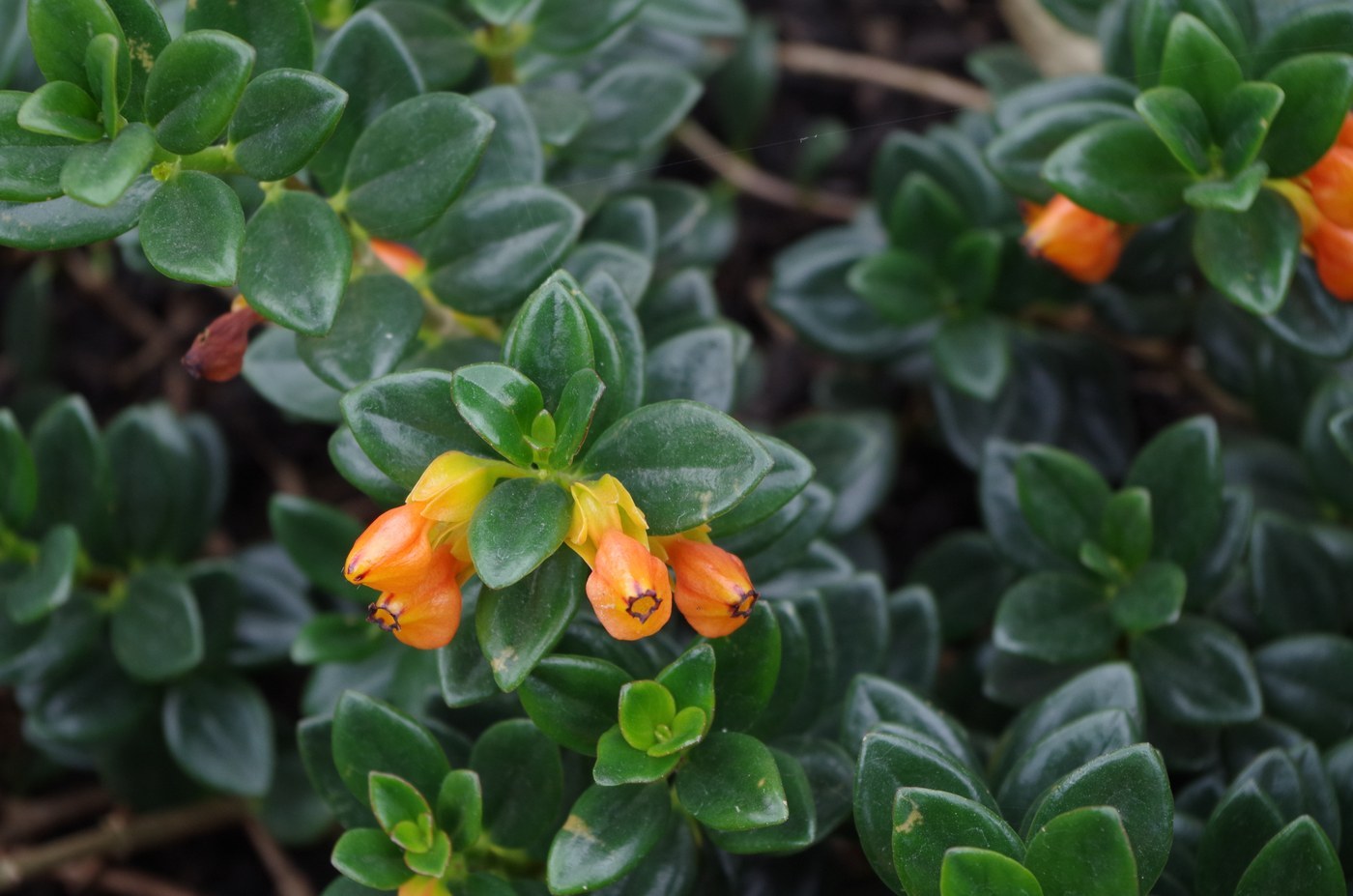
Key Identifying Features
The Goldfish Plant (Nematanthus gregarius and related species) earns its name from its tubular, pouched orange to red flowers that resemble a swimming goldfish. Pair these distinctive blooms with small, thick, glossy dark-green leaves on trailing stems and the ID is clear.
- Pouched, puckered tubular flowers in orange, red or yellow
- Small, thick, waxy, glossy oval leaves
- Arching to trailing stems, well suited to hanging baskets
- Bushy, cascading habit
Leaves & Stems
Leaves are 2–4 cm long, oval, thick, leathery and very glossy dark green, sometimes with a purplish underside. They are arranged in opposite pairs along succulent-ish stems that arch out then trail. The whole plant forms a dense, mounding cascade. Stems are slightly fleshy and green to reddish. The closely related Columnea (also called goldfish plant) has longer, hairier leaves but similar fish-shaped flowers; both belong to the Gesneriad family (African violet relatives).
Flowers & Fruit
The flowers are the highlight: each is a 2–3 cm tubular, inflated, pouch-bellied bloom that pinches at the mouth, flushed bright orange, scarlet or gold — strikingly like a tiny goldfish with an open mouth. They appear along the stems, often in flushes through spring and summer (and longer in good light). Fruit is an inconspicuous capsule.
How to Tell It Apart from Look-Alikes
- vs. Lipstick Plant (Aeschynanthus): a close relative with longer leaves and flowers that emerge from a dark tubular calyx like lipstick from a tube; goldfish-plant flowers have the swollen fish-belly pouch instead
- vs. Columnea: also a goldfish plant, but with longer, often hairy leaves
- vs. ordinary trailing foliage plants: without the pouched flowers, look for the small, thick, glossy paired leaves on arching stems
Where You'll Find It
Grown indoors in hanging baskets for its cascading, flower-studded stems. Native to the rainforests of Brazil and tropical Central/South America, where it grows as an epiphyte on trees.
Quick ID Checklist
- Orange/red tubular flowers pouched like a goldfish
- Small, thick, glossy dark-green oval leaves
- Leaves in opposite pairs on arching stems
- Trailing, mounding habit in a hanging pot
- Gesneriad family (related to African violet/lipstick plant)
Frequently asked questions
Why is it called a Goldfish Plant?
Its tubular flowers are inflated and pouched at the belly with a pinched mouth, giving each bloom the look of a tiny orange or red goldfish.
How do I tell it from a Lipstick Plant?
Both are Gesneriads. Lipstick Plant (Aeschynanthus) flowers emerge from a dark tube like lipstick, while Goldfish Plant flowers have a swollen fish-belly pouch.
Why isn't my Goldfish Plant flowering?
Insufficient light is the usual cause. These plants need bright, indirect light to set their characteristic pouched flowers; in low light you see only the glossy foliage.
Are the leaves supposed to be so glossy and thick?
Yes. Small, thick, waxy, glossy dark-green leaves in opposite pairs are a key identifying trait of Nematanthus, even when the plant is not in bloom.