
Grapefruit Tree Identification Guide
Identify the grapefruit tree (Citrus paradisi) by its large glossy leaves with broad winged petioles, big fragrant white flowers, and very large round yellow fruit borne in grape-like clusters.
Read the full Grapefruit Tree encyclopedia entry →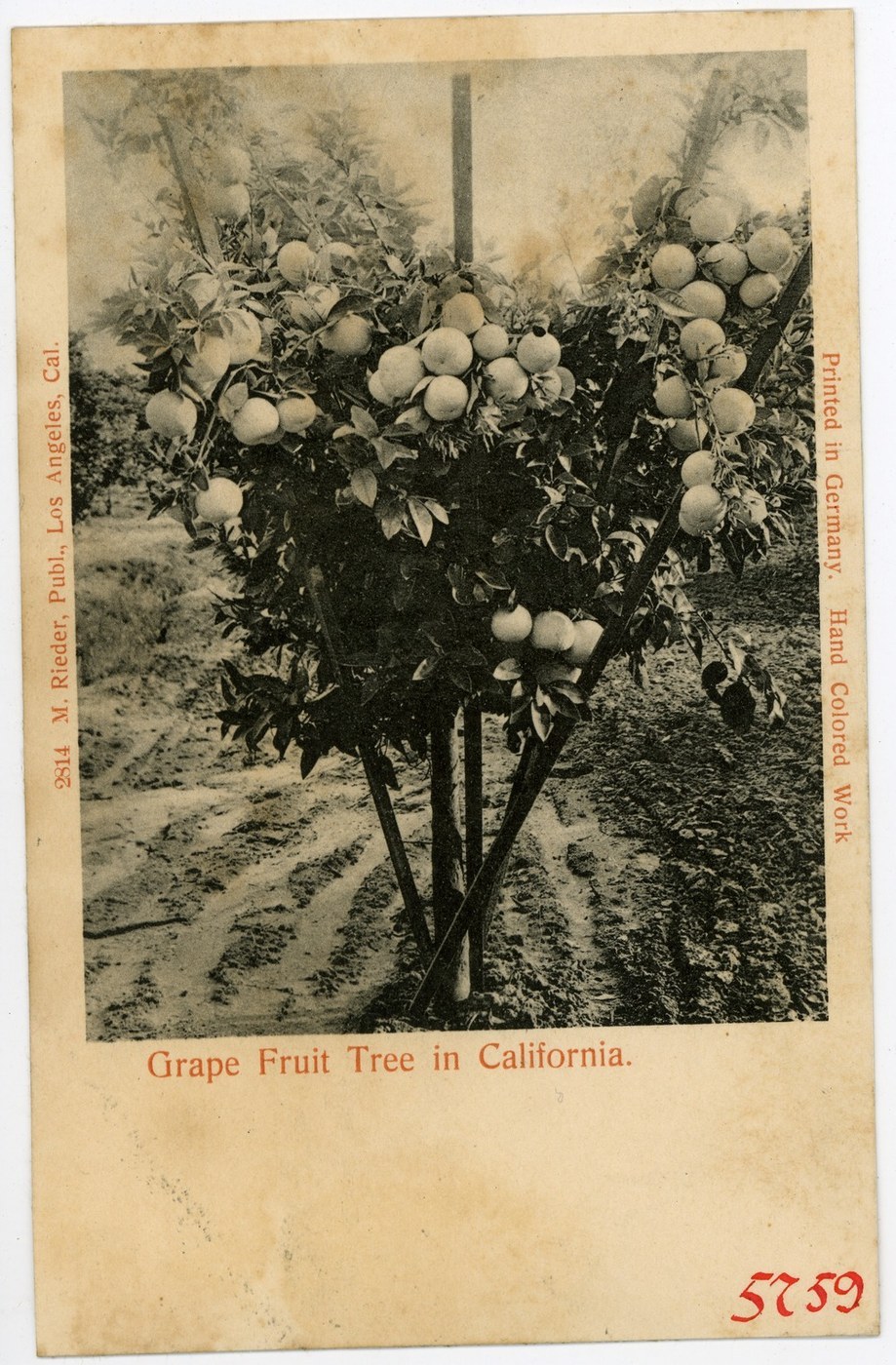
Key Identifying Features
The grapefruit tree (Citrus paradisi) is a large evergreen citrus tree, 4-10 m tall, with a rounded, dense, deep-green canopy — the biggest of the common citrus. Identify it by its large glossy leaves with conspicuously broad, heart-shaped winged petioles, large fragrant white five-petaled flowers, and the unmistakable very large round yellow fruit, often hanging in grape-like clusters (the source of its name). Crushed leaves and peel smell strongly of citrus oil.
Leaves & Stems
- Leaves are large (10-15 cm), glossy dark green, oval with a pointed tip.
- The petiole bears broad, winged flaps — wider and more heart-shaped than orange (a key separator).
- Held to light, leaves show translucent oil glands and a strong grapefruit scent when crushed.
- Twigs are green, angular, and bear short, sometimes flexible spines, especially on young growth.
Flowers & Fruit
- Flowers are white, waxy, four-to-five petaled, 4-5 cm — large for citrus, very fragrant, in clusters.
- Fruit is a large round hesperidium, 10-15 cm, with a smooth-to-slightly-pebbled pale yellow rind (sometimes blushed pink).
- Fruit characteristically grows in tight clusters resembling bunches of grapes.
- Flesh is pale yellow, pink, or ruby red, juicy, with a bitter-tart flavor and a thick white pith.
How to Tell It Apart from Look-Alikes
- Orange (Citrus sinensis): Smaller round orange fruit, narrowly winged petioles, smaller leaves and flowers.
- Pomelo (Citrus maxima): Even larger, often pear-shaped fruit with very thick rind; grapefruit (a pomelo-orange hybrid) is rounder and slightly smaller with broad-winged petioles.
- Lemon (Citrus limon): Elliptical yellow fruit with a nipple, purple-tinged new growth, barely winged petioles.
The very large yellow clustered fruit + broad heart-shaped winged petioles + large fragrant white flowers confirms grapefruit.
Where You'll Find It
Grapefruit trees grow in subtropical and warm Mediterranean climates (USDA zones 9-11) — orchards (notably Florida, Texas, and the Mediterranean) and large gardens. They need full sun, heat, and well-drained soil, and are frost-sensitive. Trees often carry mature fruit and new blossoms at once. Look for the big canopy hung with clustered yellow globes.
Quick ID Checklist
- Large evergreen citrus with dense rounded canopy
- Large glossy leaves with broad heart-shaped winged petioles
- Translucent oil dots and strong citrus scent when crushed
- Large fragrant white flowers
- Very large round yellow fruit in grape-like clusters
- Thick rind, bitter-tart pink/yellow/ruby flesh
Frequently asked questions
How do I tell a grapefruit tree from an orange tree?
Grapefruit has much larger fruit (often in grape-like clusters), bigger leaves with broad heart-shaped winged petioles, and larger flowers. Orange trees have smaller round orange fruit and narrowly winged petioles. The broad leaf wings and giant clustered yellow fruit are the giveaways.
Why is it called grapefruit?
Because the large fruits often hang in tight clusters that resemble oversized bunches of grapes. This clustering habit is itself a useful identification clue.
What is the broad winged petiole and why does it matter?
The leaf stalk of grapefruit has wide, heart-shaped flaps of leaf tissue at its base. The width helps separate citrus species: grapefruit wings are broad, orange wings are narrow, and lemon wings are nearly absent.
How is a grapefruit different from a pomelo?
Grapefruit is a hybrid of pomelo and sweet orange. Pomelo fruit is even larger, often pear-shaped, with a very thick rind, while grapefruit is rounder, somewhat smaller, and has broad-winged petioles and clustered fruit.