
Green Onion Identification Guide
How to identify green onions / scallions (Allium) by their hollow tubular leaves, white slender base, and onion smell.
Read the full Green Onion encyclopedia entry →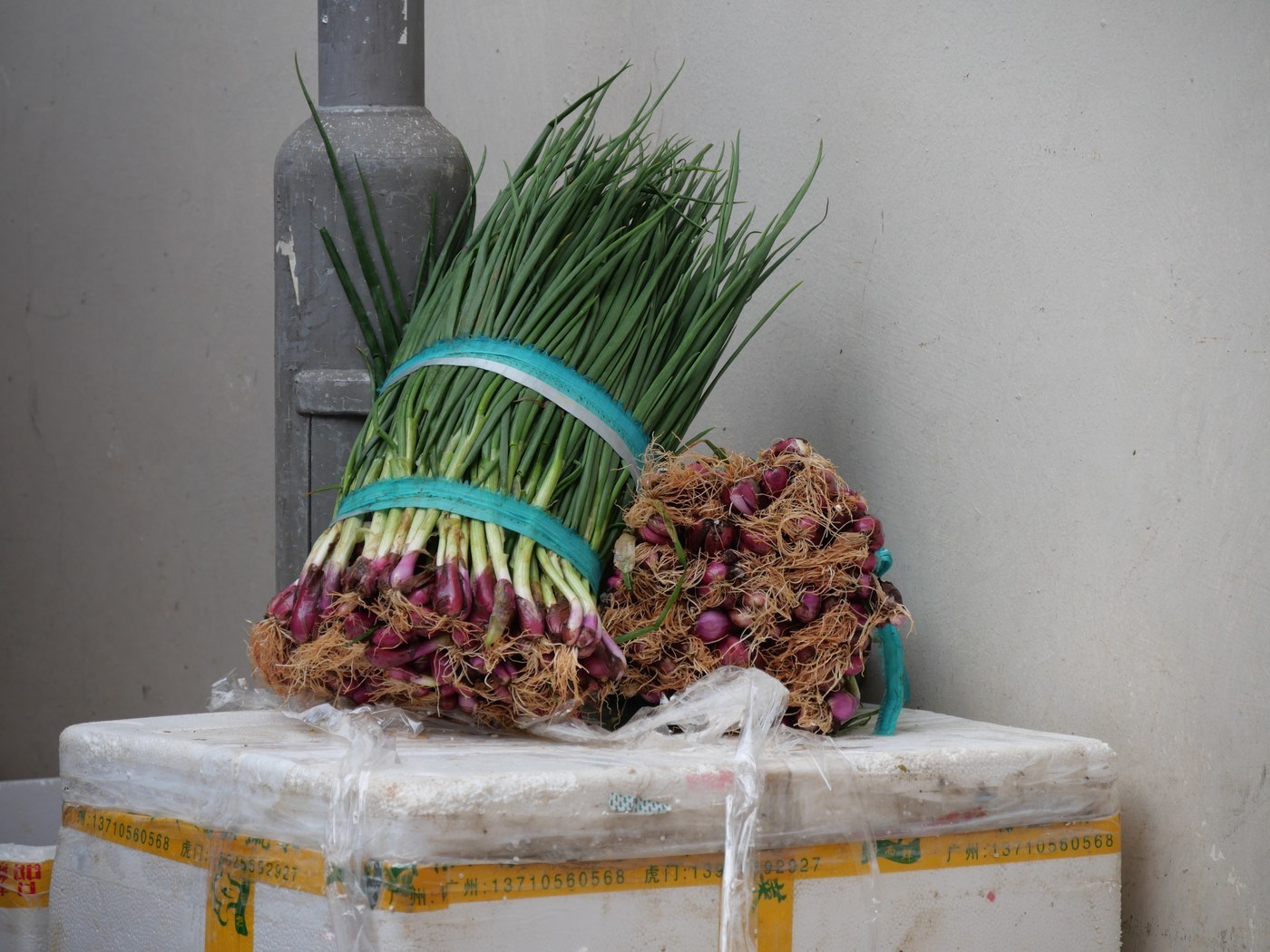
Key Identifying Features
Green onions (also called scallions) are young or bunching onions, usually Allium fistulosum or immature Allium cepa. Recognize them by the slender white base with stringy roots transitioning to bright green, hollow, tubular leaves, and the unmistakable oniony smell when crushed.
- Slim plant with a straight white shaft (no big bulb)
- Hollow, round, tubular green leaves
- Fine white roots at the base
- Strong onion/garlic aroma when bruised
Leaves & Stems
The green leaves are cylindrical and hollow, like thin tubes, tapering to a point, and are usually waxy blue-green to bright green. They emerge from a white to pale-green slender base that is essentially an unswollen or barely swollen bulb. Allium fistulosum (Welsh/bunching onion) stays straight with little bulbing and grows in clumps; immature A. cepa harvested young is also sold as green onion before its bulb forms. There is no true above-ground woody stem; the leaves arise from a short basal plate.
Flowers & Fruit
If left to mature, green onions send up a hollow flower stalk (scape) topped by a spherical umbel of many small star-shaped flowers, typically white to greenish-white (yellowish in A. fistulosum), enclosed in a papery sheath before opening. Flowers mature into small capsules with black seeds. The globe-shaped flower cluster is a classic Allium signature.
How to Tell It Apart from Look-Alikes
- Chives (Allium schoenoprasum): similar hollow tubular leaves but much thinner and grass-like, growing in dense tufts with pink-purple pompom flowers; green onions are thicker with a distinct white shaft.
- Garlic chives: have flat, solid leaves, not the round hollow tube of green onions.
- Leeks: much larger, with flat, folded, solid strap leaves, not hollow tubes.
- Death camas and daffodil shoots: superficially similar strap or tubular leaves, but they lack the onion smell and grow from different bulbs — the onion aroma is a key identification trait.
Where You'll Find It
Grown year-round in vegetable gardens, containers, and windowsills; they tolerate cool weather and regrow when the base is replanted. Bunching onions are common in kitchen gardens worldwide and are sold fresh in bundles at nearly every market.
Quick ID Checklist
- Slim plant, white slender base, no large bulb
- Hollow, round, tubular green leaves
- White stringy roots at the base
- Strong onion smell when crushed (key identification check)
- If flowering: round umbel of small white-green flowers
Frequently asked questions
What's the difference between green onions and chives?
Both have hollow tubular leaves and an onion smell, but chives are much thinner and grass-like, grow in dense clumps, and have purple pompom flowers. Green onions are thicker and have a clear white slender base.
Are green onions and scallions the same thing?
Yes. Green onion and scallion are different names for the same product: young onions or bunching onions harvested with green tops and an undeveloped or slightly swollen white base.
Will green onions form a bulb?
Bunching onions (Allium fistulosum) stay slender with little to no bulb. Immature common onions (Allium cepa) sold as green onions would eventually form a round bulb if left to mature in the ground.
What features identify a green onion plant?
Look for the slender white base with no large bulb, the bright green hollow round tubular leaves, fine white roots, and, if flowering, a spherical umbel of small white-green flowers — the classic Allium signature.