How to Care for Hoya Carnosa
Grow the classic wax plant with our full Hoya carnosa guide: light, watering, humidity, feeding, and coaxing those fragrant star-shaped blooms.
Read the full Hoya Carnosa encyclopedia entry →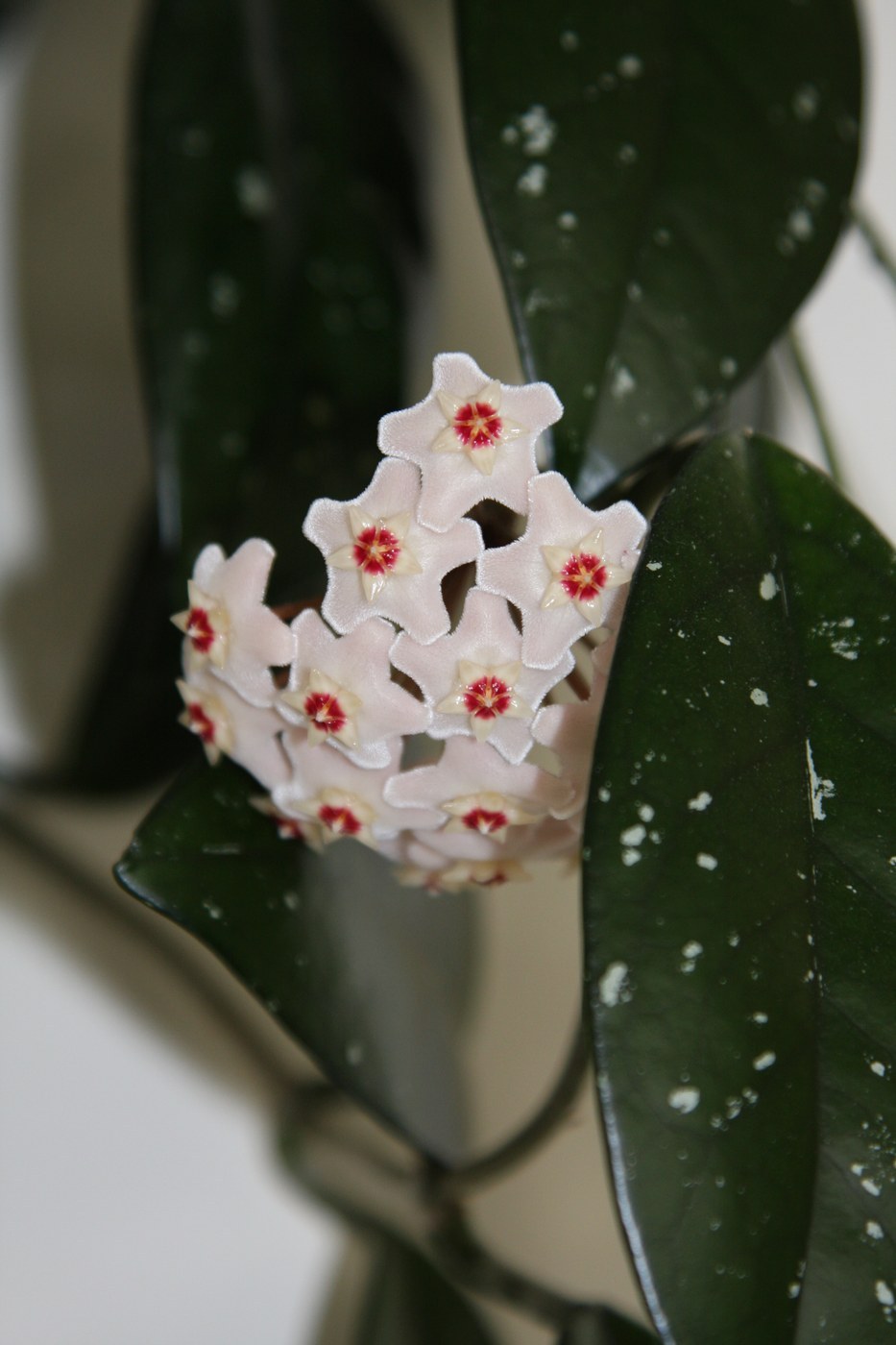
Hoya carnosa, the wax plant, is a forgiving trailing vine prized for its thick waxy leaves and clusters of porcelain-like, star-shaped flowers. It thrives on a little benign neglect, making it an easy, rewarding houseplant for beginners.
Light
Give Hoya carnosa bright indirect light for the best growth and, crucially, for flowering. An east-facing window or a spot a few feet back from a south or west window is ideal. A couple of hours of gentle morning sun deepens leaf color and encourages blooms, but harsh midday sun scorches the foliage. In too little light the vine survives but grows leggy and rarely flowers.
Water
Let the soil dry out substantially between waterings. Hoyas store moisture in their succulent leaves and resent staying wet. Water thoroughly until it drains, then wait until the top half of the pot is dry before watering again. Cut back noticeably in winter when growth slows. Overwatering, causing soft yellowing leaves and root rot, is the most common way to lose a Hoya.
Soil & Potting
Use a light, fast-draining, airy mix. A blend of standard potting soil with generous orchid bark, perlite, and a little coco coir mimics the epiphytic conditions these plants enjoy. Always plant in a container with drainage holes. Hoyas actually bloom better slightly pot-bound, so resist the urge to over-pot.
Humidity & Temperature
Average household humidity is fine, though the plant appreciates 50 percent or higher and grows faster with it. Keep temperatures between roughly 60 and 80 F (16 to 27 C). Protect it from cold drafts and avoid temperatures below about 50 F (10 C).
Feeding
Feed with a balanced, diluted liquid fertilizer every 3 to 4 weeks during spring and summer. Some growers switch to a higher-phosphorus bloom formula as flowering approaches. Stop feeding in fall and winter while the plant rests.
Propagation
Hoya carnosa roots readily from stem cuttings. Take a cutting with one or two nodes and at least a couple of leaves, then root it in water or directly in a moist, airy mix. Warmth and bright indirect light speed the process. Cuttings can take a few weeks to establish roots.
Repotting / Pruning
Repot only every 2 to 3 years, or when the plant is severely root-bound. Prune lightly to shape or manage length, but never cut off the leafless flower spurs, called peduncles, because Hoyas rebloom from the same spurs year after year. Removing them forfeits future flowers.
Common Problems & Pests
Watch for mealybugs nestled in leaf axils and along stems, plus aphids and scale. Treat with insecticidal soap or a horticultural oil. Yellow, mushy leaves signal overwatering, while wrinkled leaves indicate the plant is too dry. Bud drop is usually caused by inconsistent watering or moving the plant while budding.
Seasonal Care Tips
In spring and summer, water and feed regularly and provide a trellis or hoop for the vine to climb. As days shorten in fall, reduce water and stop feeding. A cool, drier winter rest with bright light actually helps trigger the following season's bloom.
Frequently asked questions
Why won't my Hoya carnosa bloom?
The most common reasons are insufficient light and cutting off the flower spurs. Give it several hours of bright indirect light daily, let it become slightly pot-bound, and never remove the leafless peduncles, since new blooms form from them each year.
How often should I water a wax plant?
Water only when the top half of the soil has dried out, typically every 1 to 2 weeks in summer and much less in winter. The succulent leaves store water, so err on the side of underwatering.
Should I cut off the flower stalks after blooming?
No. Leave the woody peduncles intact after the flowers fade because Hoya carnosa produces new flower clusters from the same spurs season after season. Removing them delays future blooming.
Why are the leaves on my Hoya turning yellow?
Soft, yellowing leaves usually mean overwatering or poor drainage. Let the mix dry out more between waterings and make sure the pot drains freely. Occasional yellowing of an old leaf, however, is normal.
Hoya Carnosa identified by the community
Recent Hoya Carnosa specimens identified with Plant Identifier.