
How to Care for Hoya Rope Plant
Grow-care guide for the Hoya Rope Plant (Hoya carnosa 'Compacta'): light, watering, potting, humidity, and propagation for lush curled foliage.
Read the full Hoya Rope Plant encyclopedia entry →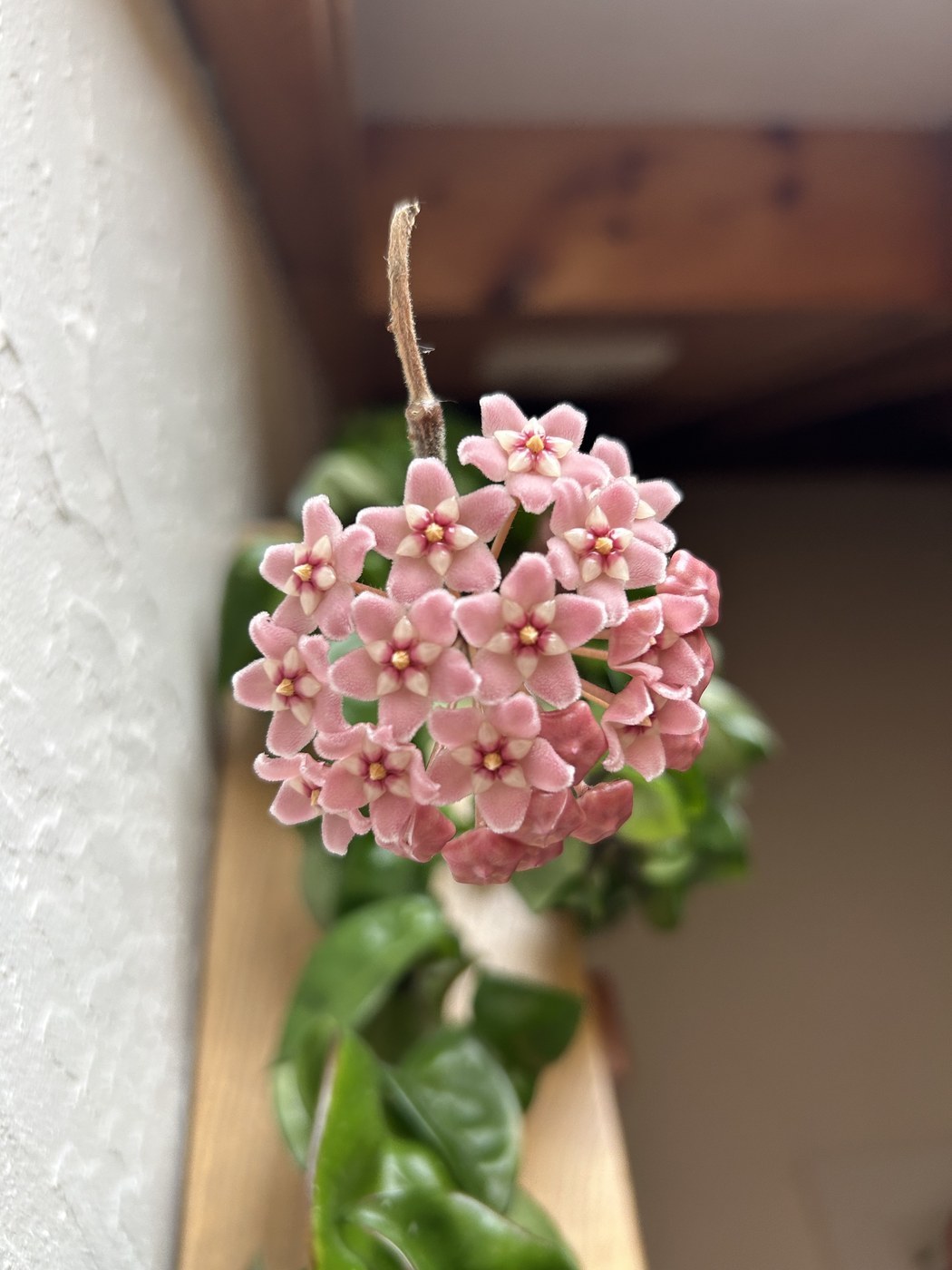
The Hoya Rope Plant is a slow, sculptural cultivar of the wax plant prized for its tightly curled, twisted leaves that cascade down like braided rope. It is an easygoing epiphytic vine that rewards patience with waxy star-shaped flower clusters once established.
Light
Give the Rope Plant bright, indirect light for the best growth and flowering. An east-facing window, or a spot a few feet back from a south or west window, is ideal. It tolerates lower light but grows painfully slowly and rarely blooms there. Protect the thick leaves from harsh midday sun through unshaded glass, which can scorch them. A little gentle morning sun or a couple of hours of filtered afternoon light encourages the reddish leaf blush and eventual flowering.
Water
Water when the soil is mostly dry, then water thoroughly until it runs from the drainage holes and empty the saucer. The succulent, water-storing leaves let this Hoya coast between waterings, so err on the dry side rather than keeping it constantly moist. In the warm growing months this may mean roughly weekly; in winter, stretch intervals considerably. Slightly wrinkled leaves signal thirst; soft, translucent, or yellowing leaves usually mean overwatering.
Soil & Potting
Use a loose, fast-draining mix that mimics an epiphyte's airy root zone. A blend of regular potting mix with orchid bark, perlite, and a little coco coir or peat works well. The chunky texture keeps roots oxygenated and prevents the sogginess Hoyas resent. Always plant in a container with drainage holes; the plant flowers best when slightly pot-bound, so resist the urge to over-pot.
Humidity & Temperature
Average household humidity suits it, though it appreciates a moderately humid spot of 50 to 60 percent, which keeps the curled leaves plump. Warm, stable temperatures between 60 and 80 degrees Fahrenheit are ideal. Keep it away from cold drafts, heating vents, and windows that dip below 50 degrees Fahrenheit in winter. Consistency matters more than high humidity for this forgiving plant.
Feeding
Feed lightly during spring and summer with a balanced, diluted liquid fertilizer about once a month. When you want to encourage blooms, a formula slightly higher in phosphorus can help. Stop feeding in fall and winter while growth slows. This is a slow grower, so avoid heavy feeding, which can cause salt buildup and leaf-tip damage.
Propagation
Propagate from stem cuttings with one or two nodes and at least a leaf or two. Let the cut end callus for a few hours, then root in water, sphagnum moss, or a light propagation mix; keep it warm and humid. Roots typically appear in several weeks. Because the Rope Plant is a naturally slow grower, propagation demands patience but is very reliable.
Repotting / Pruning
Repot only every two to three years, or when roots crowd the pot, moving up just one size. Spring is the best time. Minimal pruning is needed; trim only to shape or remove damaged growth. Never cut off the leafless flowering spurs, called peduncles, because the plant reblooms from the same spurs year after year.
Common Problems & Pests
Mealybugs are the most common pest, hiding in the tight leaf curls; spot-treat with a swab dipped in diluted alcohol or an insecticidal soap. Watch also for scale and aphids near flower buds. Yellowing, mushy leaves point to overwatering or poor drainage, while shriveled leaves and dropping buds indicate under-watering or dry, fluctuating conditions. Sooty mold can follow the sticky nectar the flowers exude, so wipe leaves as needed.
Seasonal Care Tips
Growth and flowering peak in the warm months, so concentrate watering and feeding then. In fall and winter, reduce water and pause fertilizer while the plant rests; a slightly cooler, drier winter rest can actually encourage the next flush of blooms. Keep it out of cold drafts through winter, and resume regular care as light lengthens in spring.
Frequently asked questions
Why won't my Hoya Rope Plant flower?
Blooming usually requires bright indirect light, a slightly pot-bound root system, and maturity. Give it a brighter spot, avoid over-potting, and never cut off the old flower spurs, since new blooms form on them repeatedly.
How often should I water a Rope Hoya?
Wait until the soil is mostly dry, then water thoroughly. This is often about weekly in summer and much less in winter. The succulent leaves store water, so under-watering is far safer than keeping it soggy.
Why are the leaves shriveling?
Slightly wrinkled, thin leaves typically mean the plant is thirsty or the mix has dried out too long. Water thoroughly and the leaves should plump back up. Persistent shriveling can also point to root damage from earlier overwatering.
Does the Rope Plant grow slowly?
Yes, it is naturally a very slow grower, especially in lower light. Bright indirect light, warmth, and light feeding in the growing season speed things up, but patience is part of growing this Hoya.