
Hyacinth Identification Guide
Identify hyacinth by its dense, cylindrical spike of star-shaped, waxy, strongly fragrant flowers rising above strap-shaped leaves from a fat bulb.
Read the full Hyacinth encyclopedia entry →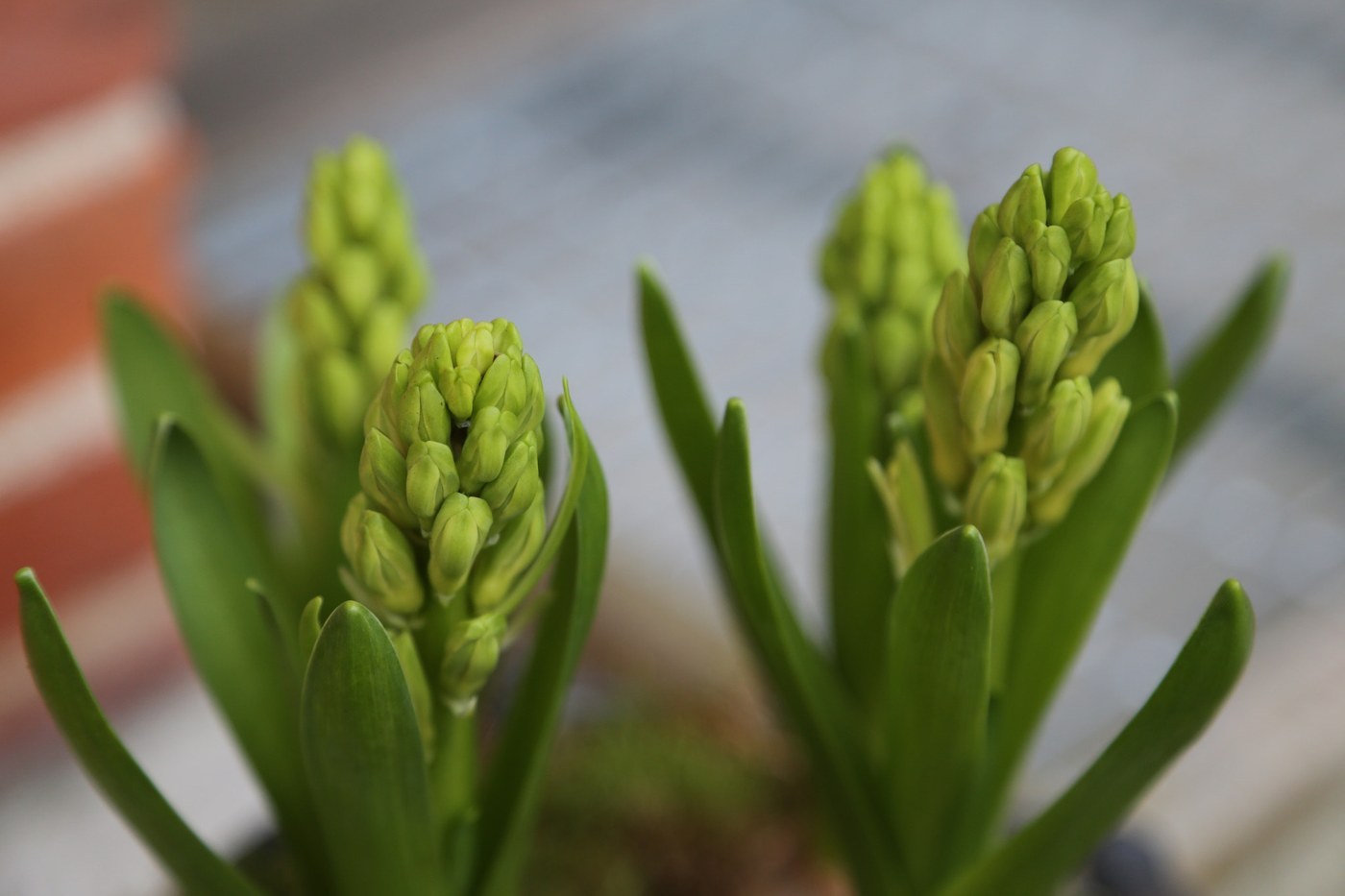
Key Identifying Features
Hyacinth (Hyacinthus orientalis) is a spring-flowering bulb in the asparagus family (Asparagaceae). It is recognized by a single dense, cylindrical column of waxy, star-shaped flowers packed tightly around an upright stem, with an exceptionally strong, sweet perfume, rising from a tuft of thick, glossy, strap-shaped leaves.
- A solid, plump spike crowded with many flowers
- Star-shaped flowers with six recurved (rolled-back) tepal lobes
- Powerful, heady fragrance
- Fleshy, channeled, strap-like leaves from a large bulb
Leaves & Stems
Leaves are few (typically 4-6), thick, glossy, and strap-shaped with a channeled or folded form, emerging in a basal clump directly from the large, tunic-covered bulb. They are bright to deep green and somewhat upright. The flowering stem is stout, fleshy, and unbranched, often becoming top-heavy under the weight of the flower column.
Flowers & Fruit
The flower spike is the signature feature: a dense cylindrical or conical raceme of 20-40 or more flowers. Each flower is a small waxy bell that flares into six pointed lobes which curl backward, giving a starry look. Colors span blue, purple, violet, pink, rose, white, cream, yellow, apricot, and red. The fragrance is intense and sweet, often filling a room. Garden hyacinths usually have a single fat spike; over years bulbs may produce looser, multiple spikes. Fruit is a small three-chambered capsule, rarely seen in cultivation.
How to Tell It Apart from Look-Alikes
- Grape hyacinth (Muscari): much smaller, with tight clusters of tiny urn-shaped (constricted-mouth) flowers, not open star lobes.
- Hyacinth bean / water hyacinth: unrelated plants despite the name.
- Bluebell (Hyacinthoides): related but with nodding, more loosely arranged tubular bells on an arching stem.
- Spanish bluebell: looser spike of bell flowers, less dense and less strongly scented.
The combination of a single dense cylindrical spike of starry waxy flowers with a powerful sweet scent over thick strap leaves confirms a true hyacinth.
Where You'll Find It
Native to the eastern Mediterranean and Middle East, garden hyacinth is grown worldwide as a spring bulb in borders, containers, and forced indoor pots. It blooms in early to mid-spring from autumn-planted bulbs in full sun to light shade and is a classic for forcing in glasses and bowls for winter bloom indoors.
Quick ID Checklist
- Single dense, cylindrical spike packed with flowers
- Star-shaped flowers with six backward-curling lobes
- Very strong, sweet fragrance
- Thick, glossy, strap-shaped basal leaves
- Grows from a large bulb; many bright colors
Frequently asked questions
How do I tell a hyacinth from a grape hyacinth?
A true hyacinth has a large dense spike of open, star-shaped flowers and a strong scent, while grape hyacinth (Muscari) is much smaller with tight clusters of tiny urn-shaped flowers pinched at the mouth.
Why is my hyacinth flower spike flopping over?
The dense column of flowers makes the spike top-heavy, especially in rich soil or when forced indoors; staking or planting in a sheltered spot helps keep it upright.
Why do older hyacinths produce smaller, looser flower spikes?
Garden hyacinths gradually revert from the tightly packed nursery-forced spike to looser, more natural multiple spikes over several years as the bulb ages.