
How to Care for Illawarra Flame Tree
Growing guide for Brachychiton acerifolius: a spectacular Australian tree that erupts in bell-shaped scarlet blooms on bare branches.
Read the full Illawarra Flame Tree encyclopedia entry →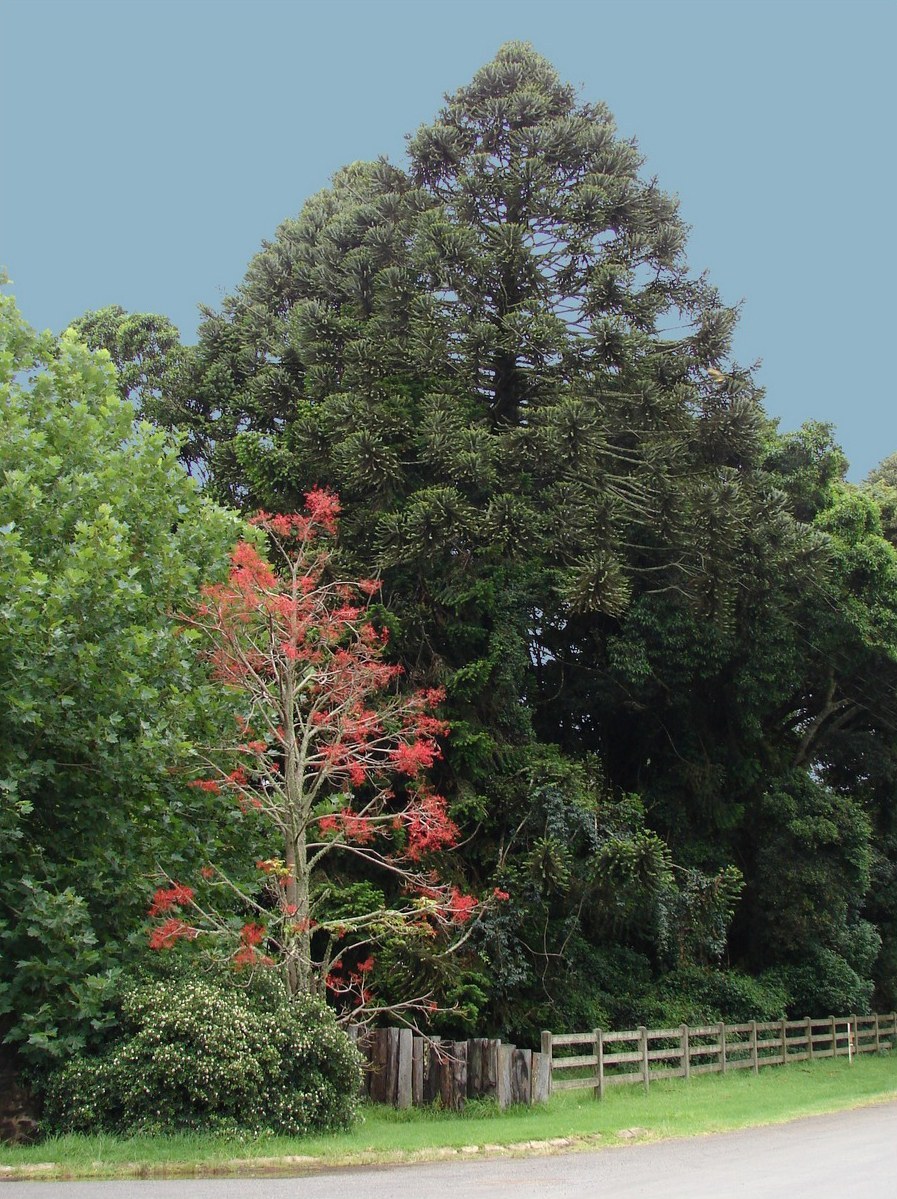
The Illawarra Flame Tree (Brachychiton acerifolius) is a stunning deciduous Australian tree famous for the sheets of bell-shaped scarlet flowers that smother its bare branches in early summer, often after the glossy, maple-like leaves have dropped. It is a bold specimen tree for warm, frost-free gardens and, once established, an easy and drought-tolerant grower.
Light
Plant in full sun. Abundant direct light is essential for the tree to develop a strong canopy and, most importantly, to trigger its dramatic flowering. In shade it grows leggy and flowers poorly or not at all. Choose an open, sunny position with room for its eventual size.
Water
Water moderately. Young trees need regular deep watering through their first few seasons to establish a robust root system. Once mature, the Flame Tree is notably drought-tolerant and copes with dry spells. Its tendency to drop leaves and flower more heavily is often linked to a dry period, so avoid constant irrigation of established specimens.
Soil & Potting
It grows in a wide range of soils but prefers a deep, fertile, well-drained loam. Good drainage matters most; it dislikes waterlogged ground. It tolerates sandy and clay soils provided they do not stay wet. A slightly acidic to neutral pH suits it well. Give it deep soil to accommodate its stout trunk and root system.
Humidity & Temperature
This is a warm-climate, frost-sensitive tree suited to subtropical and warm-temperate zones (roughly USDA zones 9-11). Young trees are especially tender to frost and need protection or a sheltered spot; mature trees tolerate light frost better. It handles both humid coastal and drier inland conditions once established, and appreciates warm summers to flower well.
Feeding
Feed young trees in spring with a balanced slow-release fertilizer to build strong growth. Established trees need little supplemental feeding in reasonable soil. Avoid excessive nitrogen, which encourages leafy growth at the expense of the flamboyant flowering display. A spring topdressing of compost supports steady, healthy growth.
Propagation
Propagation is usually from seed, which germinates readily after soaking; wear gloves when handling the seed pods, as they are lined with irritating fine hairs. Seed-grown trees may take 5-8 years or more to flower. Named forms and faster flowering are achieved by grafting. Cuttings are difficult and rarely used.
Repotting / Pruning
The Flame Tree needs little pruning; simply remove dead, damaged, or crossing branches in late winter to maintain a good structure. It naturally forms a shapely pyramidal to rounded canopy. Young container-grown trees can be repotted into progressively larger deep pots before planting out, but the species ultimately wants to be a landscape tree with room to grow.
Common Problems & Pests
Generally robust and low-maintenance. The most common complaint is shy or erratic flowering, which is normal for young trees and improves with age, full sun, and a natural dry-then-wet cycle. Leaf drop before flowering is natural and not a problem. Watch for scale, mealybugs, and occasional borers on stressed trees; keep trees vigorous and treat infestations with horticultural oil.
Seasonal Care Tips
- Spring: Feed young trees; plant new specimens after frost danger passes; water in dry weather.
- Summer: Enjoy the peak scarlet flowering display; established trees need little water.
- Autumn: Ease off watering and feeding as growth slows; collect seed pods if propagating (with gloves).
- Winter: Protect young trees from frost; do any structural pruning while the canopy is bare.
Frequently asked questions
Why won't my Illawarra Flame Tree flower?
Young trees simply need time and can take 5-8 years or more from seed to bloom. Ensure full sun, avoid heavy nitrogen feeding, and note that a natural dry period often triggers the spectacular flowering, which becomes more reliable as the tree matures.
Is the Flame Tree fast-growing?
It grows at a moderate pace, faster with warmth, sun, and regular water when young. Provide deep, well-drained soil and consistent early watering to establish it quickly, then it becomes drought-tolerant.
Can I grow an Illawarra Flame Tree in a cold climate?
Not outdoors long-term. It is frost-sensitive and suited to subtropical and warm-temperate zones. In cooler areas it can be grown in a large container and protected from frost, though flowering is less reliable.
Why does my Flame Tree drop all its leaves?
This is completely natural. The tree is deciduous and often sheds its foliage right before flowering, so the scarlet blooms appear on bare branches. Leaf drop tied to a dry spell is part of its normal flowering cycle.