
Illawarra Flame Tree Identification Guide
Identify the Illawarra flame tree (Brachychiton acerifolius) by its blazing red bell flowers on bare branches, maple-shaped glossy leaves, and boat-shaped seed pods.
Read the full Illawarra Flame Tree encyclopedia entry →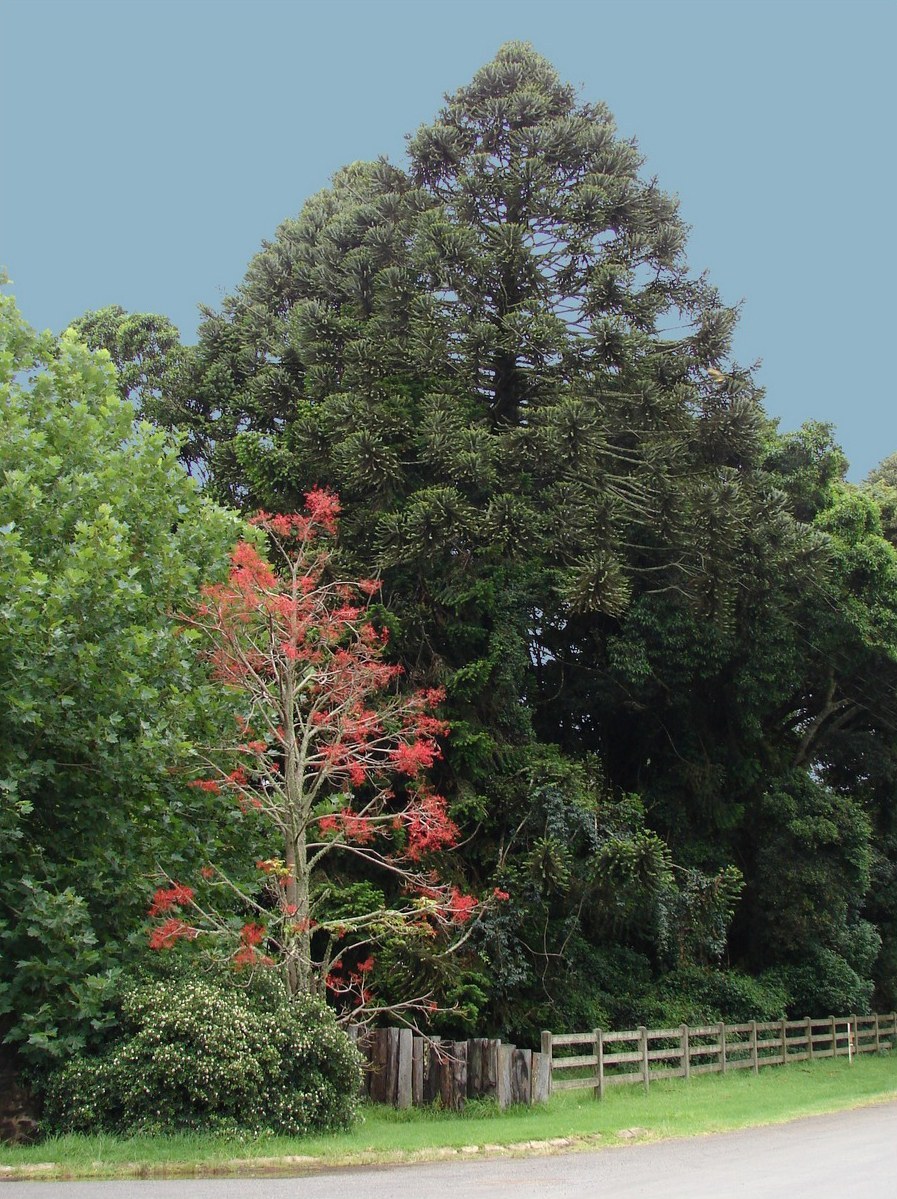
Key Identifying Features
The Illawarra flame tree (Brachychiton acerifolius) is one of Australia's most spectacular flowering trees, instantly recognized when it drops its leaves and covers the bare branches in masses of bright scarlet, bell-shaped flowers in early summer. (It is the same species marketed as the flame bottle tree.)
- Blazing scarlet-red bell flowers on leafless branches
- Glossy green, maple-like lobed leaves when in foliage
- Boat-shaped, leathery brown seed pods with irritant hairs
- Tall pyramidal tree with smooth green-gray bark
Leaves & Stems
Leaves are alternate, simple, and glossy dark green, but strongly variable in shape - the species name acerifolius means "maple-leaved." Vigorous shoots bear deeply 3-7 lobed maple-like leaves up to 10 in across, while older or flowering branches may have entire, lance-shaped leaves. Bark is smooth and greenish-gray on young trees, and the trunk may thicken at the base with age, reflecting its bottle-tree kinship. Stems exude sticky sap when cut.
Flowers & Fruit
In late spring and summer the tree produces dense panicles of waxy, scarlet bell-shaped flowers about 0.75 in across. The color comes from the bell-shaped calyx (there are no true petals), and the display can be so dense that the whole crown appears to be on fire. Flowering is erratic - heavy some years, partial in others, often on the leafless portions. Fruit is a dark brown, woody, boat-shaped follicle 3-4 in long containing yellow seeds embedded in fine irritating bristles.
How to Tell It Apart from Look-Alikes
- Firewheel tree (Stenocarpus sinuatus): red flowers too, but arranged in a flat radiating wheel, with different leaves and woody canoe pods.
- Royal poinciana (Delonix regia): large petalled red flowers and ferny bipinnate leaves, not bell flowers and maple leaves.
- Queensland bottle tree (B. rupestris): swollen bottle trunk, cream flowers, narrow leaves.
- Coral tree (Erythrina): pea-shaped red flowers, trifoliate leaves, often thorny.
The scarlet bell flowers on bare branches + variable maple-shaped glossy leaves + boat-shaped follicles confirm the Illawarra flame tree.
Where You'll Find It
Native to subtropical rainforest margins of eastern Australia (the Illawarra region of NSW and northward), it is widely planted as a street and feature tree in frost-free to light-frost climates worldwide (USDA zones 9b-11), including coastal Australia, California, and the Mediterranean.
Quick ID Checklist
- Bright scarlet bell flowers smothering bare branches in summer
- Glossy, variable maple-like lobed leaves
- Boat-shaped brown woody pods with irritating bristles
- Smooth green-gray bark; trunk thickening with age
- Erratic, year-to-year flowering
- Tall pyramidal crown, subtropical climate
Frequently asked questions
Is the Illawarra flame tree the same as the flame bottle tree?
Yes. Both names refer to Brachychiton acerifolius. 'Illawarra' is the New South Wales region where it is iconic, and it is a member of the bottle tree (Brachychiton) genus.
What gives the flowers their red color if there are no petals?
The showy red comes from the bell-shaped calyx of each flower, not from petals. Massed together on leafless branches, these calyces create the famous flaming display.
Why doesn't my tree flame every year?
Flowering in this species is notably erratic, varying with climate, age, and stress. Trees often bloom spectacularly only in certain years or on certain branches, typically where leaves have dropped.
Are the leaves always maple-shaped?
No. The leaves are variable. Young, vigorous growth has deeply lobed maple-like leaves, while older and flowering branches may carry simple, unlobed lance-shaped leaves on the same tree.