
Jack-in-the-Pulpit Identification Guide
Recognize Jack-in-the-Pulpit (Arisaema triphyllum) by its hooded green-and-purple striped spathe enclosing an upright spadix. This guide covers leaves, berries, and identification.
Read the full Jack-in-the-Pulpit encyclopedia entry →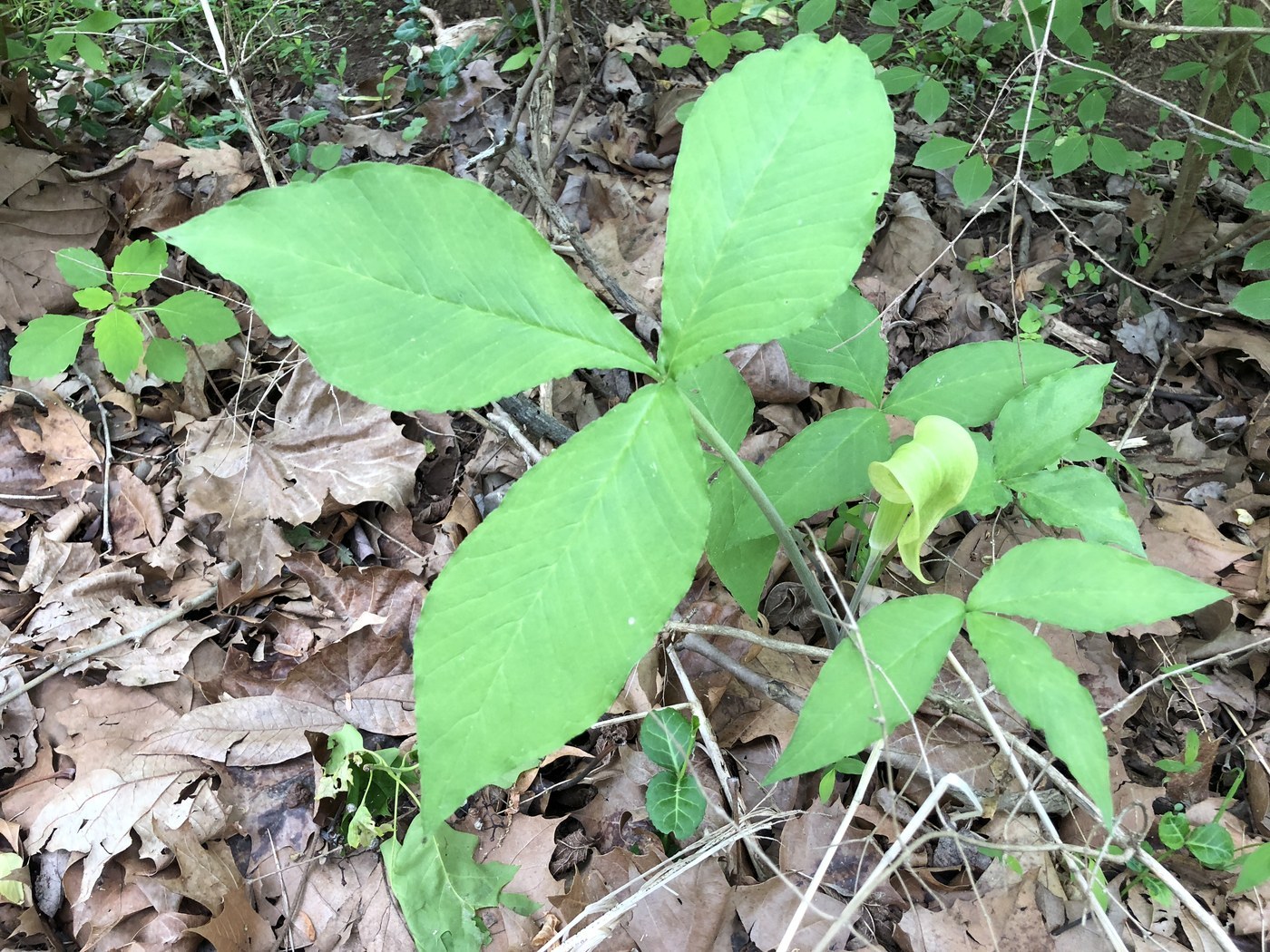
Key Identifying Features
Jack-in-the-Pulpit (Arisaema triphyllum) is an unmistakable woodland plant named for its unusual flower structure: an upright spadix ("Jack") sheltered inside a hooded, striped spathe ("the pulpit"). Plants stand 1 to 2 feet (30 to 60 cm) tall and bloom in spring, rising from an underground corm.
- A hooded spathe that arches over an upright fingerlike spadix
- Spathe is green, often striped with purple or maroon-brown
- One or two compound leaves, each with three leaflets
- Bright red berry cluster in late summer
Leaves & Stems
Each plant has one or two long-stalked leaves, each divided into three broad, oval leaflets (hence triphyllum). The leaves often rise above the flower and can be quite large. The "stem" is actually a leaf stalk and flower stalk emerging from a buried corm. Foliage is smooth and matte green.
Flowers & Fruit
The true flowers are tiny and crowded at the base of the spadix, hidden inside the tube of the spathe. The spathe forms a vertical cylinder with an overhanging hood and is striped green and purple-brown. Plants can be male or female and may even change sex year to year depending on size. Blooming is in April to June. By late summer the female plants produce a tight cluster of shiny green berries that ripen bright red.
How to Tell It Apart from Look-Alikes
- Trillium: also has leaves in threes but a flat three-petaled flower, not a hooded spathe.
- Green dragon (Arisaema dracontium): a relative with many leaflets and a long, narrow protruding spadix.
- Skunk cabbage: has a similar spathe-and-spadix structure but a mottled, ground-hugging hood and a foul smell.
The hooded pulpit enclosing an upright Jack, plus three-part leaves, makes this plant easy to confirm.
Where You'll Find It
Jack-in-the-Pulpit grows in moist, rich, shaded deciduous woodlands, swamp edges, and bottomlands across eastern and central North America. It likes damp, humus-rich soil.
Quick ID Checklist
- Hooded spathe (pulpit) over an upright spadix (Jack)
- Spathe green with purple-brown stripes
- One or two leaves, each with three leaflets
- Bright red berry cluster in late summer
- Rises from a buried corm
- Moist, shaded woodland
Frequently asked questions
What is the Jack and the pulpit in the name?
The pulpit is the hooded, tube-like spathe, and Jack is the upright finger-like spadix standing inside it. The structure resembles an old-fashioned covered preacher's pulpit, which inspired the name.
Why are the berries bright red?
Female plants produce a tight cluster of berries that ripen from green to glossy red in late summer, attracting birds that disperse the seeds. The red berry cluster is a strong late-season identification clue.
Can the plant really change sex?
Yes. Jack-in-the-Pulpit can shift between male and female from year to year depending on its size and stored energy. Larger, well-nourished plants tend to be female and produce berries.
How tall does Jack-in-the-Pulpit grow?
Plants typically stand 1 to 2 feet (30 to 60 cm) tall, with one or two three-leaflet leaves often rising above the hooded flower structure.