
Jalapeno Identification Guide
How to identify the jalapeno pepper plant (Capsicum annuum) by its glossy leaves, small white flowers, and stout shiny green pods.
Read the full Jalapeno encyclopedia entry →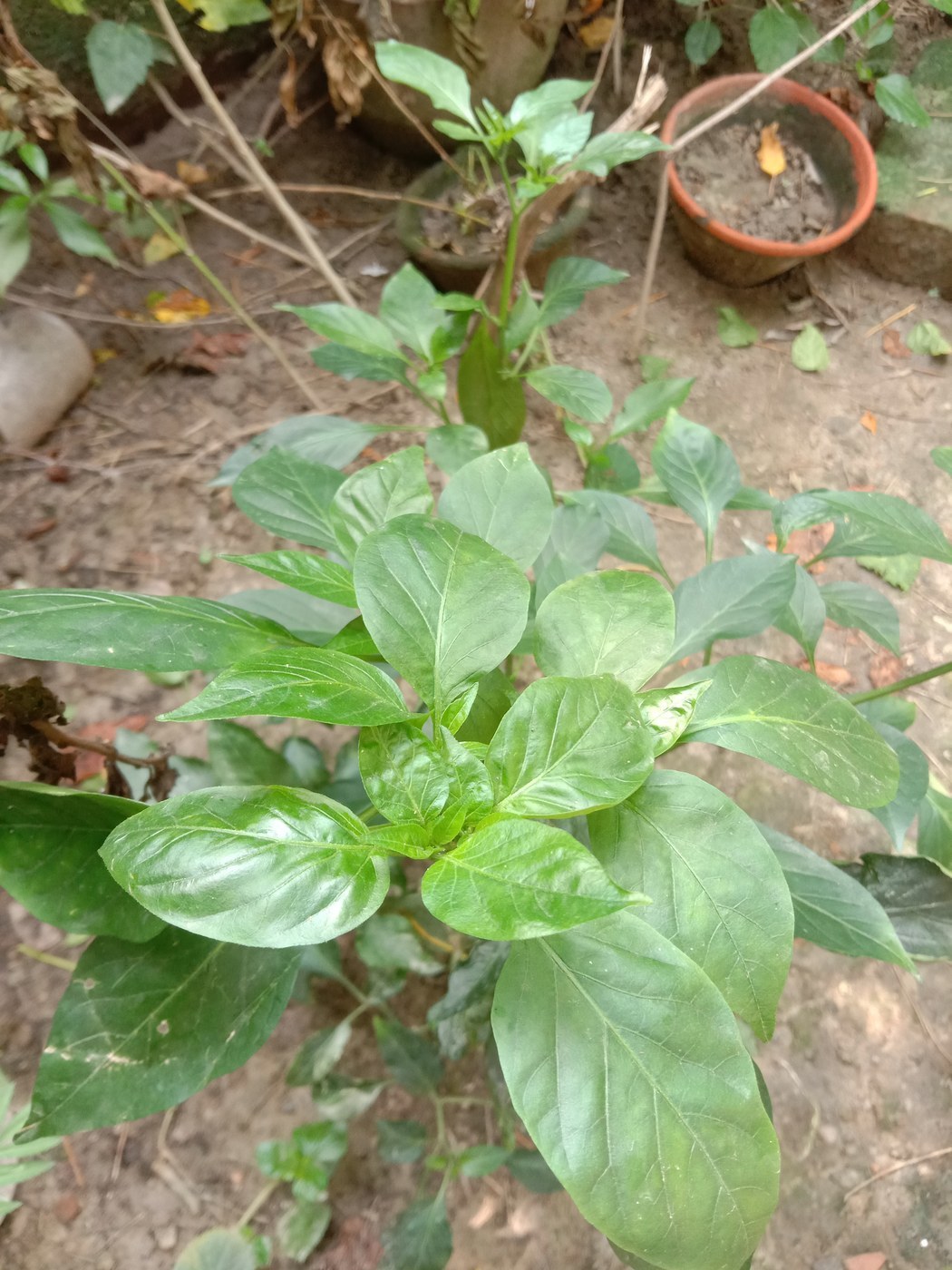
Key Identifying Features
The jalapeno is a cultivar of Capsicum annuum, the same species as bell and cayenne peppers. Identify it by the compact bushy plant, smooth glossy leaves, small downward-facing white star flowers, and the characteristic stout, blunt-tipped, shiny green pods held upright-to-pendant on the plant.
- Bushy, branching plant 2-3 ft tall with a woody base
- Smooth, glossy, pointed oval leaves (no fuzz)
- Small white (occasionally purple-tinged) flowers, nodding
- Thick-walled, blunt, 2-3.5 in green pods ripening to red
Leaves & Stems
Leaves are ovate to lance-shaped, 1-4 in long, smooth, glossy dark green, with a pointed tip, smooth margins, and a tapering base on a slender stalk. Unlike eggplant or tomato, jalapeno foliage is hairless and not strongly scented. Stems are slender, green, becoming slightly woody and ridged near the base, branching repeatedly to form a rounded bush. New growth is bright green.
Flowers & Fruit
Flowers appear singly (or a few) at the leaf/branch junctions, nodding downward, about 1/2 in across, with five to six white petals forming a flat star and a small cluster of bluish-to-yellow anthers in the center. The fruit is a firm, glossy pod that hangs or points from the joints: typically 2-3.5 in long, blunt-tipped, and cylindrical-conical with thick crisp walls. Mature jalapenos often show fine pale corky lines or netting ("corking") on the skin, a normal trait prized in some markets. Pods start dark green and ripen through to red if left on the plant.
How to Tell It Apart from Look-Alikes
- Other Capsicum annuum peppers: plant and flowers are nearly identical; identify jalapeno by its stout, blunt, thick-walled medium-green pod with possible corking. Serranos are slimmer and smaller; cayennes are long, thin, and wrinkled; bell peppers are large and blocky.
- Tomato/eggplant seedlings: related nightshades, but those have hairy or fuzzy leaves; jalapeno leaves are glossy and smooth.
- Ornamental peppers: also C. annuum, but usually have upward-pointing, more colorful little fruits and a more compact habit.
Where You'll Find It
Grown as a warm-season annual in vegetable gardens, raised beds, and containers in full sun. It is frost-tender and thrives in heat, so it appears in summer plots and greenhouses worldwide, with major cultivation in Mexico and the southern United States.
Quick ID Checklist
- Bushy plant 2-3 ft, smooth glossy hairless leaves
- Small nodding white star flowers at the joints
- Stout, blunt, thick-walled green pods, 2-3.5 in
- Possible pale corking lines on mature pods
- Pods ripen green to red; warm-season garden setting
Frequently asked questions
How do I distinguish a jalapeno plant from other chili plants?
The plant and white flowers are nearly identical across Capsicum annuum chilies, so identify by the pod: jalapenos are stout, blunt-tipped, thick-walled, and medium green, often showing fine corky lines. Serranos are thinner and cayennes are long and wrinkled.
What are the pale lines or cracks on my jalapenos?
That is called corking, a natural netting of fine tan lines on the skin of mature jalapenos. It is normal and often considered a sign of full, flavorful maturity, not damage or disease.
Do jalapenos turn red?
Yes. Jalapenos are usually picked green, but if left on the plant they ripen fully to bright red and become sweeter and slightly hotter.
Are jalapeno flowers white or purple?
Most jalapeno flowers are white with a flat, star-shaped face and a small central cluster of anthers. Some plants show a faint purple tinge, especially under cool or bright conditions.