
Japanese Aucuba Identification Guide
Identify Japanese aucuba by its large glossy gold-speckled leaves, coarse-toothed margins, and shade-loving evergreen shrub habit with red berries.
Read the full Japanese Aucuba encyclopedia entry →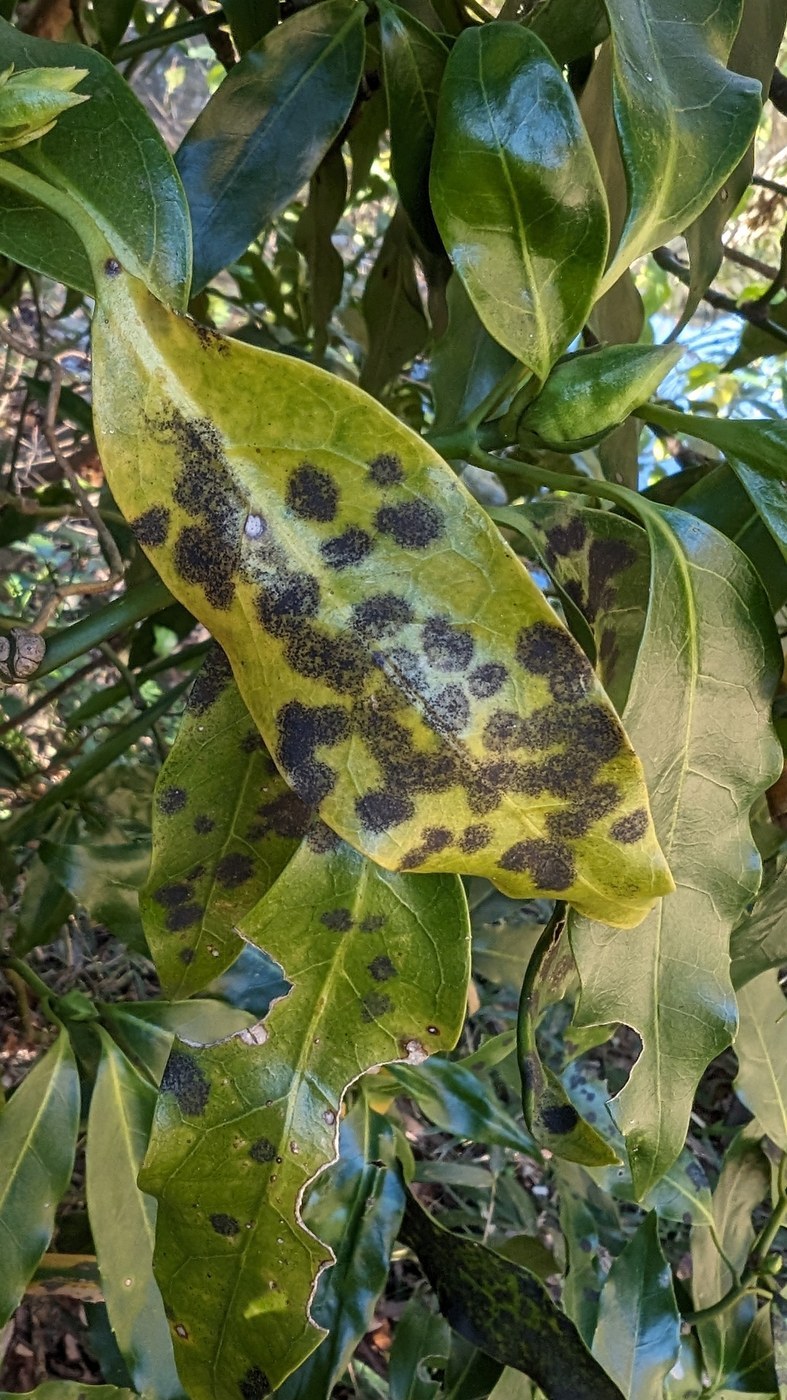
Key Identifying Features
Japanese aucuba (Aucuba japonica), often called gold dust plant or spotted laurel, is a shade-loving evergreen shrub famous for its large, glossy leaves splashed and speckled with bright yellow-gold. That bold gold-dusting on dark green is the most recognizable trait, though plain-green forms also exist.
- Rounded, upright evergreen shrub, 3–10 ft
- Large (3–8 in), glossy, leathery leaves
- Many cultivars heavily speckled or blotched yellow-gold
- Bright red berries on female plants in winter
Leaves & Stems
Leaves are opposite, simple, large, glossy, leathery, and elliptical, with coarse, widely spaced teeth mainly toward the upper half of the leaf margin. The signature is the yellow gold-dust speckling in variegated cultivars ('Variegata', 'Crotonifolia'), though some forms are solid green. Stems are green, smooth, and somewhat fleshy/succulent, staying green even on older wood — an unusual and helpful cue. The plant has a coarse, bold-leaved texture overall.
Flowers & Fruit
Aucuba is dioecious (separate male and female plants). Flowers are small, dull purple-maroon, 4-petaled, in loose clusters in spring — modest and easily overlooked. Female plants bear showy, glossy red, egg-shaped berries (about ½ in) that persist through winter, but only if a male plant is nearby for pollination. The bright red berries against gold-flecked foliage are a strong winter ID clue.
How to Tell It Apart from Look-Alikes
- Cherry laurel: glossy leaves but smaller teeth, no gold speckling, and white flower spikes with black fruit.
- Croton (Codiaeum): tropical houseplant with similar colorful leaves, but tender and with milky sap and very different leaf shapes; aucuba is a hardy outdoor shrub.
- Gold-variegated holly: spiny leaves vs. aucuba's coarse-toothed, soft-pointed leaves.
- Camellia: glossy toothed leaves but finer teeth, no gold speckle, and large showy flowers.
The large glossy gold-speckled coarsely toothed opposite leaves + green fleshy stems + red berries + deep-shade habit combination identifies Japanese aucuba.
Where You'll Find It
A premier plant for deep, dry shade — under trees, on north walls, and in woodland gardens where little else thrives. Native to Japan and East Asia, it's widely planted in temperate and mild gardens and tolerates pollution, making it a classic city and courtyard shrub. It prefers shade and moist but well-drained soil; full sun scorches the leaves.
Quick ID Checklist
- Bold evergreen shrub, 3–10 ft, in shade
- Large glossy leathery leaves, coarsely toothed near tip
- Often heavily speckled/blotched yellow-gold
- Green, smooth, fleshy stems
- Small dull maroon flowers; red berries on females
- Thrives in deep shade where few plants do
If you find a bold shade shrub with big glossy leaves that look dusted with gold paint and green fleshy stems, it's Japanese aucuba.
Frequently asked questions
Why do the leaves look speckled with gold?
Popular cultivars like 'Variegata' (gold dust plant) carry yellow-gold flecking and blotches caused by variegation in the leaf. It's a natural ornamental trait, not a disease, and is the plant's most recognizable feature; some forms are plain green instead.
Why doesn't my aucuba have berries?
Aucuba is dioecious, meaning plants are either male or female. Only female plants produce the red berries, and only when a male plant grows nearby to pollinate them. A lone female or a male plant will never fruit.
Can Japanese aucuba grow in deep shade?
Yes — it's one of the best shrubs for deep, dry shade and pollution-prone city spots, thriving under trees and on north-facing walls where many plants fail. In contrast, full sun tends to scorch and bleach its leaves.
How do I tell aucuba from croton?
They have similar colorful foliage, but croton is a tender tropical houseplant with milky sap and varied leaf shapes, while aucuba is a hardy outdoor evergreen shrub with large coarse-toothed leaves and green fleshy stems. Aucuba also survives cold winters that would kill a croton.