
Japanese Larch Identification Guide
How to identify Japanese larch (Larix kaempferi) by its deciduous needle tufts, reddish twigs, and rose-like cones with reflexed scales. Covers needles, cones, bark, and look-alikes.
Read the full Japanese Larch encyclopedia entry →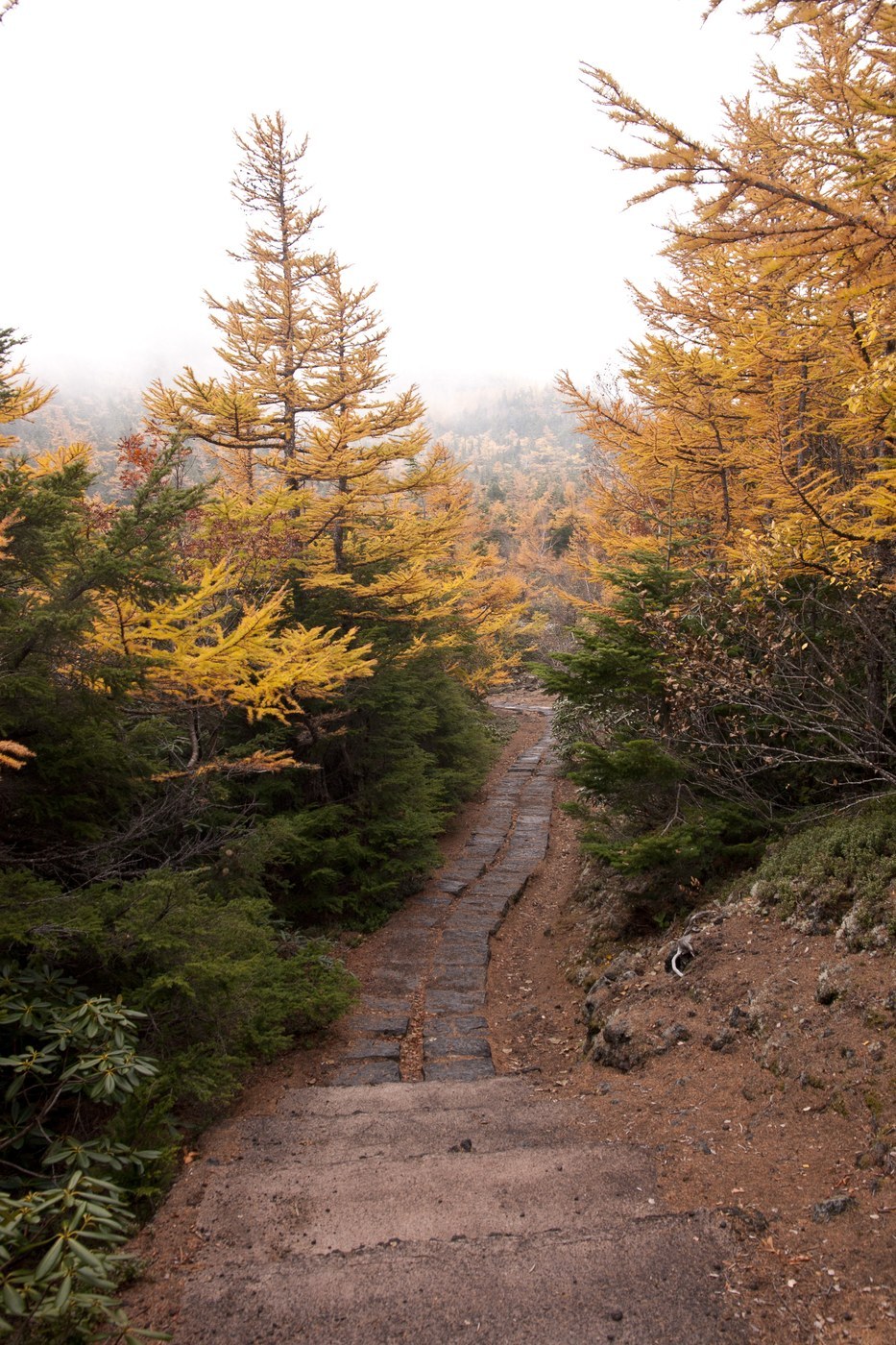
Key Identifying Features
Japanese larch (Larix kaempferi) is a deciduous conifer—unusual among needled trees—that turns golden and drops its needles in autumn. It is recognized by soft blue-green needles in dense tufts, reddish to orange-brown young twigs, and small rose-shaped cones with outward-curling scale tips.
- Deciduous: needles drop in winter, gold in autumn
- Needles in rosette tufts of 20–40 on short spurs
- Young shoots reddish-orange, often with a waxy bloom
- Small cones with scales reflexed (rolled back) like a rose
Leaves & Stems
Needles are soft, flat, 2–3.5 cm long, blue-green to grey-green, broader than European larch and with two greyish bands beneath. On older wood they grow in tight whorl-like tufts on woody short shoots (spurs); on vigorous new growth they are spaced singly and spirally. In autumn the whole tree turns buttery to orange-gold before the needles fall, leaving bare spur-studded twigs through winter—an easy way to confirm a larch. The young twigs are distinctly reddish-brown to orange, often glaucous, a key separator from European larch's yellowish twigs. Bark is scaly, grey-brown, peeling in flakes to reveal reddish patches.
Flowers & Fruit
Cones are small, ovoid, 2–3.5 cm long, ripening pale brown, and their scale tips curve markedly outward and downward (reflexed), giving a shaggy, opened-rose appearance—diagnostic versus European larch's straight-scaled cones. Cones persist on bare twigs over winter. Spring brings small reddish female 'larch roses' and yellow male cones among the emerging needle tufts.
How to Tell It Apart from Look-Alikes
- European larch (L. decidua): Yellow-brown (not reddish) twigs, greener narrower needles, and cone scales straight, not reflexed.
- Hybrid larch (L. × marschlinsii): Intermediate; slightly reflexed scales and orange-brown twigs.
- True firs/spruces/pines: Evergreen with single or paired/bundled needles; larch is the deciduous one with rosette tufts.
- Cedar (Cedrus): Also tufted but evergreen; larch drops its needles.
Where You'll Find It
Native to the mountains of central Japan (Honshu), and very widely planted for forestry and as an ornamental across Europe and North America because of fast growth and hardiness. Look for it in plantations, parklands, and bonsai collections, often where a fast deciduous conifer was wanted.
Quick ID Checklist
- Deciduous conifer, golden in autumn, bare in winter
- Soft blue-green needles in tufts on short spurs
- Reddish-orange young twigs, often waxy-bloomed
- Small cones with reflexed, rose-like scale tips
- Scaly grey-brown bark with reddish patches
A deciduous conifer with blue-green needle tufts, orange-red twigs, and rose-like reflexed cones is Japanese larch.
Frequently asked questions
Is Japanese larch really a conifer if it loses its needles?
Yes. Larches are among the few deciduous conifers; they bear cones and needles but shed the needles each autumn after turning gold, then leaf out again in spring.
How do I tell Japanese larch from European larch?
Japanese larch has reddish-orange (often waxy) young twigs, broader blue-green needles, and cones whose scale tips curl outward like an open rose, whereas European larch has yellowish twigs and straight cone scales.
Why are the cones shaped like little roses?
The cone scales reflex (roll backward and outward) as they mature, giving the small cones a shaggy, opened-rose look that is one of the most reliable identification features.
Where is Japanese larch native?
It is native to the mountains of central Honshu in Japan but is now widely planted for forestry and ornament across Europe and North America.