
Kangaroo Vine Identification Guide
Identify Kangaroo Vine (Cissus antarctica), an Australian climber, by its glossy toothed leaves and curling tendrils. Covers leaf shape, climbing habit, and look-alikes.
Read the full Kangaroo Vine encyclopedia entry →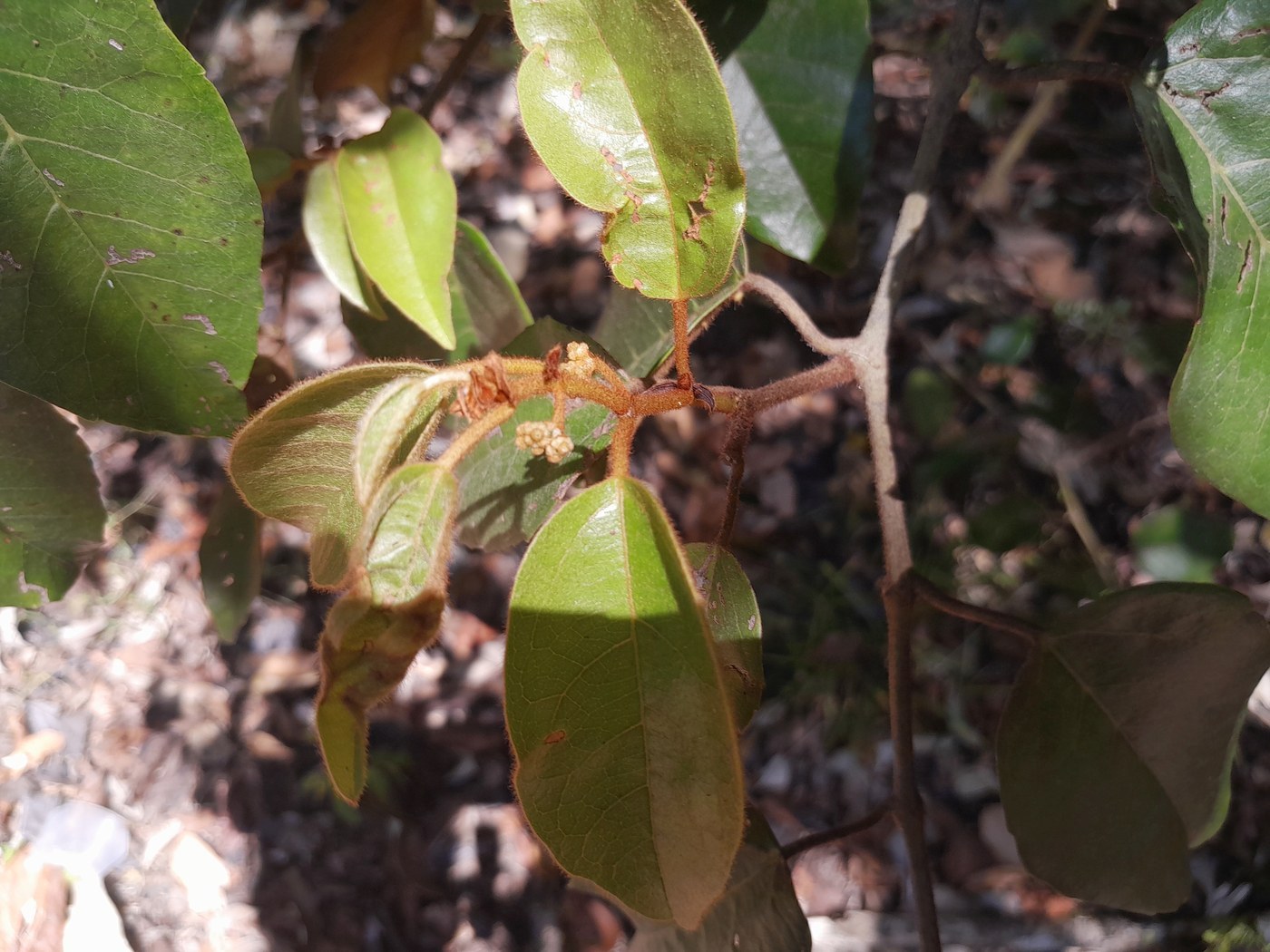
Key Identifying Features
Kangaroo Vine (Cissus antarctica) is an evergreen climber from eastern Australia in the grape family (Vitaceae). It's grown as an easy, shade-tolerant houseplant and outdoor screen in mild climates. Identify it by:
- Glossy, dark-green oval leaves with toothed (serrated) margins
- Curling tendrils opposite the leaves, used to climb
- A vigorous climbing or trailing habit on thin, wiry stems
- Reddish-brown fuzz on new growth and young stems
Leaves & Stems
Leaves are simple, oval to oblong (ovate), roughly 3-4 inches long, with a pointed tip, a rounded to slightly heart-shaped base, and clearly saw-toothed edges. The upper surface is glossy mid- to dark green with a slightly leathery feel and prominent sunken veins, while the underside is paler and the veins and young growth carry rusty-brown hairs. Leaves are borne alternately. The stems are slender, flexible, and produce forked or simple tendrils (modified shoots, a hallmark of the grape family) directly opposite many leaves these wrap around supports to climb. With nothing to climb, it trails gracefully.
Flowers & Fruit
Indoors it rarely flowers. Outdoors, mature vines bear small, inconspicuous greenish flowers in clusters, followed by small round black berries resembling tiny grapes (reflecting its Vitaceae kinship). These are not commonly seen and are not the primary ID feature the toothed glossy leaves and tendrils are.
How to Tell It Apart from Look-Alikes
- Grape ivy (Cissus rhombifolia / alata): a close relative, but its leaves are compound, divided into 3 diamond-shaped leaflets Kangaroo Vine has single, undivided oval leaves.
- English ivy (Hedera helix): lobed leaves and clinging aerial rootlets (no tendrils) Kangaroo Vine climbs by tendrils and has toothed, unlobed leaves.
- Pothos/philodendron: heart-shaped leaves, no tendrils, and aroid (not grape) family Kangaroo Vine's tendrils are decisive.
The single glossy toothed oval leaf + opposite tendrils + rusty new growth confirms Kangaroo Vine.
Where You'll Find It
Native to rainforests of eastern Australia, it is widely grown as a houseplant for its tolerance of low light, cool rooms, and some neglect, and outdoors as a fast cover for trellises and pergolas in frost-free to mild climates (about USDA zone 10+). Indoors it often trails from hanging baskets or climbs a moss pole.
Quick ID Checklist
- Glossy dark-green oval leaves with toothed margins
- Single (simple) leaves, not divided into leaflets
- Tendrils opposite the leaves for climbing
- Rusty-brown hairs on young stems and leaf undersides
- Climbing or trailing wiry stems
- Small black grape-like berries if fruiting (rare indoors)
Frequently asked questions
How is Kangaroo Vine different from grape ivy?
They are close cousins in the grape family. Grape ivy (Cissus rhombifolia) has compound leaves divided into three diamond-shaped leaflets, while Kangaroo Vine has single, undivided oval leaves with toothed edges.
How does Kangaroo Vine climb?
By tendrils thin, curling shoots that grow opposite the leaves and wrap around supports. This is a grape-family trait and distinguishes it from ivy, which climbs with clinging aerial rootlets.
Why does the new growth look reddish and fuzzy?
Young stems and leaf undersides are covered in fine rusty-brown hairs, a normal feature of Cissus antarctica that helps confirm the ID.
Is it related to grapes?
Yes. It belongs to Vitaceae, the grape family, and produces small black grape-like berries when it fruits, though it rarely flowers indoors.