
Kohlrabi Identification Guide
Recognize kohlrabi (Brassica oleracea Gongylodes Group) by its unmistakable swollen above-ground stem 'bulb' with leaf stalks radiating from it like a small alien sputnik.
Read the full Kohlrabi encyclopedia entry →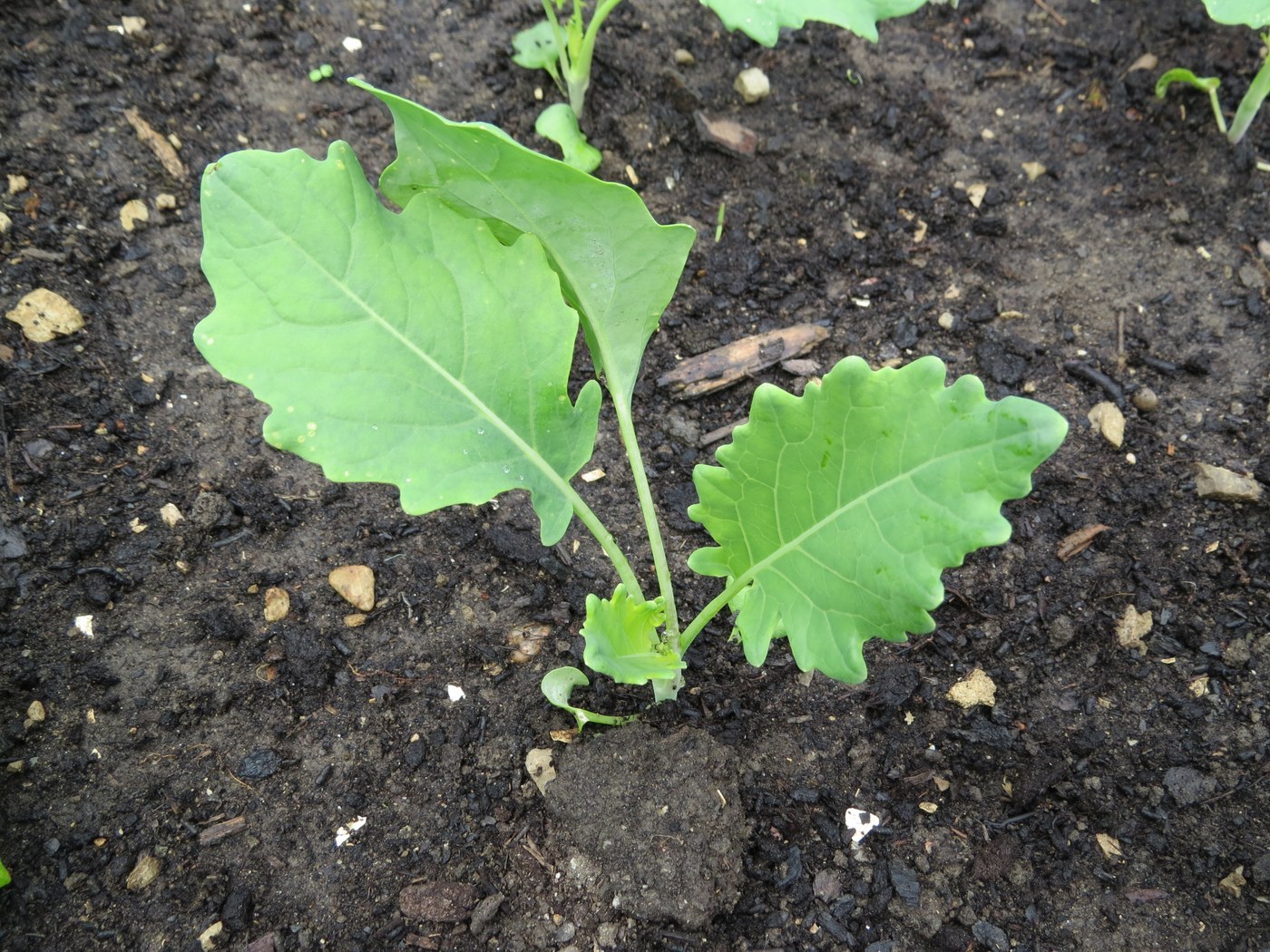
Key Identifying Features
Kohlrabi (Brassica oleracea, Gongylodes Group) is a cool-season biennial grown as an annual, instantly recognizable by its swollen, round stem that sits above the soil with leaf stalks emerging directly from its surface. This bulbous structure — pale green or vivid purple — looks like a turnip perched on the ground, giving rise to its 'sputnik' nickname. The rest of the plant shows classic cabbage-family traits: blue-green waxy leaves and, if left to flower, yellow four-petaled blooms.
Leaves & Stems
- The 'bulb' is a swollen stem (not a root), 5-12 cm across, sitting on top of the soil.
- Leaf stalks radiate outward and upward from all around the bulb, each scarred where older leaves dropped — this is the defining ID feature.
- Leaves are oval to oblong, blue-green, with a waxy bloom and slightly toothed or wavy margins, on long slender petioles.
- Skin of the bulb is smooth, pale green/white or deep purple; flesh inside is crisp and white.
Flowers & Fruit
- In its second year (or if it bolts), kohlrabi sends a tall branched flower stalk from the bulb.
- Flowers are pale yellow, four-petaled crosses, like other Brassica oleracea.
- Fruits are slender pods (siliques) with small round seeds.
- Most gardeners harvest before flowering, so the bulb is the usual identifier.
How to Tell It Apart from Look-Alikes
- Turnip (Brassica rapa): The turnip 'globe' is a swollen root that sits in the ground with leaves emerging from a crown at the top only — not a stem with leaves all around it.
- Rutabaga (swede): Also a root, with a leafy neck on top, growing partly underground.
- Cabbage/kohlrabi relatives: Cabbage forms a leafy head; broccoli and cauliflower form flower heads. Only kohlrabi has the round above-ground stem bulb studded with leaf stalks.
If the swollen part sits on top of the soil and has leaf stems sprouting from all over it, it is kohlrabi.
Where You'll Find It
Kohlrabi is a garden and market vegetable, grown in cool spring and autumn weather in temperate regions worldwide. It needs full sun and steady moisture; it does not occur as a wild plant. You'll see it in raised beds, allotments, and farm rows, often interplanted with other brassicas.
Quick ID Checklist
- Swollen round stem sitting above the soil (the 'bulb')
- Leaf stalks radiating directly from the bulb's surface
- Skin pale green/white or purple, crisp white flesh
- Blue-green, waxy, slightly toothed leaves on long petioles
- If flowering: pale yellow four-petaled blooms
- Grown in cool-season vegetable beds
Frequently asked questions
Is kohlrabi a root vegetable like a turnip?
No. The globe is a swollen stem that grows above the soil, with leaf stalks emerging from all around it. A turnip is a true root that sits in the ground with leaves only at its crown.
What is the single most reliable way to identify kohlrabi?
Look for the round bulb resting on top of the soil with leaf stems sprouting directly from its sides and top, like a small green or purple sputnik. No other common vegetable has this exact form.
Does the purple variety differ from the green one?
Only in skin color. Purple kohlrabi has deep purple skin but the same crisp white interior, blue-green leaves, and above-ground swollen-stem structure as green kohlrabi.
What flowers does kohlrabi produce?
If it bolts or grows into its second year, it sends up a tall stalk of pale yellow four-petaled flowers and slender seed pods, confirming its place in the cabbage family Brassicaceae.