
Lemon Cypress Identification Guide
Identify Lemon Cypress (Cupressus macrocarpa 'Goldcrest') by its bright chartreuse-yellow foliage and strong lemon scent when touched.
Read the full Lemon Cypress encyclopedia entry →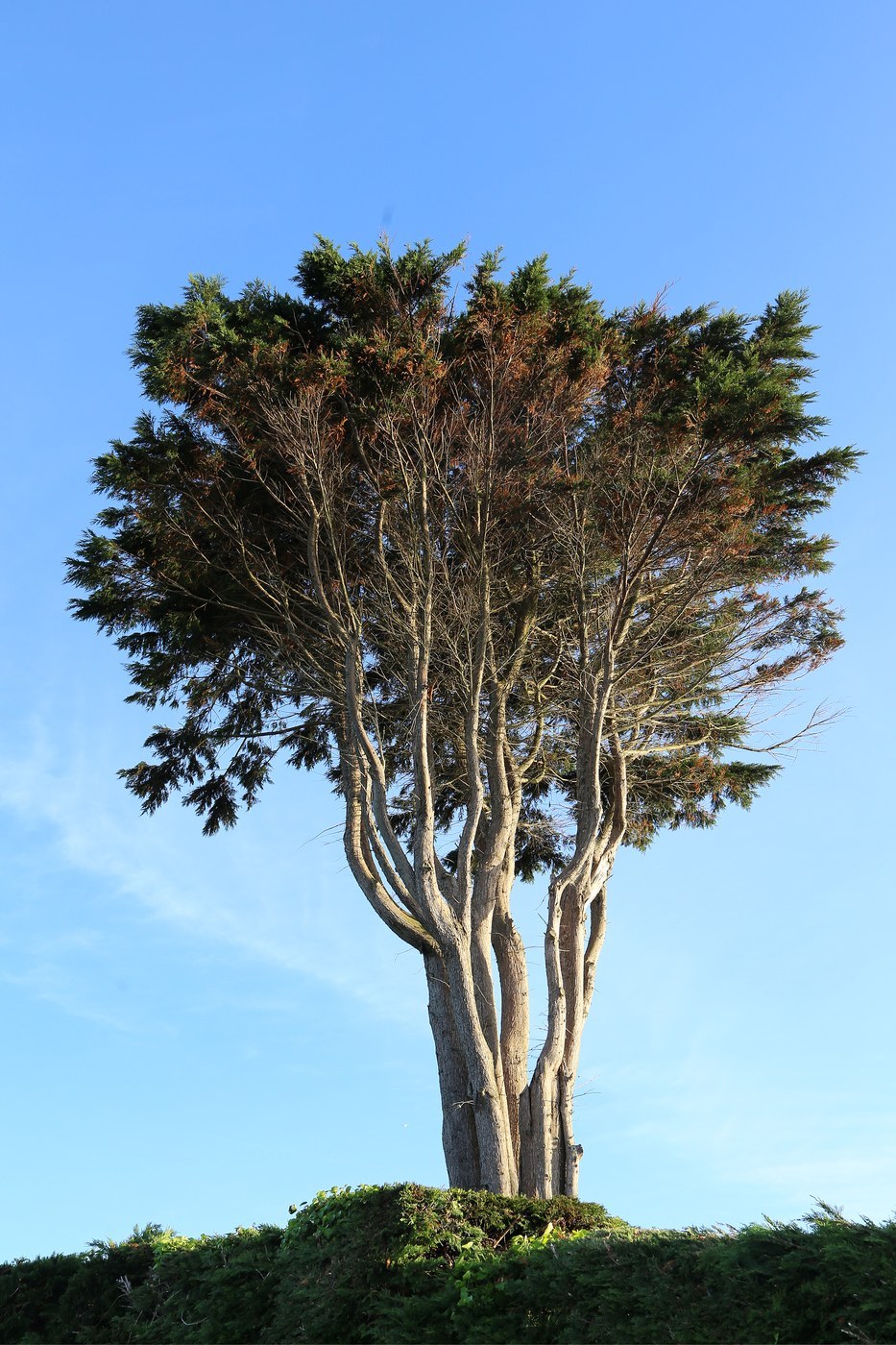
Key Identifying Features
Lemon Cypress is the popular golden cultivar 'Goldcrest' of Monterey Cypress (Cupressus macrocarpa), grown as a small ornamental and houseplant. It is unmistakable for two things: glowing chartreuse-yellow foliage and an intense, fresh lemon scent released the moment you brush or crush the leaves.
- Bright golden-green to yellow scale foliage
- Strong lemon/citrus fragrance when touched
- Narrow, columnar to conical, soft-textured crown
- Often sold as a small potted or patio plant, 1-3 ft, but can reach 6-10+ ft in ground
Leaves & Stems
Foliage consists of tiny scale-like leaves densely clothing soft, feathery branchlets. Unlike the gray-green wild Monterey Cypress, 'Goldcrest' is selected for its vivid yellow-green color, brightest in full sun and on new growth. The branchlets are slender and slightly soft to the touch, giving the plant a fluffy, fine texture. The defining test is scent: rub the foliage and you get a clear lemon aroma, distinguishing it from most other golden conifers.
Flowers & Fruit
As a cypress it reproduces by cones, though potted ornamentals rarely cone. When mature, it can produce the species' large, round, woody cones about 1-1.5 inches across ("macrocarpa" means large-fruited) with shield-shaped scales. Most indoor and small specimens stay vegetative and are valued purely for foliage.
How to Tell It Apart from Look-Alikes
- Golden Arborvitae (Thuja 'Golden'): flat ferny sprays and no lemon scent — Lemon Cypress branchlets are more rounded and citrus-scented.
- Golden Leyland Cypress 'Castlewellan Gold': similar golden color but milder scent and flatter sprays.
- Wild Monterey Cypress: green to gray-green foliage, not golden.
The combination of bright yellow soft foliage plus an unmistakable lemon fragrance is the quickest confirmation.
Where You'll Find It
A cultivated ornamental sold worldwide as a potted plant, patio specimen, and small garden conifer. It prefers full sun (which keeps the color bright), good drainage, and mild climates; indoors it needs a cool, bright spot. The parent species is native to a tiny native range around Monterey, California.
Quick ID Checklist
- Bright chartreuse-yellow foliage
- Strong lemon scent when rubbed
- Soft, fine, feathery scale-leaf branchlets
- Narrow upright/conical form, often potted
- Brightest color in full sun
A glowing yellow conifer that smells of lemon when you touch it is Lemon Cypress.
Frequently asked questions
Why does Lemon Cypress smell like lemon?
Its foliage contains aromatic oils that release a fresh citrus scent when the leaves are bruised or rubbed. This fragrance is the easiest way to confirm the plant.
Is Lemon Cypress a houseplant or an outdoor tree?
Both. It is commonly sold as a small potted plant but is actually a cultivar of Monterey Cypress and, planted outdoors in mild climates, can grow into a sizable tree.
Why is my Lemon Cypress turning green or brown?
Loss of golden color usually means too little light, so move it to full sun. Browning often signals over- or under-watering or dry indoor air.
How is it different from golden arborvitae?
Lemon Cypress has rounded, citrus-scented branchlets, while golden arborvitae forms flat, ferny, scentless sprays.