
Loganberry Identification Guide
Identify loganberry, a raspberry-blackberry hybrid, by its long trailing canes, compound leaves, and large elongated deep-red berries that keep their core.
Read the full Loganberry encyclopedia entry →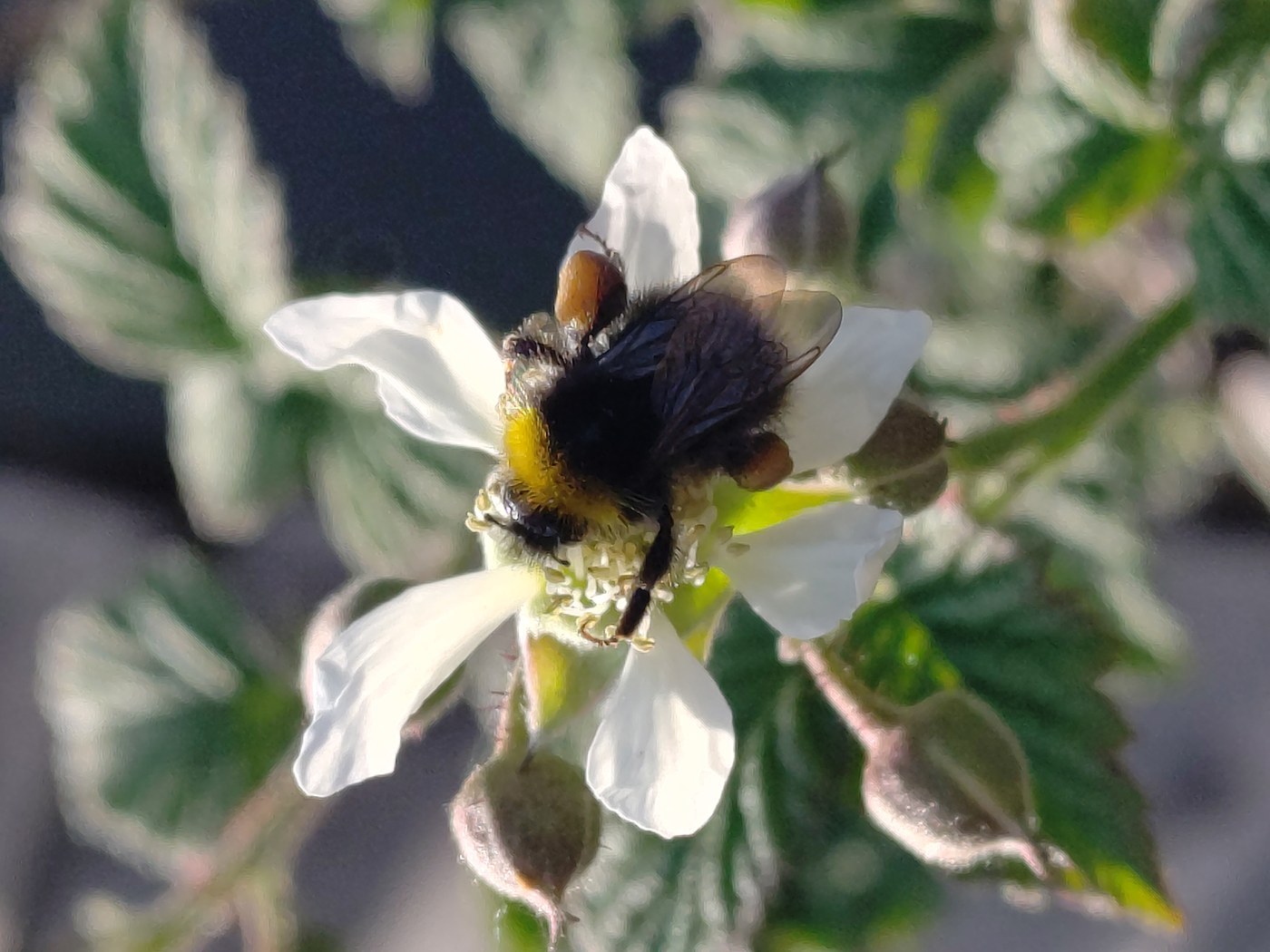
Key Identifying Features
Loganberry is a Rubus hybrid of raspberry and blackberry with long, trailing-to-arching canes and large, elongated, deep wine-red berries. It looks intermediate between its parents: blackberry-like growth and seediness but a reddish color and softer, more raspberry-like flavor. The conical, dark-red fruit on a sprawling thorny (or thornless) cane is the key.
- Trailing canes 6-10 ft, often spiny with soft red bristles
- Large, long-conical, dark red berries
- Fruit keeps its central core when picked (blackberry trait)
- Compound leaves with toothed leaflets
Leaves & Stems
Leaves are compound with 3-5 toothed, pointed leaflets, medium green above and grayish-hairy beneath — the typical bramble leaf, somewhat crinkled. Canes are long, biennial, and trailing, green to reddish, and the original loganberry is densely covered in soft red prickles/bristles rather than hard hooked thorns (thornless cultivars exist). Canes root at the tips and grow vegetatively the first year, fruiting the second.
Flowers & Fruit
Flowers are white to pale pink, five-petaled, larger than raspberry flowers, borne in loose clusters in late spring. Fruit ripens over a long season in summer: elongated, conical berries up to 1.5 in., ripening from pale red to a deep dark red (never fully black). The flavor is sharp and tangy. Crucially, the berry retains its white core when picked, behaving like a blackberry rather than a hollow raspberry.
How to Tell It Apart from Look-Alikes
- Raspberry: Smaller and rounder, and the fruit slips off leaving a hollow cup; loganberry is longer, dark red, and keeps its core.
- Blackberry: Ripens glossy black; loganberry stays dark red and is more elongated and tart.
- Boysenberry: Larger, rounder-shouldered and more purple-maroon; loganberry is narrower, more conical, and clearly red.
- Tayberry: Very similar red hybrid — slightly larger and sweeter; distinguishing the two is difficult and a cultivar-level call.
Focus on the long dark-red conical shape, retained core, and bristly trailing canes to confirm loganberry.
Where You'll Find It
Loganberry is a cultivated plant originating in California, grown in cool-temperate gardens worldwide on trellises and fences. It is not native or truly wild, though canes can escape into hedges. Expect it in home fruit gardens, allotments, and small farms in mild maritime climates such as the Pacific coast and Britain.
Quick ID Checklist
- Long trailing bramble canes with soft red prickles
- Compound leaves, 3-5 toothed leaflets, gray-hairy beneath
- White-to-pink 5-petal flowers, late spring
- Large, elongated, deep-red conical berries
- Berry keeps its core when picked
- Cultivated trellis/garden setting
Frequently asked questions
How do I tell a loganberry from a raspberry?
Loganberries are larger, longer, and dark red, and they keep their central core when picked, whereas raspberries pull free leaving a hollow cup.
Why is it red and not black like a blackberry?
Loganberry is a raspberry-blackberry hybrid, so it inherits the blackberry's retained core but ripens to a deep red rather than glossy black.
Is loganberry the same as boysenberry?
No. Boysenberry is larger, rounder, and more purple-maroon, while loganberry is narrower, conical, and clearly dark red.
Does it have thorns?
The original loganberry has soft red prickles or bristles rather than hard hooked thorns, and thornless cultivars are also available.