
Lungwort Identification Guide
How to identify lungwort (Pulmonaria) by its silver-spotted bristly leaves and flowers that open pink and age to blue on the same cluster.
Read the full Lungwort encyclopedia entry →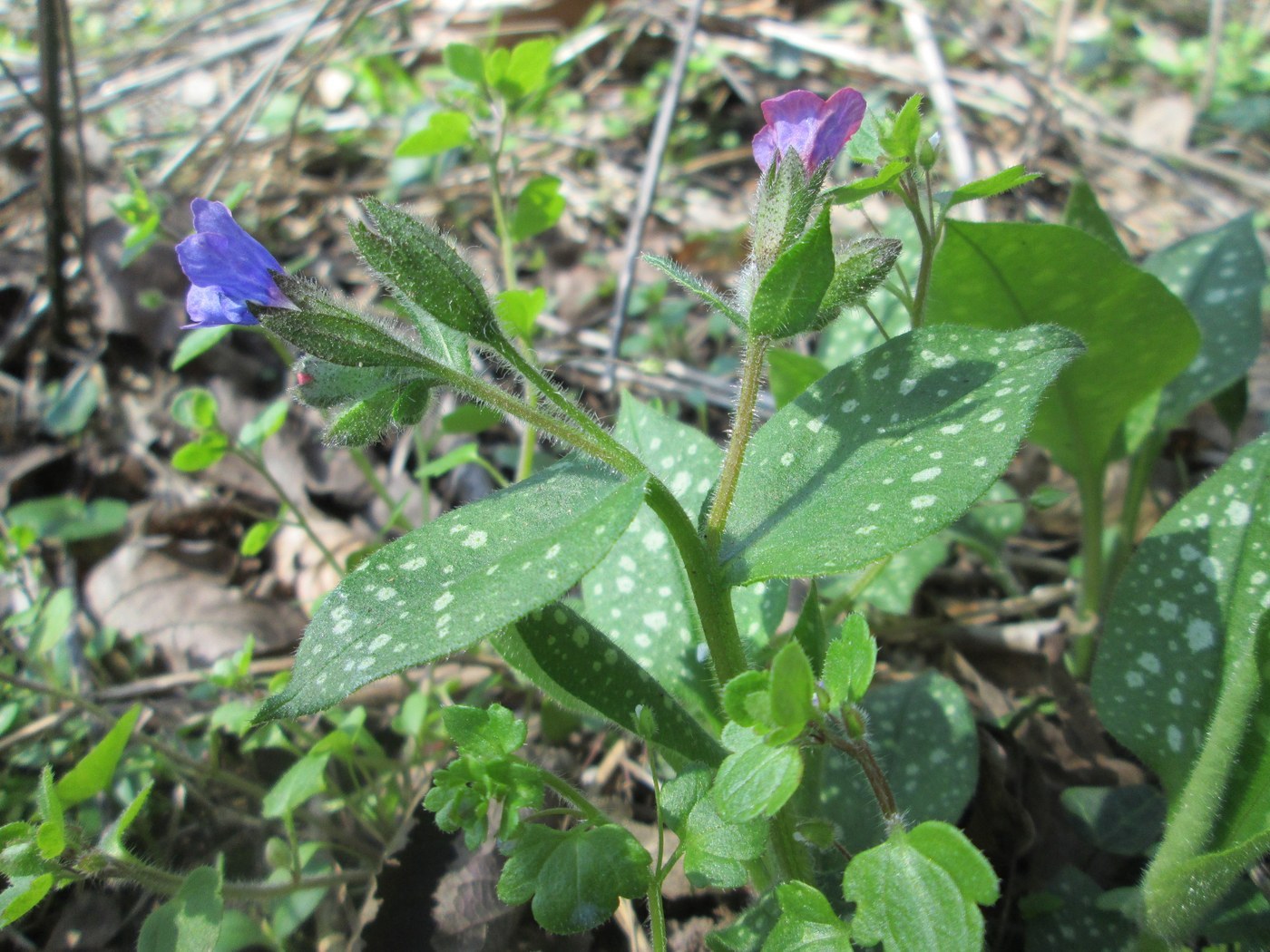
Key Identifying Features
Lungwort (Pulmonaria) is a low spring perennial in the borage family (Boraginaceae). Two features make it easy: the leaves are usually spotted or splashed with silver-white over green, and the flowers change color as they age — typically opening pink or red and turning blue or violet, so a single cluster shows several colors at once.
- Leaves bristly/hairy and often silver-spotted or marbled
- Flowers in nodding clusters, opening pink and aging blue
- Funnel-shaped, 5-lobed small flowers
- Low, clump-forming woodland plant blooming early spring
Leaves & Stems
Leaves are oval to lance-shaped, rough and hairy (bristly) to the touch, and frequently marked with pale silver or white spots, blotches, or near-complete silver overlay — a key field mark. Basal leaves enlarge after flowering. Stems are short, erect, and bristly-hairy. The plant spreads slowly into low mounds and clumps, generally 20–40 cm tall.
Flowers & Fruit
Flowers are clustered in coiled, nodding heads (a borage-family trait) at the stem tips. Each is a small funnel-shaped tube flaring into five lobes. The color shift is diagnostic: buds and fresh flowers are pink, red, or violet (acidic in the bud), shifting to blue or purple as the flower matures and pH changes. Some cultivars are pure white or coral. Fruit are four small nutlets, typical of Boraginaceae. Bloom is early to mid-spring.
How to Tell It Apart from Look-Alikes
- Comfrey (Symphytum): a larger borage relative with similar nodding clusters, but leaves are big and unspotted and flowers do not show the silver-spotted leaf combination.
- Brunnera (Siberian bugloss): has bright blue forget-me-not flowers and can have silver leaves, but its flowers are flat and starry, all blue, not the pink-to-blue funnel clusters.
- Forget-me-not (Myosotis): flat 5-lobed blue flowers with a yellow eye, but plain green leaves and no pink-to-blue shift.
- Bugloss / borage: bristly with blue flowers, but lacks the silver-spotted leaves.
Where You'll Find It
Lungwort thrives in shade and woodland gardens, under shrubs, and along shady borders in moist, humus-rich soil. It is one of the earliest spring nectar sources for bees. Wild species occur in European woodlands and hedge banks. The mottled leaves remain attractive long after the flowers fade.
Quick ID Checklist
- Silver-spotted or marbled, bristly leaves
- Flowers open pink/red, age to blue in the same cluster
- Small funnel-shaped, 5-lobed nodding flowers
- Low clump in shade, blooming early spring
- Belongs to the borage family (coiled flower clusters, nutlet fruit)
Frequently asked questions
Why do lungwort flowers show pink and blue at the same time?
The petals contain pigments sensitive to pH. Buds and young flowers are acidic and appear pink or red, then shift to blue or violet as they mature, so a cluster displays several colors at once.
Are the silver spots on the leaves always present?
Most lungworts have silver spotting or marbling, and many garden cultivars have heavily silvered leaves. A few species have plain green leaves, but spotting is the typical and most useful field mark.
How do I tell lungwort from brunnera, which also grows in shade?
Brunnera has flat, starry, all-blue forget-me-not flowers, while lungwort has nodding funnel-shaped clusters that shift from pink to blue. Lungwort leaves are also distinctly bristly and spotted.
Why is it called lungwort?
Under the old doctrine of signatures, the spotted leaves were thought to resemble diseased lungs, so the plant was historically associated with treating lung ailments. The name reflects folklore, not a botanical feature.