
Lychee Tree Identification Guide
Identify the lychee tree (Litchi chinensis) by its evergreen compound leaves, dense rounded canopy, and clusters of red, bumpy-skinned tropical fruit.
Read the full Lychee Tree encyclopedia entry →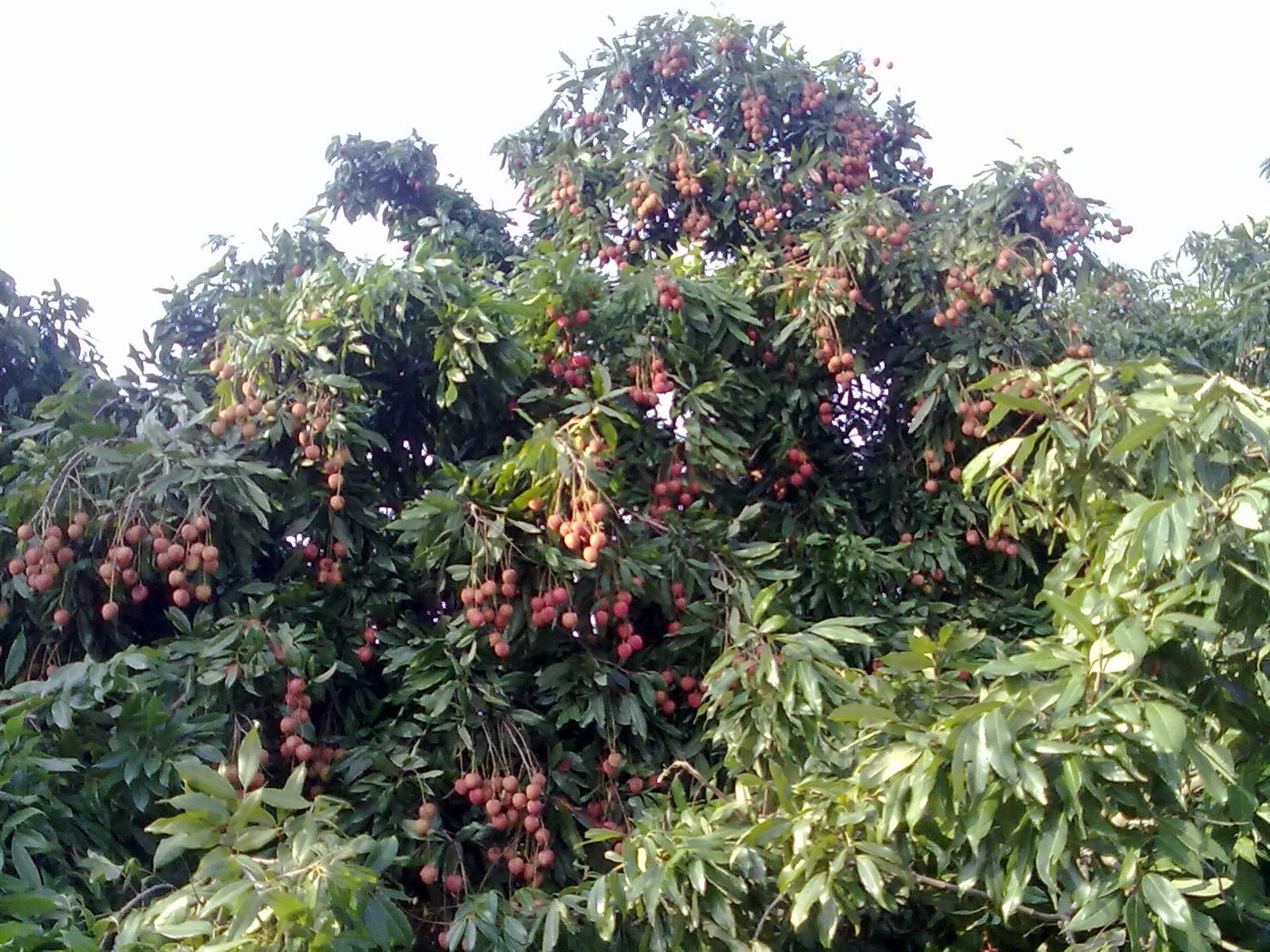
Key Identifying Features
Lychee (Litchi chinensis) is a medium evergreen tree, 30-40 ft tall, with a dense, rounded, spreading canopy, grown in subtropical and tropical regions. It is identified by its glossy evergreen compound leaves with copper-colored new growth and especially by its clusters of bright-red, strawberry-textured fruit with bumpy, leathery skin.
- Dense, rounded evergreen canopy
- Pinnately compound leaves with 2-4 pairs of glossy leaflets
- Reddish/bronze flushes of new growth
- Hanging clusters of red, rough-skinned round fruit
Leaves & Stems
Leaves are alternate and pinnately compound, with 2-4 (rarely up to 8) leaflets that are lance-shaped to elliptic, 2-6 in., glossy dark green above and dull grayish-green beneath, with smooth margins and a leathery feel. There is no terminal leaflet (even-pinnate). A key live feature is the bright coppery-red to bronze color of emerging new leaves, which slowly turn green. Bark is gray-brown and fairly smooth; the canopy is low-branching and dense.
Flowers & Fruit
Flowers are small, greenish-white to yellowish, petalless, borne in large branched terminal panicles in late winter to spring. The fruit is unmistakable: round to oval, 1-1.5 in., with a thin, leathery, bumpy (warty) skin that ripens bright red to pinkish-red. Inside is translucent white, fragrant, juicy flesh around a single shiny brown seed. Fruits hang in loose clusters and ripen in early summer.
How to Tell It Apart from Look-Alikes
- Longan: Very close relative with similar compound leaves; fruit is smoother and tan/brown rather than red and warty — fruit color and texture separate them.
- Rambutan: Fruit has long soft spines (hairs); lychee skin is bumpy but not hairy.
- Mango: Has simple (not compound) leaves and a large flat-stoned fruit.
- Ackee (relative): Compound leaves too, but bears red leathery capsules that split open, not bumpy red berries.
The combination of even-pinnate glossy leaves, coppery new growth, and red bumpy-skinned clustered fruit confirms lychee.
Where You'll Find It
Lychee thrives in frost-free subtropical and tropical climates with a cool dry season to trigger flowering. It is grown in southern China and Southeast Asia (its native range), India, Florida, Hawaii, Australia, and South Africa, in orchards, large gardens, and as a shade/fruit tree. It needs warm, humid summers and rich, well-drained acidic soil.
Quick ID Checklist
- Medium evergreen tree with dense rounded canopy
- Even-pinnate compound leaves, 2-4 glossy leaflet pairs
- Coppery-red new growth
- Greenish panicles of small petalless flowers
- Red, bumpy-skinned round fruit in clusters
- Translucent white flesh around one shiny brown seed
Frequently asked questions
How do I tell a lychee tree from a longan tree?
Both have similar compound evergreen leaves, but lychee fruit is bright red with bumpy skin, while longan fruit is smaller, smooth, and tan-brown.
What does lychee new growth look like?
Emerging leaves flush a distinctive coppery-red to bronze color before slowly turning green, a helpful live identification clue.
Are the leaves simple or compound?
Compound. Lychee has even-pinnate leaves with 2-4 pairs of glossy leaflets and no terminal leaflet.
Where does lychee grow?
In frost-free subtropical and tropical climates with a cool dry season, including southern China, Southeast Asia, India, Florida, Hawaii, and Australia.