How to Care for Marble Queen Pothos
Grow the creamy-variegated Marble Queen Pothos with bright indirect light and simple watering. A forgiving, trailing houseplant.
Read the full Marble Queen Pothos encyclopedia entry →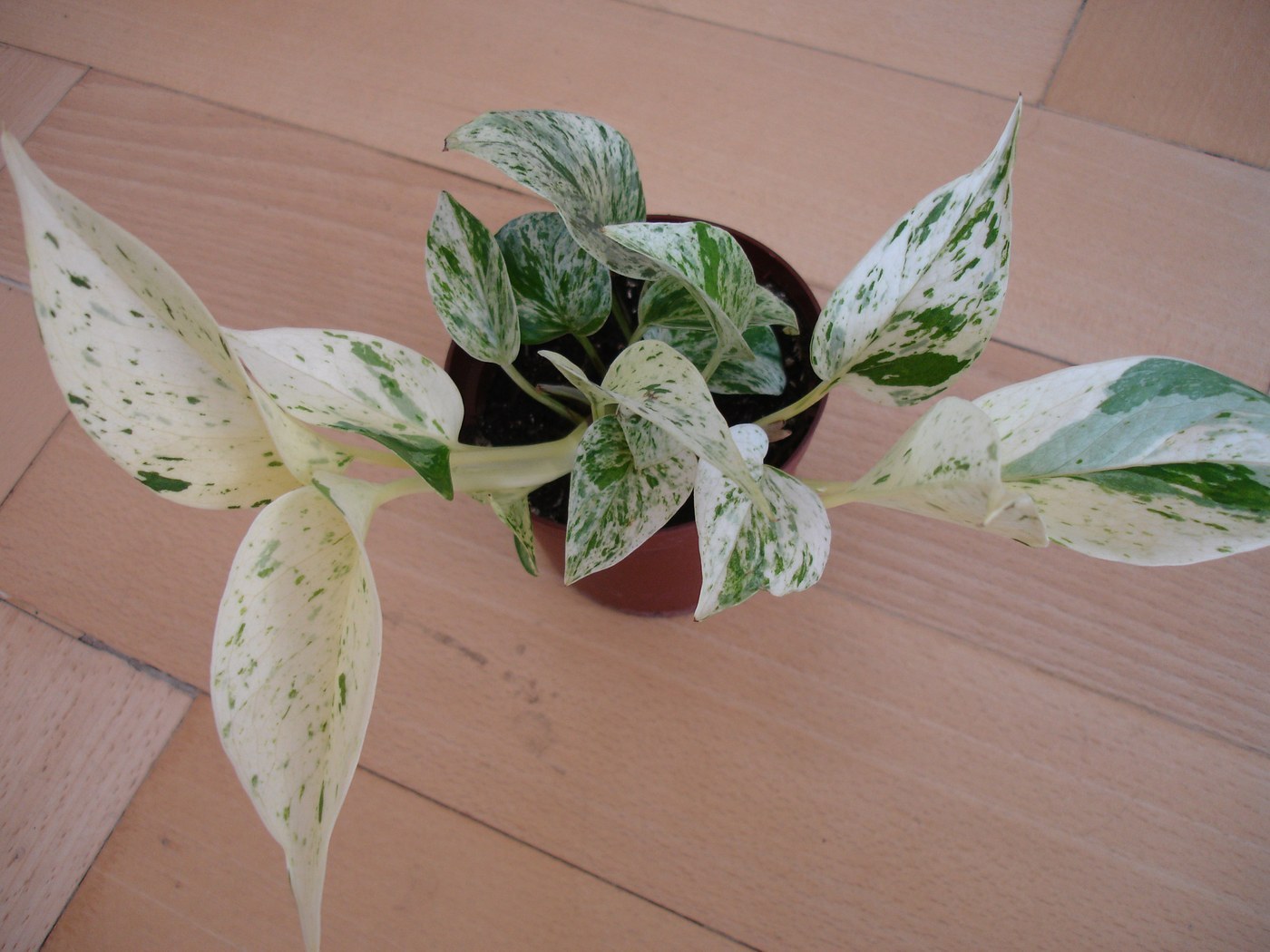
Marble Queen Pothos (Epipremnum aureum 'Marble Queen') is a heavily variegated cultivar with heart-shaped leaves marbled in cream, white, and green. Vigorous, trailing, and famously forgiving, it is one of the easiest houseplants to grow and adapts to hanging baskets, shelves, or climbing supports.
Light
Give Marble Queen bright, indirect light to keep its striking variegation crisp. Because so much of each leaf lacks green chlorophyll, this cultivar needs more light than solid-green pothos to stay vigorous and colorful. In low light it grows slowly and reverts toward greener leaves; in harsh direct sun the pale sections scorch. A spot near a bright window with filtered light is ideal.
Water
Water when the top inch of soil dries out, then water thoroughly until it drains from the bottom. Marble Queen prefers to dry slightly between waterings and dislikes staying wet. Drooping leaves signal thirst and usually perk up quickly after watering, while yellowing lower leaves often mean overwatering. Cut back in winter when growth slows.
Soil & Potting
Use a well-drained, airy potting mix; a standard houseplant mix with added perlite or orchid bark works well. Always plant in a container with drainage holes. Pothos is not fussy about soil as long as it drains freely and does not stay soggy, which is the main cause of trouble.
Humidity & Temperature
Marble Queen thrives in normal household temperatures of 65 to 85 degrees Fahrenheit and dislikes cold below about 55 degrees and chilly drafts. It tolerates average indoor humidity but grows lusher with moderate to higher humidity. It is an adaptable, easy-going plant that needs no special climate control.
Feeding
Feed monthly during spring and summer with a balanced, diluted liquid houseplant fertilizer. Little to no feeding is needed in fall and winter. Avoid over-fertilizing, which can burn roots and cause leaf-tip browning; when in doubt, feed lightly and infrequently.
Propagation
Marble Queen roots very easily from stem cuttings. Snip a section with a few leaves and at least one node, then place it in water or directly in moist potting mix. Roots form within a couple of weeks in water; once they are an inch or two long, pot the cutting up. Take cuttings in spring or summer for fastest rooting.
Repotting / Pruning
Repot every one to two years or when roots circle the pot or emerge from drainage holes, moving up one pot size in spring. Prune anytime to control length and encourage bushiness; cutting just above a node prompts branching. Regular trimming keeps the plant full rather than sparse and leggy, and trimmed pieces can be rooted as new plants.
Common Problems & Pests
Yellow leaves usually indicate overwatering, while brown, crispy edges suggest underwatering or very dry air. Loss of variegation and long gaps between leaves point to insufficient light. Pests are uncommon but can include mealybugs, scale, and spider mites; wipe them off and treat with insecticidal soap. Ensure good drainage to prevent root rot, the most common serious issue.
Seasonal Care Tips
In spring and summer, expect active growth: water regularly, feed monthly, and prune or repot as needed. In fall and winter, reduce water and hold off on feeding while growth slows. Keep it away from cold windows and heating vents in winter, and rotate the plant occasionally so all sides receive even light and grow evenly.
Frequently asked questions
Why is my Marble Queen losing its variegation?
Fading variegation and greener new leaves are a sign of too little light. Move it to a brighter, indirect spot so the heavily variegated leaves can sustain themselves.
How do I make my pothos bushier?
Prune regularly by cutting just above a node, which encourages branching. You can also root the trimmings and plant them back into the same pot to fill it out.
Why are the leaves turning yellow?
Yellowing lower leaves usually mean overwatering or poor drainage. Let the top inch of soil dry before watering and make sure the pot drains freely.
Can I grow Marble Queen Pothos in water?
Yes, cuttings root and can be kept in water long-term, though they grow best transferred to soil. Refresh the water regularly and add dilute fertilizer for water-grown plants.
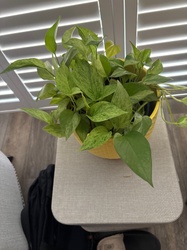
Marble Queen Pothos identified by the community
Recent Marble Queen Pothos specimens identified with Plant Identifier.