
Marsh Marigold Identification Guide
Identify Marsh Marigold (Caltha palustris) by its glossy yellow buttercup-like flowers and rounded heart-shaped leaves in wet ground. This guide covers field marks and look-alikes.
Read the full Marsh Marigold encyclopedia entry →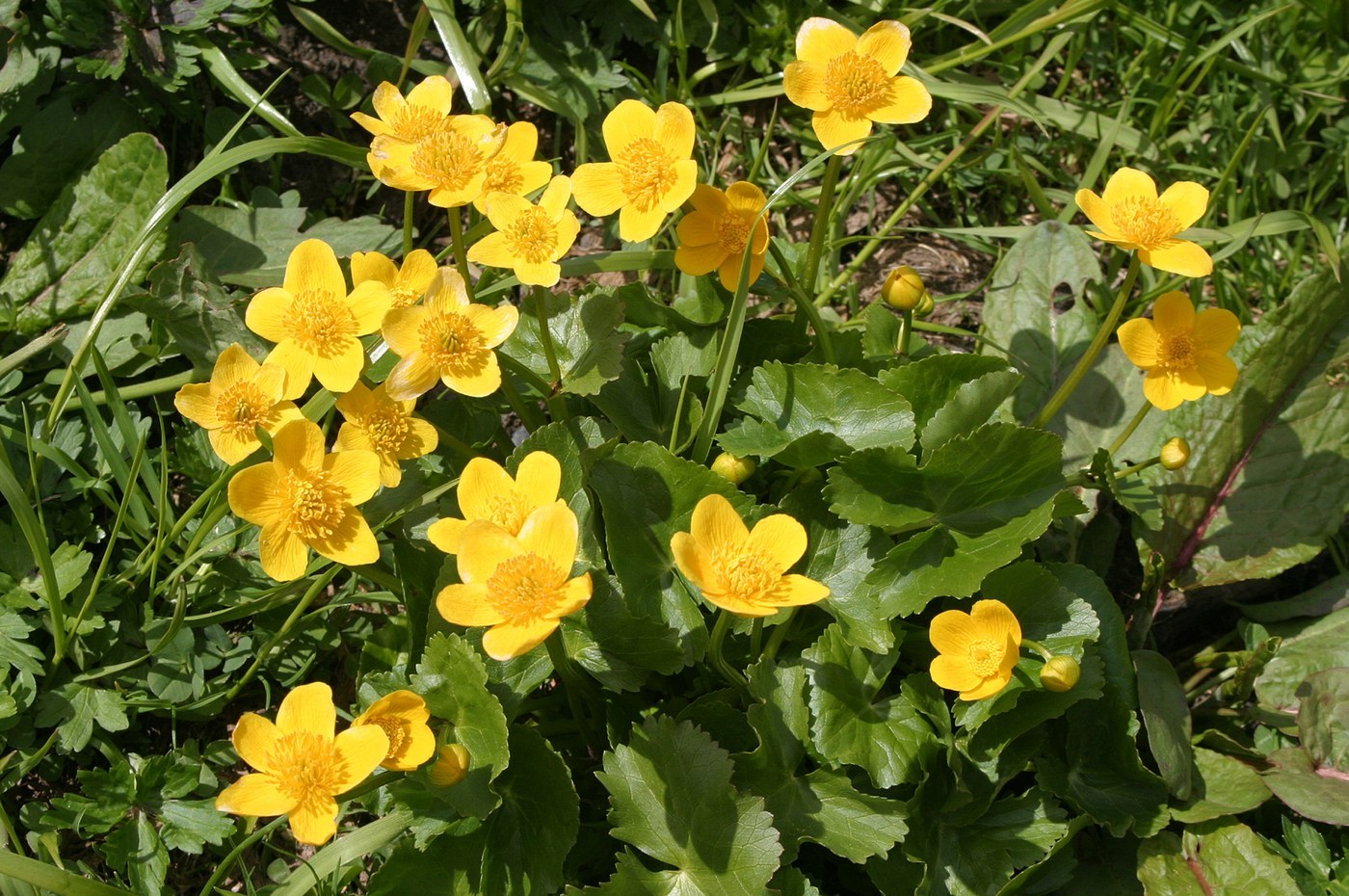
Key Identifying Features
Marsh Marigold (Caltha palustris), also called kingcup, is a low, mounding spring wildflower of wet places, with bright, glossy golden-yellow flowers and rounded, glossy leaves. Plants form clumps 8 to 18 inches (20 to 45 cm) tall and bloom in early to mid spring in marshes and along streams.
- Shiny golden-yellow flowers resembling large buttercups
- 5 to 9 petal-like sepals (no true petals)
- Glossy, rounded to heart- or kidney-shaped leaves
- Grows in wet, boggy ground
Leaves & Stems
Leaves are rounded, kidney- or heart-shaped, glossy dark green, and slightly scalloped or toothed at the edges. They grow mostly from the base on long stalks, with smaller ones on the hollow, succulent, branching stems. The whole plant is hairless and somewhat fleshy, suited to wet habitats.
Flowers & Fruit
Each flower is 1 to 1.5 inches (2.5 to 4 cm) across with 5 to 9 bright yellow, waxy, petal-like sepals (it lacks true petals) surrounding many yellow stamens. The flowers have a lacquered, shiny appearance. Blooming runs March to June depending on region. The fruit is a cluster of small pod-like follicles that split to release seeds.
How to Tell It Apart from Look-Alikes
- Buttercups (Ranunculus): smaller flowers with true petals (usually 5) and divided leaves, not glossy rounded ones.
- Lesser celandine (Ficaria verna): also wet-loving and yellow, but flowers have many narrow petals and leaves are smaller.
- Yellow water lily: floating leaves on water, not an upright marsh plant.
The big glossy yellow blooms over rounded heart-shaped leaves in wet soil identify marsh marigold; remember it has sepals, not petals.
Where You'll Find It
Marsh Marigold thrives in marshes, wet meadows, swamps, ditches, pond edges, and slow stream banks across cooler temperate regions of North America, Europe, and Asia. It needs consistently wet or saturated soil and full to partial sun.
Quick ID Checklist
- Glossy golden-yellow buttercup-like flowers
- 5 to 9 petal-like sepals (no true petals)
- Rounded, heart/kidney-shaped glossy leaves
- Hollow, succulent stems
- Growing in wet, boggy ground
- Blooms early to mid spring
Frequently asked questions
Is marsh marigold a true marigold?
No. Despite the name, it is in the buttercup family (Ranunculaceae), not related to garden marigolds. The name refers to its golden flowers and wetland habitat. It is also called kingcup.
Does marsh marigold have petals?
Not true petals. The bright yellow, glossy structures are petal-like sepals, usually 5 to 9 of them, surrounding a cluster of yellow stamens. This is a useful detail when distinguishing it from buttercups.
Where does marsh marigold grow?
It grows in consistently wet places such as marshes, wet meadows, swamps, ditches, and stream and pond edges, in cooler temperate regions of North America, Europe, and Asia.
What do the leaves look like?
Marsh marigold has rounded, kidney- or heart-shaped glossy dark green leaves with slightly scalloped or toothed edges, growing mostly from the base on long stalks.