
How to Care for Mayapple
Grow mayapple, a shade-loving woodland groundcover with striking umbrella leaves that spreads into lush colonies in moist, rich soil.
Read the full Mayapple encyclopedia entry →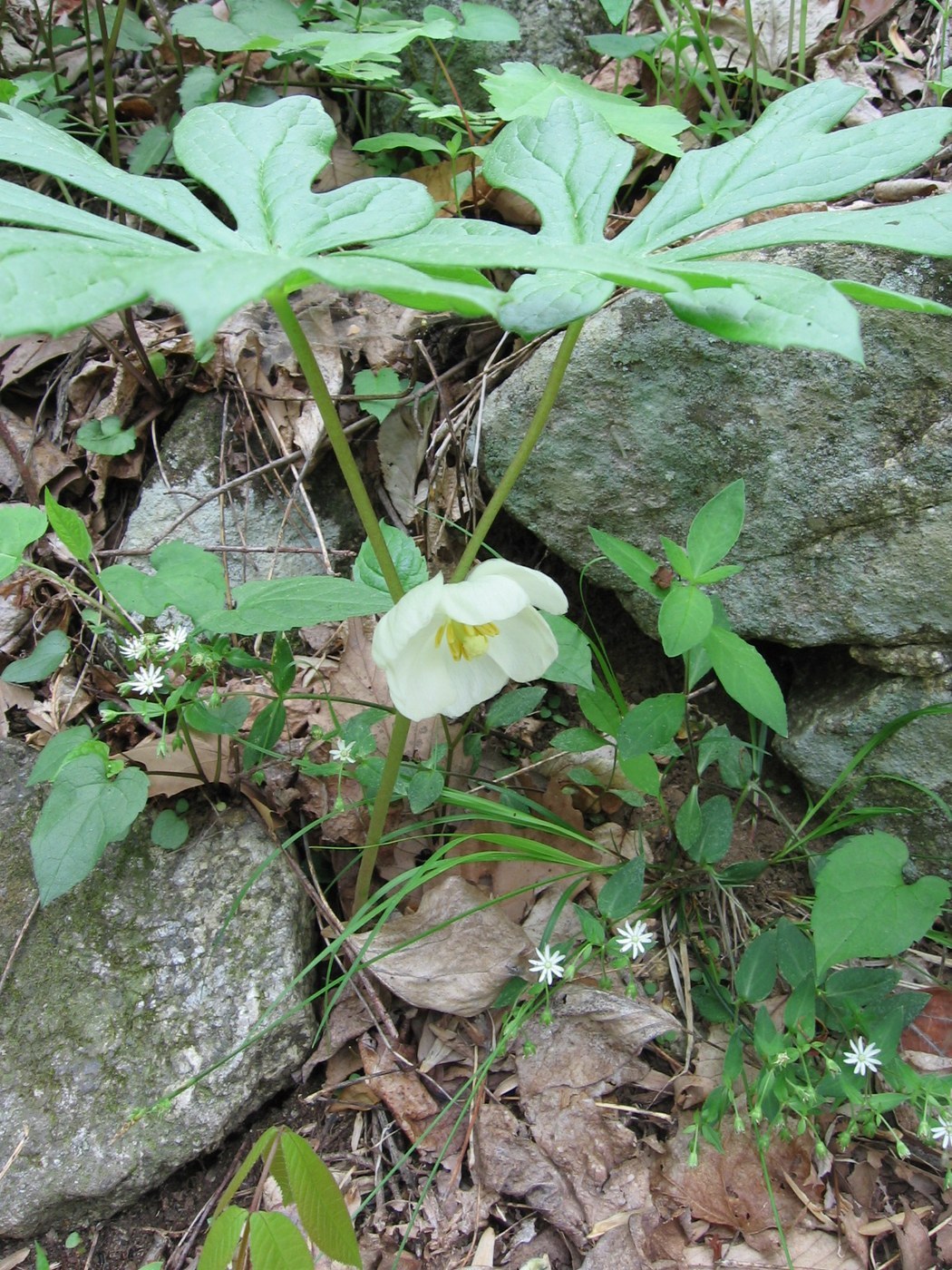
Mayapple (Podophyllum peltatum) is a spring-emerging woodland perennial famous for its umbrella-like, deeply lobed leaves that unfurl into a lush green carpet. It spreads by underground rhizomes to form colonies and produces a single nodding white flower tucked beneath paired leaves. It is a rewarding groundcover for shady, moist gardens.
Light
Mayapple wants partial to full shade, mimicking its native deciduous-forest floor. Dappled light or morning sun with afternoon shade is ideal. It emerges and grows early while trees are leafless, then rests as summer canopy shade deepens. Too much direct sun scorches the foliage and hastens dormancy.
Water
Provide consistent, moderate moisture, especially in spring while the plant is actively growing and flowering; the soil should stay evenly moist but not waterlogged. In its natural cycle mayapple often goes dormant and dies back in mid to late summer, particularly if soil dries out, which is normal. Keep it watered to prolong the attractive foliage.
Soil & Potting
Grow mayapple in rich, humusy, well-drained woodland soil high in organic matter, ideally slightly acidic to neutral. Amend planting areas with leaf mold or compost to mimic forest duff. A loose, moisture-retentive soil encourages the rhizomes to spread. A yearly leaf-litter mulch feeds the soil and keeps roots cool.
Humidity & Temperature
Mayapple is cold-hardy, roughly USDA zones 3 to 8, and thrives in the cool, humid conditions of the woodland floor. It handles cold winters well while dormant. Hot, dry summer air simply pushes it into earlier dormancy; a shaded, sheltered spot with steady moisture keeps it looking good longer.
Feeding
Mayapple is not a heavy feeder. In rich woodland soil it needs no fertilizer. A spring topdressing of compost or well-rotted leaf mold supplies ample nutrients and improves soil structure. Avoid strong synthetic fertilizers, which are unnecessary for this naturalized woodlander.
Propagation
The easiest method is rhizome division. In fall or very early spring while dormant, lift a section of the spreading rhizome, cut it into pieces each with a bud (eye), and replant a couple of inches deep. Divisions establish readily in suitable shade and moisture. Growing from seed is slow and requires patience through a cold, moist stratification period.
Repotting / Pruning
Little pruning is needed. Remove tattered or yellowing foliage as the plant enters summer dormancy. To control the vigorous spread, dig and remove rhizomes at the colony edges. Mark the location, since mayapple disappears entirely by late summer and is easy to disturb accidentally when planting nearby.
Common Problems & Pests
Mayapple is largely trouble-free. It can develop rust and leaf-spot fungal diseases in overly wet, stagnant conditions; good air circulation helps. Slugs and snails may chew the leaves in damp shade. Its main quirk is early summer dormancy, which can leave bare gaps, so interplant with later-emerging shade perennials like ferns and hostas.
Seasonal Care Tips
Expect shoots to push up in early spring, followed by the hidden flower. Keep soil moist through spring and early summer. Accept and plan for mid-summer dormancy by pairing it with companions. Refresh leaf mulch in fall. Divide or expand colonies while dormant in fall or earliest spring.
Frequently asked questions
Why does my mayapple disappear in summer?
Summer dormancy is natural. Mayapple grows and blooms in spring, then dies back to its rhizome by mid to late summer, especially in dry or warm conditions.
Does mayapple spread aggressively?
It spreads steadily by underground rhizomes to form large colonies. Give it room, or edge the patch by removing rhizomes to keep it in bounds.
How much sun does mayapple need?
Little to none directly. It prefers partial to full shade, thriving in dappled woodland light. Direct sun scorches the leaves.
What is the best way to propagate mayapple?
Divide the rhizomes in fall or early spring, replanting sections that each have a growth bud a couple of inches deep in rich, moist shade.