
Melampodium Identification Guide
Identify melampodium (butter daisy) by its neat bushy mounds and abundant small golden-yellow daisy flowers with green-yellow centers.
Read the full Melampodium encyclopedia entry →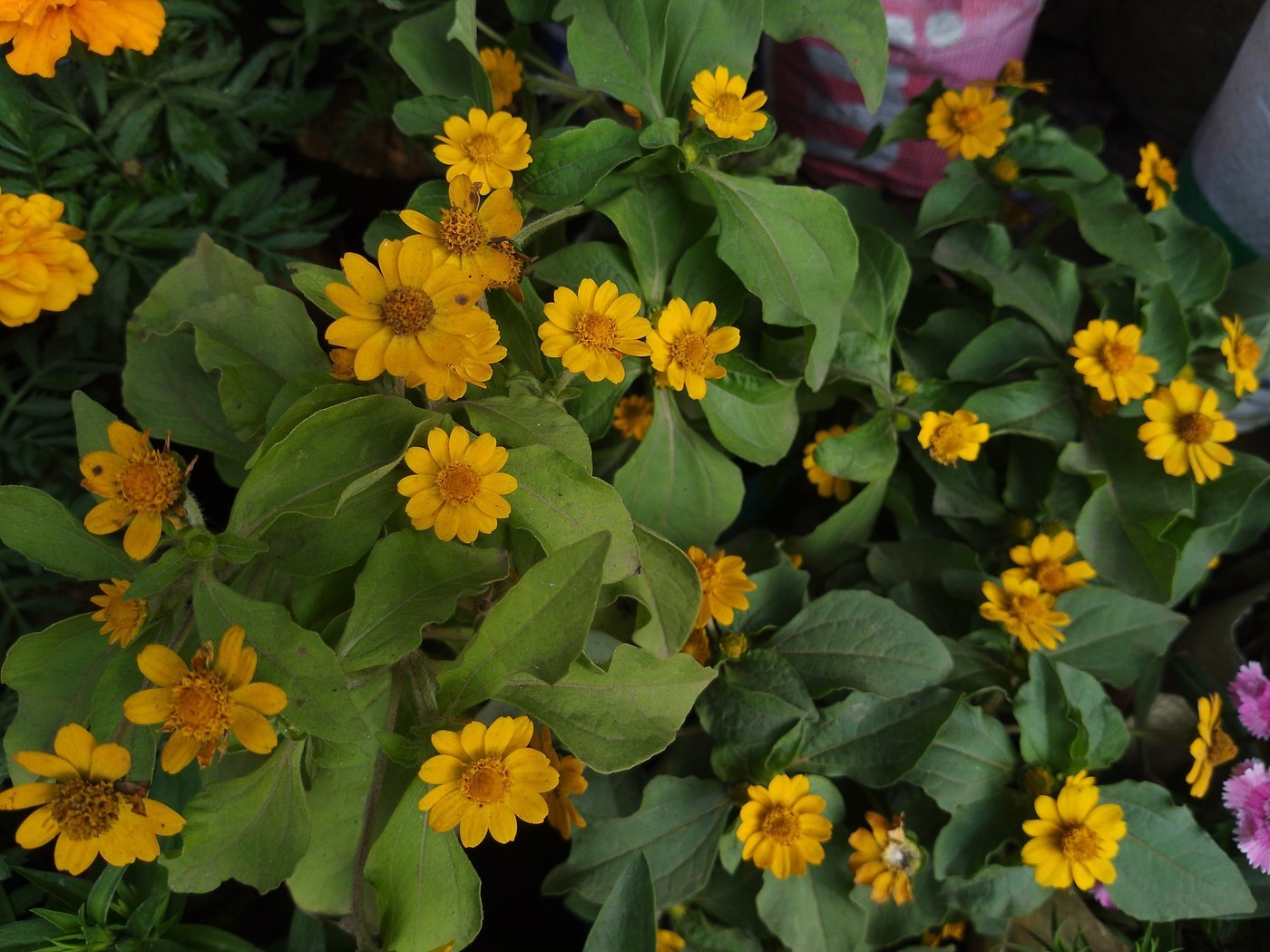
Key Identifying Features
Melampodium (Melampodium divaricatum, also sold as M. paludosum), known as butter daisy or gold medallion flower, is a heat-loving annual in the aster family. It forms a tidy, rounded, self-branching mound 10–24 inches tall covered in small, bright golden-yellow daisy flowers. Unlike many daisies, its centers are yellow to yellow-green rather than dark, giving an evenly sunny look. It blooms nonstop through summer heat with almost no care.
- Compact, dome-shaped bushy annual
- Many small (~1 inch) golden-yellow daisy flowers
- Yellow to greenish-yellow center (not dark)
- Continuous bloom in heat and humidity
Leaves & Stems
Stems are green, well-branched, and slightly brittle, building a naturally mounded shape. Leaves are opposite, oval to lance-shaped, medium green, with slightly wavy or shallowly toothed margins, a pointed tip, and a softly hairy texture. The foliage is dense and lush, forming a green cushion that nearly disappears under the steady flush of flowers.
Flowers & Fruit
Each flower head has a single row of about 8–13 broad golden-yellow ray florets around a slightly raised yellow disk. Blooms are produced abundantly at the branch tips and self-clean as they fade. The plant reseeds freely, with seedlings appearing the next warm season. Seeds are small dry achenes hidden in the spent heads.
How to Tell It Apart from Look-Alikes
- Creeping zinnia (Sanvitalia) has a dark purple-brown center and a low trailing habit; melampodium is bushier and uniformly yellow-centered.
- Bidens has more deeply cut, ferny leaves and often notched petals; melampodium leaves are simple and oval.
- Small marigolds have strongly scented, finely divided foliage; melampodium foliage is simple and only faintly scented.
- The mounded form plus all-yellow daisies is the giveaway.
Where You'll Find It
Melampodium is grown as a low-maintenance bedding and container plant in full sun, valued for thriving in heat, humidity, and drought. Native to Mexico and Central America, it is popular in southern gardens, mass plantings, and edges. It self-sows where conditions are warm and may naturalize in beds.
Quick ID Checklist
- Compact, dome-shaped bushy annual
- Many small bright yellow daisy flowers
- Yellow/green center, not dark
- Opposite, simple, softly hairy oval leaves
- Thrives in heat and humidity, self-sows
A neat yellow-flowered mound that shrugs off summer heat and has all-yellow daisy centers is melampodium.
Frequently asked questions
How do I tell melampodium from creeping zinnia?
Melampodium has a yellow to greenish center and grows as an upright bushy mound, while creeping zinnia has a dark purple-brown center and a low trailing habit.
Why is it called butter daisy?
The name refers to its abundant buttery golden-yellow daisy flowers that cover the plant throughout the warm season.
Does melampodium come back every year?
It is grown as an annual but reseeds freely, so volunteer seedlings often appear the next warm season in the same beds.
Does it need deadheading?
No. Melampodium is self-cleaning, dropping spent flowers on its own and blooming continuously without deadheading.