
How to Care for Monstera Esqueleto
Grow Monstera Esqueleto (M. epipremnoides), a climbing aroid with dramatic fenestrated leaves, in bright indirect light and airy soil.
Read the full Monstera Esqueleto encyclopedia entry →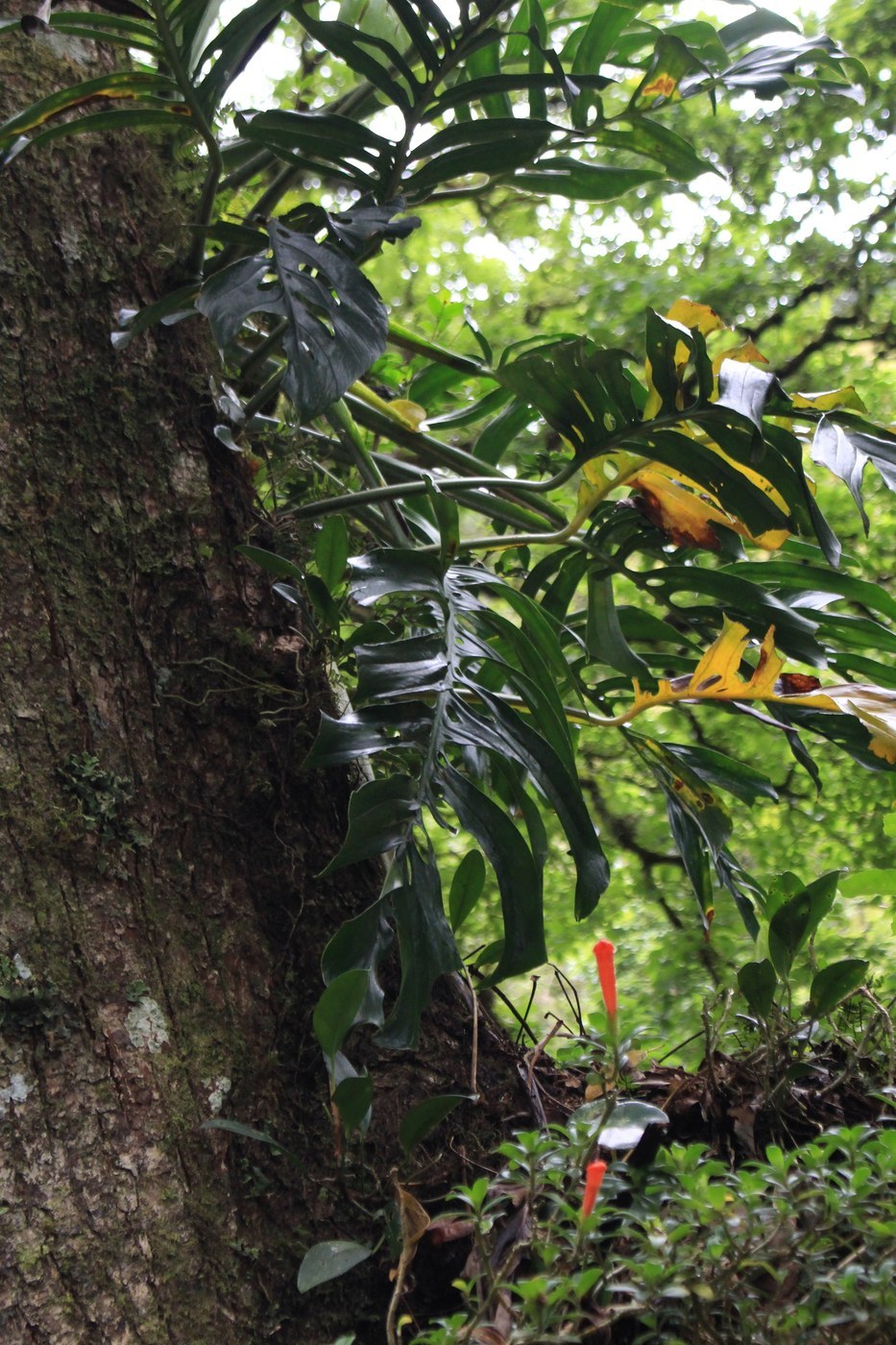
Monstera Esqueleto (Monstera epipremnoides) is a spectacular climbing aroid whose mature leaves develop enormous, skeletal fenestrations, leaving them looking more hole than leaf. It is a fast, vigorous climber that rewards moderately attentive care with dramatic architectural foliage.
Light
Grow in bright indirect light. Ample bright, filtered light drives the large fenestrated leaves; too little light yields small, solid leaves without the signature holes. Protect it from prolonged direct sun, which scorches the thin leaf tissue. An east window or a few feet back from a bright south or west window is ideal.
Water
Water when the top inch of soil dries out. Keep the mix lightly moist but never waterlogged, watering thoroughly and letting excess drain away. Allow slightly more drying in low light and winter. Consistent moisture supports its fast growth, but sitting in soggy soil quickly leads to root rot.
Soil & Potting
Use a chunky, airy aroid mix: potting soil combined with orchid bark, perlite, and coco coir or sphagnum. This gives the fast, thick roots the aeration they need. Always use a pot with drainage. Provide a moss pole or trellis; as an epiphytic climber it produces its largest, most fenestrated leaves when allowed to climb and anchor with aerial roots.
Humidity & Temperature
A tropical species that loves warmth and humidity. Aim for 60% or higher humidity for best leaf development, using a humidifier or pebble tray in dry rooms. Keep temperatures between 65 and 85 F (18 to 29 C) and above 55 F (13 C); avoid cold drafts and sudden temperature swings.
Feeding
Feed with a balanced liquid fertilizer diluted to half strength every two to four weeks during spring and summer. This vigorous grower is a moderately heavy feeder when actively growing. Reduce or stop feeding in fall and winter when growth slows.
Propagation
Propagate by stem cuttings, each including at least one node and ideally an aerial root. Root cuttings in water, sphagnum moss, or a light mix, keeping them warm and humid until new roots establish, then pot up. Nodes with aerial roots root fastest.
Repotting / Pruning
Repot every one to two years or when roots fill the pot, moving up one size into fresh airy mix. Refresh or extend the moss pole as the plant climbs. Prune to control size or shape, cutting just above a node; healthy cuttings can be propagated. Guide new growth onto the support and mist the pole to encourage aerial roots to attach.
Common Problems & Pests
Yellowing leaves usually signal overwatering, while brown crispy edges point to low humidity or underwatering. Lack of fenestration means insufficient light or a young plant still maturing. Watch for spider mites (favored by dry air), thrips, mealybugs, and scale; wipe foliage and treat with insecticidal soap or horticultural oil as needed.
Seasonal Care Tips
In spring and summer, provide bright light, steady moisture, feeding, and high humidity for rapid, dramatically fenestrated new leaves. In fall and winter, cut back on water and pause fertilizer as growth slows, and keep it warm and away from cold windows and heating drafts.
Frequently asked questions
Why aren't my Monstera Esqueleto leaves developing holes?
Fenestration develops with maturity and enough light. Young plants naturally have solid leaves, and insufficient bright indirect light delays or prevents holes. Increase light and let the plant climb a moss pole.
How is Monstera Esqueleto different from Monstera adansonii?
Esqueleto (M. epipremnoides) grows much larger leaves with far more extensive, skeletal fenestrations that can reach the leaf edge, and the plant overall is larger and more vigorous than the smaller-leaved adansonii.
Does Monstera Esqueleto need a moss pole?
It benefits greatly from one. As a natural climber it produces its biggest, most fenestrated leaves when supported on a moss pole or trellis where aerial roots can anchor.
How often should I water Monstera Esqueleto?
Water when the top inch of soil dries. Keep it lightly moist but never soggy, watering less in winter and low light. Overwatering leads to yellow leaves and root rot.