
How to Care for Morning Glory
Morning Glory is a fast, free-flowering annual vine with silky trumpet blooms that open at dawn. Easy to grow on any sunny trellis or fence.
Read the full Morning Glory encyclopedia entry →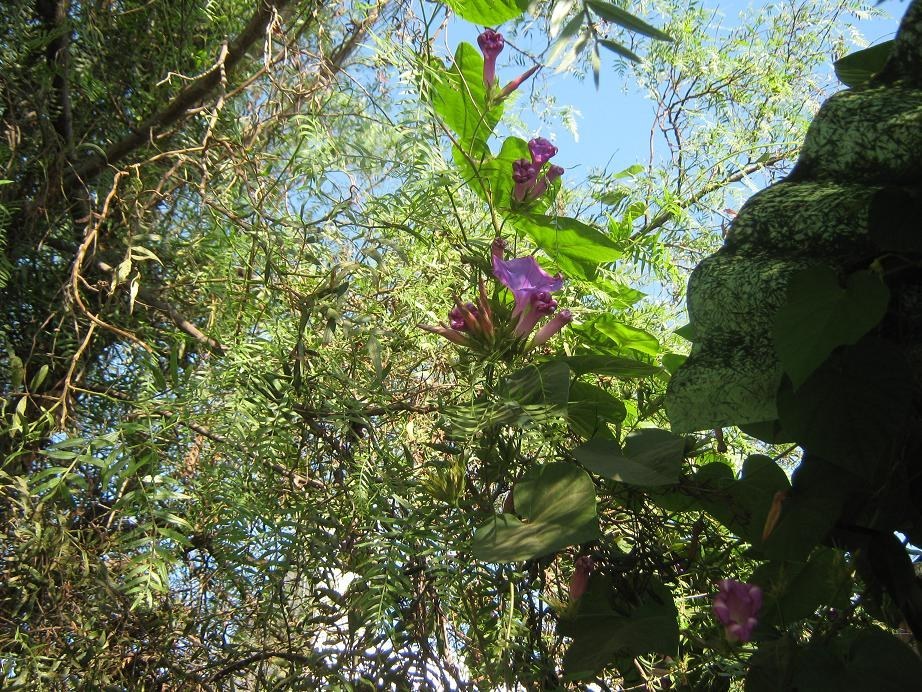
Morning Glory (Ipomoea purpurea) is a vigorous twining annual vine that unfurls silky, funnel-shaped flowers in blue, purple, pink, magenta, and white each morning, fading by afternoon and replaced by fresh blooms daily through the warm season. Fast, forgiving, and generous, it quickly clothes a trellis, arch, or fence in heart-shaped foliage and color.
Light
Morning Glory demands full sun to bloom well: give it at least six to eight hours of direct light. In too much shade it produces plenty of lush leaves but few flowers, so a bright, open, sunny position is essential for a good display.
Water
Provide moderate, regular water, especially during dry spells and while the vine is climbing hard. Keep the soil from drying out completely during flowering, but avoid constant sogginess. Established plants have some drought tolerance, though flowering suffers if they wilt frequently.
Soil & Potting
Morning Glory grows in average, well-drained soil and actually blooms best when the ground is not too rich. Overly fertile soil drives leafy growth at the expense of flowers. A moderately fertile, free-draining loam is ideal; in containers use a standard potting mix with a tall support in place from the start.
Humidity & Temperature
A warm-season plant, Morning Glory loves heat and is frost-tender, so it is grown as an annual in most climates. Sow or plant out only after the last frost when the soil has warmed. It tolerates humidity well and thrives through hot summers, blooming until cut down by autumn cold.
Feeding
Feed sparingly. Too much nitrogen yields a wall of leaves and few blooms. If the soil is very poor, a light dose of a balanced or bloom-oriented (higher phosphorus) fertilizer supports flowering. In average soil, no feeding is usually needed at all.
Propagation
Morning Glory is easily grown from seed sown after the last frost. Nicking each hard seed coat with a file and soaking the seeds overnight speeds and improves germination. Sow directly where they are to grow, as the vines resent root disturbance; they also self-sow readily from year to year.
Repotting / Pruning
Provide a trellis, netting, strings, or an arch at planting time so the twining stems have something to grip. Pinch young seedlings once to encourage branching. Trim wayward or overgrown stems anytime to keep the vine in bounds. Remove faded flowers and developing seed pods to prolong bloom and limit self-seeding.
Common Problems & Pests
Generally easy and robust, Morning Glory can attract aphids and spider mites in hot, dry conditions; rinse them off with water or treat as needed. Leaf spot and rust may appear in damp, crowded plantings, so ensure airflow. The most common complaint is all leaves and no flowers, caused by too much shade or too-rich, over-fertilized soil.
Seasonal Care Tips
In spring, wait for warm soil, then scarify and sow seeds directly at the base of a support. Through summer, water during dry spells, guide the vines onto their trellis, and deadhead to keep blooms coming. In fall, the vine is killed by frost; pull the spent plant and collect or let seeds self-sow for next year.
Frequently asked questions
Why does my Morning Glory have lots of leaves but no flowers?
The two usual causes are too little sun and soil that is too rich in nitrogen. Give it a full-sun spot with at least six to eight hours of direct light, and stop feeding: lean, moderately fertile soil produces far more blooms than pampered plants.
How do I get Morning Glory seeds to germinate?
The seeds have a hard coat. Nick each one with a file or nail clipper and soak overnight in water before sowing after the last frost in warm soil. Sow directly where they will grow, since the vines dislike having their roots disturbed.
Does Morning Glory come back every year?
It is a frost-tender annual, so the plant itself dies with the first hard cold. However, it self-sows so freely that it often reappears from dropped seed the following spring, giving the impression of a returning perennial.
What kind of support does Morning Glory need?
Give it something to twine around, a trellis, netting, strings, an obelisk, or an arch, and put the support in place at planting time. The stems climb by twining, so they grip thin verticals easily and will quickly cover the structure.