
Mugo Pine Identification Guide
Identify Mugo Pine (Pinus mugo), the compact, shrubby mountain pine, by its low mounding form and stiff, dark green paired needles.
Read the full Mugo Pine encyclopedia entry →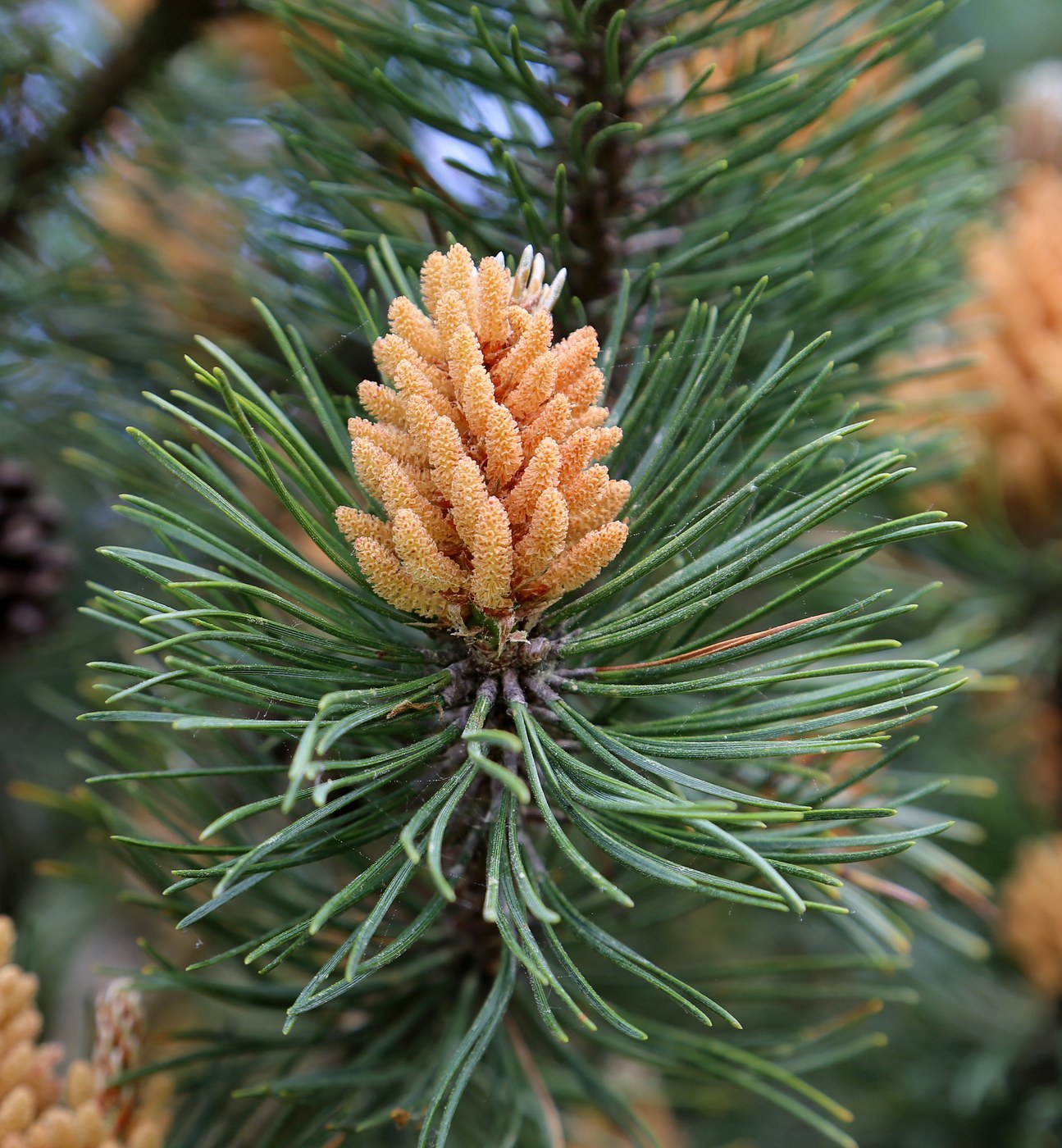
Key Identifying Features
Mugo Pine (Pinus mugo), also called mountain pine, is a low, shrubby, mounding evergreen pine - one of the few pines grown as a compact shrub rather than a tree. Landscape forms typically stay 3-8 ft tall and wide (dwarf cultivars even smaller), forming a rounded, dense, spreading mound with multiple stems. Its bushy, low habit is the first thing to notice.
- Form: dense, rounded, shrubby mound (rarely a small tree)
- Needles: short, stiff, dark green, in pairs
- Use: rock gardens, foundations, borders
Leaves & Stems
Needles come two per bundle (fascicle) - confirm by pulling a bundle apart. They are 1 to 3 inches long, stiff, often slightly curved, and dark green (greener than the blue-green of Scotch pine). The needles are densely packed, giving the plant a full, bristly texture. New spring growth appears as upright "candles" of pale new shoots, which can be pinched to keep the plant compact. Twigs are stout; winter buds are reddish-brown and resinous.
Flowers & Fruit
Cones are small. Seed cones are 1 to 2 1/2 inches long, conical to egg-shaped, and dark brown, often nearly stalkless and pointing outward; the scales have a small prickle. They mature in two to three years. Pollen cones are small and yellowish at shoot bases in spring.
How to Tell It Apart from Look-Alikes
- Scotch pine: paired needles too, but a tree with twisted blue-green needles and flaky orange bark - mugo is shrubby and dark green.
- Japanese black pine: paired but longer, stiffer needles, distinct white candle buds, and tree form.
- Mugo vs. other dwarf conifers (dwarf spruce, juniper): mugo has true paired pine needles 1-3 in long, while dwarf spruces have single 4-sided needles and junipers have scale/awl foliage.
The shrubby mounding habit + short stiff dark-green paired needles + small prickled cones confirm mugo pine.
Where You'll Find It
Native to the mountains of central and southern Europe, mugo pine is a hugely popular landscape shrub for foundations, rock gardens, mass plantings and containers because it stays compact and tolerates cold. Watch for size variability: seed-grown plants can get surprisingly large, while named dwarfs (e.g., 'Mops', 'Pumilio') stay small.
Quick ID Checklist
- Low, rounded, shrubby mound rather than a tall tree
- Needles in pairs (2 per bundle), 1-3 in, stiff
- Needles dark green, densely packed
- Upright pale "candles" of new growth in spring
- Small dark-brown cones with a tiny prickle on scales
Frequently asked questions
Why is mugo pine a shrub instead of a tree?
It is naturally a low, multi-stemmed mountain pine. Most landscape forms and dwarf cultivars stay compact and mounding, though some seed-grown plants can grow larger over time.
How many needles per bundle?
Two. Mugo is a two-needle pine; pull apart a fascicle at the base to confirm. The needles are short (1-3 in), stiff and dark green.
What are the upright shoots in spring?
Those are new growth 'candles.' Pinching them in half while soft keeps the plant dense and controls size - a common pruning technique for mugo pine.
How do I keep it from getting too big?
Choose a named dwarf cultivar such as 'Mops' or 'Pumilio,' and pinch the spring candles. Seed-grown plants vary widely in mature size.