
Mustard Greens Identification Guide
Identify mustard greens (Brassica juncea) by their large, often ruffled or crinkled leaves, sharp pungent flavor, and bright yellow four-petaled flowers.
Read the full Mustard Greens encyclopedia entry →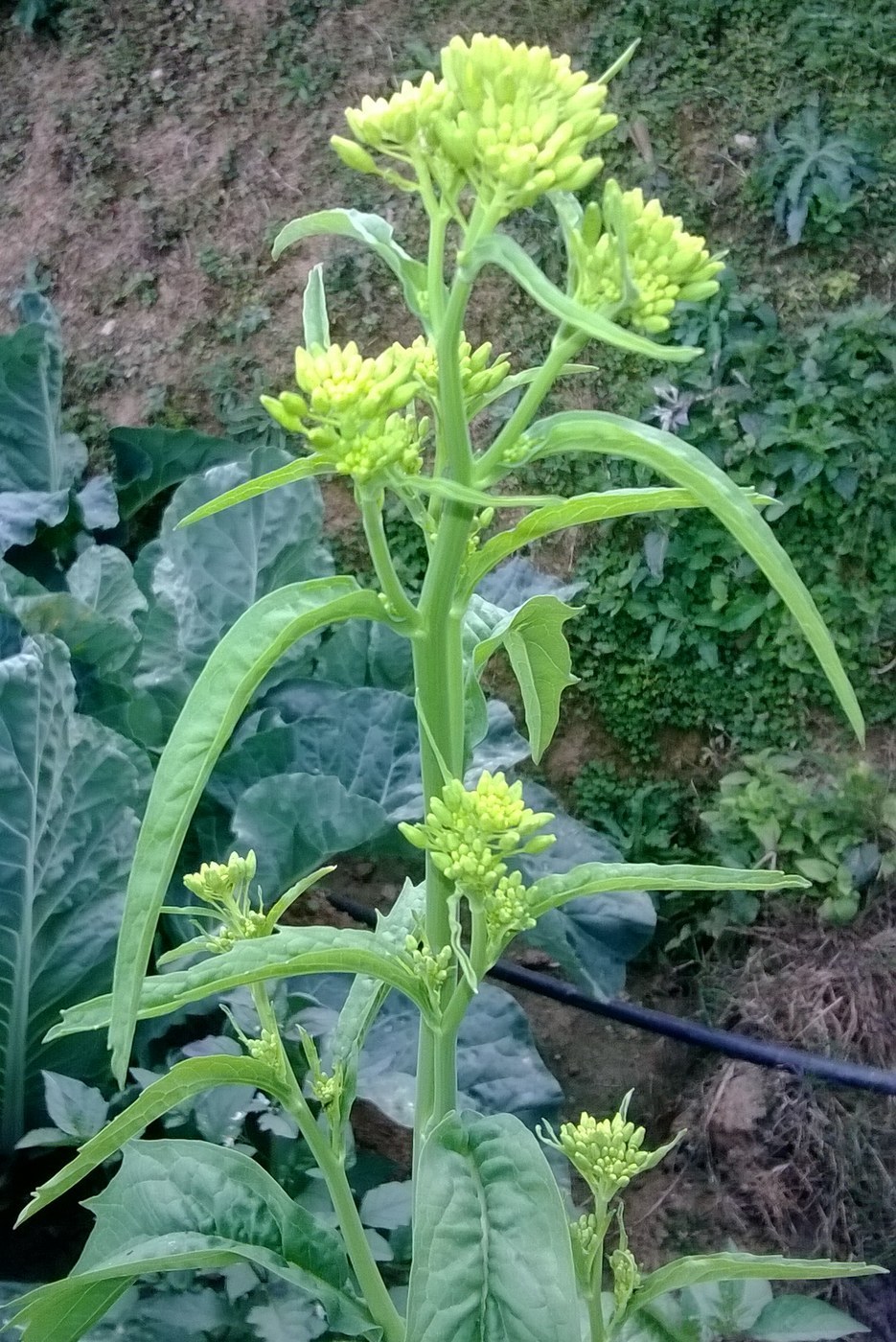
Key Identifying Features
Mustard greens (Brassica juncea, also called Indian or brown mustard) are a fast-growing leafy annual in the cabbage family. The defining traits are large, broad leaves with a sharp peppery-mustard bite, an upright leafy rosette becoming a tall flowering stalk, and bright yellow four-petaled flowers typical of Brassicaceae. Many cultivars have frilly, curled, or crinkled leaf margins and some show purple-red coloring.
Leaves & Stems
- Basal leaves are large (15-40 cm), broad, oval to oblong, with a prominent pale midrib.
- Margins range from smooth to deeply toothed, wavy, frilled, or finely curled depending on variety (e.g., 'Green Wave', 'Red Giant').
- Surface is often slightly puckered or savoyed; color from light green to deep maroon-purple.
- Leaves are mostly hairless and emit a strong mustardy, peppery smell when crushed.
- Stems are smooth, round, and somewhat fleshy, becoming branched as the plant bolts.
Flowers & Fruit
- When it bolts, it sends up a tall (to 1-1.5 m) branched flower stalk.
- Flowers are bright yellow with four petals in a cross, about 8-10 mm, in elongating clusters (racemes).
- Fruits are slender pods (siliques), 3-5 cm long, with a distinct beak at the tip, holding small round seeds.
- Seeds are brown to dark reddish (hence 'brown mustard').
How to Tell It Apart from Look-Alikes
- Black mustard (Brassica nigra): Similar yellow flowers, but pods are short and pressed close to the stem; mustard greens' pods stand out on spreading stalks.
- Field mustard / turnip (Brassica rapa): Upper leaves clasp the stem with ear-like lobes; B. juncea upper leaves narrow but do not strongly clasp.
- Kale and collards (Brassica oleracea): Have a waxy blue-green coating and milder smell; mustard greens are greener, often frilled, and far more pungent.
- Wild radish (Raphanus): Flowers often white/pale with veins, pods constricted between seeds.
The combination of broad pungent leaves, yellow cross-shaped flowers, and beaked spreading pods identifies B. juncea.
Where You'll Find It
Grown in vegetable gardens and farms worldwide, especially in Asian, Southern US, and African cuisines. It also escapes to roadsides, fields, and disturbed ground. It prefers full sun and cool weather, growing quickly in spring and fall and bolting in summer heat.
Quick ID Checklist
- Large, broad leaves, often frilled, crinkled, or red-tinged
- Strong peppery mustard smell when crushed
- Mostly hairless, slightly fleshy stems
- Bright yellow four-petaled flowers on a tall stalk
- Slender beaked pods held away from the stem
- Fast cool-season growth, prone to bolting
Frequently asked questions
How do I distinguish mustard greens from kale?
Kale leaves are usually thicker, blue-green, and covered with a waxy bloom, with a mild cabbagey smell. Mustard greens are brighter green (or red), often frilled, and release a sharp peppery mustard scent when crushed.
Are the yellow flowers a good identifier?
Yes. The four bright yellow petals arranged in a cross mark it as a member of the mustard family. Combined with beaked seed pods that stand out from the stem and the pungent leaves, the flowers confirm Brassica juncea.
Why do my mustard greens suddenly grow tall and flower?
That is bolting, triggered by heat or long days. The plant shifts from leafy rosette to a tall branched stalk bearing yellow flowers and pods. Bolted leaves turn tougher and even more pungent.
Can mustard greens be different colors?
Yes. Cultivars range from light green to deep purple-red, and leaf shapes vary from smooth to heavily curled. The constant identifiers are the mustardy smell, yellow cross flowers, and beaked pods.