
Natal Plum Identification Guide
Identify natal plum (Carissa) by its glossy leathery leaves, forked spines, fragrant white star flowers, and red plum-like fruit.
Read the full Natal Plum encyclopedia entry →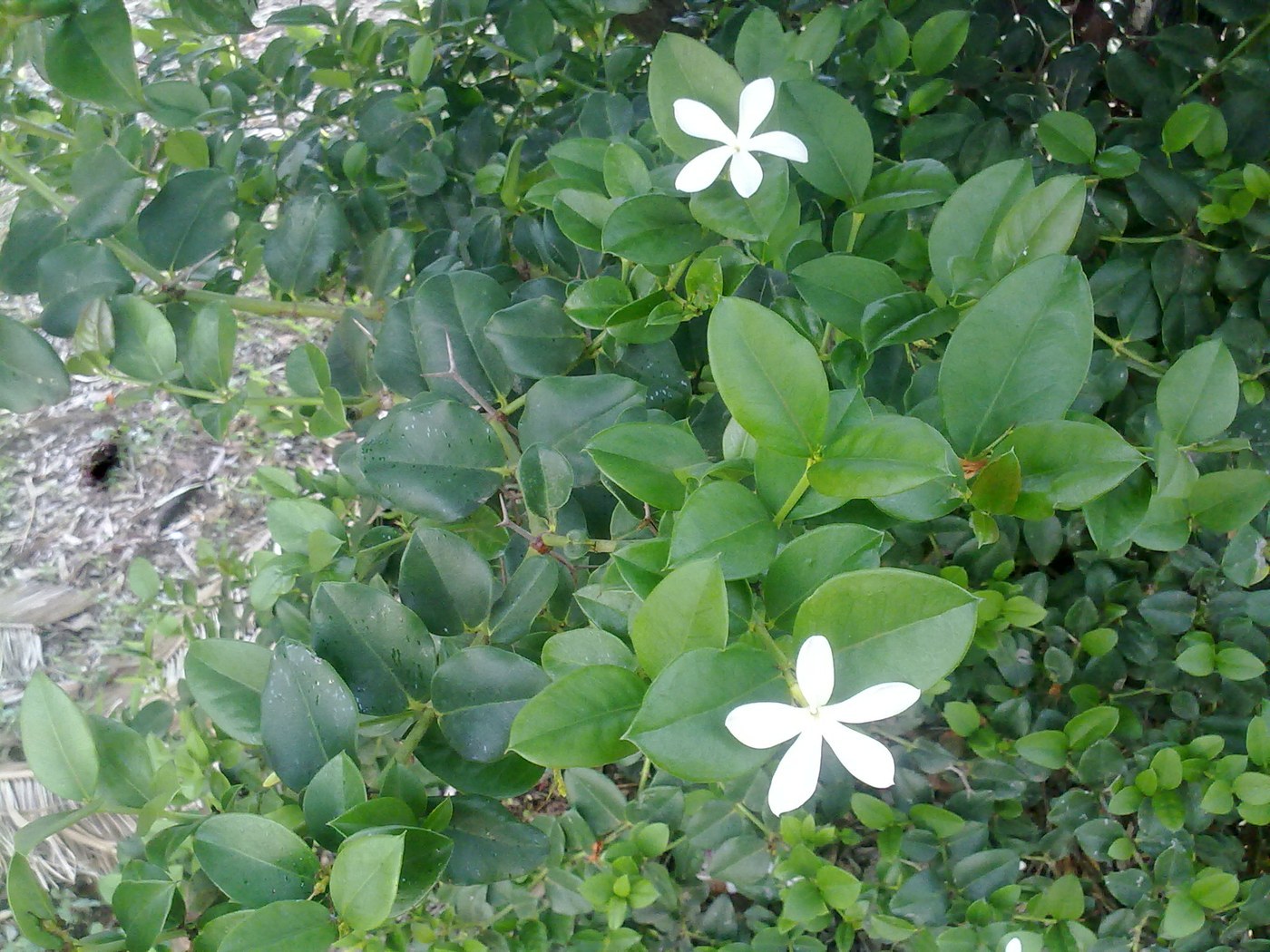
Key Identifying Features
Natal plum (Carissa macrocarpa) is a South African evergreen shrub grown in warm climates for its glossy foliage, fragrant white flowers, and red fruit. Two features stand out: distinctive forked (Y-shaped) spines on the stems and a milky white sap that bleeds from cut leaves and stems.
- Dense, mounding to sprawling evergreen shrub, 2–7 ft (some dwarf)
- Glossy, leathery, dark-green oval leaves
- Forked thorns along the branches
- Star-shaped white fragrant flowers, then red oval fruit
Leaves & Stems
Leaves are opposite, simple, oval to nearly round (1–3 in), thick, leathery, and glossy dark green with a small abrupt point at the tip. They're tough and waxy, well-suited to heat and salt. Stems bear the diagnostic stout, sharp, two-pronged (bifurcated) spines — an unusual forked shape that quickly confirms the plant. Cut any part and a white milky latex oozes out, a strong confirming trait shared with its dogbane-family relatives.
Flowers & Fruit
Flowers are white, waxy, 5-petaled, and star-shaped (1–2 in), with a sweet jasmine-like fragrance, appearing on and off much of the year in mild climates. They mature into oval to round red fruit (¾–2 in) that ripen from green through scarlet to deep crimson.
How to Tell It Apart from Look-Alikes
- True plums/cherries (Prunus): deciduous, no milky sap, no forked spines, and toothed leaves; natal plum is evergreen with entire leaves and Y-shaped thorns.
- Star jasmine (Trachelospermum): similar fragrant white star flowers and milky sap, but it's a vine with no spines or large fruit.
- Citrus: thorny and glossy, but single spines and citrus fruit/scent.
- Mock orange / Murraya: fragrant white flowers but no forked spines or red plum fruit.
The glossy opposite leaves + forked spines + milky sap + fragrant white star flowers + red plum-like fruit combination is unmistakable.
Where You'll Find It
A staple of warm coastal and subtropical landscapes (California, Florida, Mediterranean, South Africa, Australia) for hedges, barriers, foundation plantings, and ground covers. It's prized for salt and drought tolerance and the thorns make it a good security hedge. It needs frost-free conditions and full sun to part shade.
Quick ID Checklist
- Dense evergreen shrub, often coastal
- Glossy, leathery, dark-green oval opposite leaves
- Distinctive forked (Y-shaped) spines
- Milky white sap when cut
- Fragrant white star-shaped flowers
- Red, oval, plum-like fruit
If you find a glossy-leaved coastal hedge with forked thorns, milky sap, jasmine-scented white star flowers, and red fruit, it's natal plum.
Frequently asked questions
What are the forked thorns about?
Natal plum bears distinctive two-pronged, Y-shaped spines along its stems, which is unusual among landscape shrubs and a quick identification cue. The thorns also make it an effective security or barrier hedge.
Why does the plant ooze white sap?
Natal plum is in the dogbane family, whose members exude a milky white latex when cut. Seeing that sap bleed from a snapped leaf or stem is a reliable confirming trait and distinguishes it from true plums, which have clear sap.
Is natal plum related to true plums?
No. Despite the name and plum-like fruit, it's Carissa in the dogbane family, unrelated to true plums (Prunus) in the rose family. The evergreen leaves, milky sap, and forked spines all separate it from real plum trees.