
How to Care for Nimblewill
Grow Nimblewill (Muhlenbergia schreberi), a fine-textured spreading grass, in part shade to sun with moist but tolerant watering.
Read the full Nimblewill encyclopedia entry →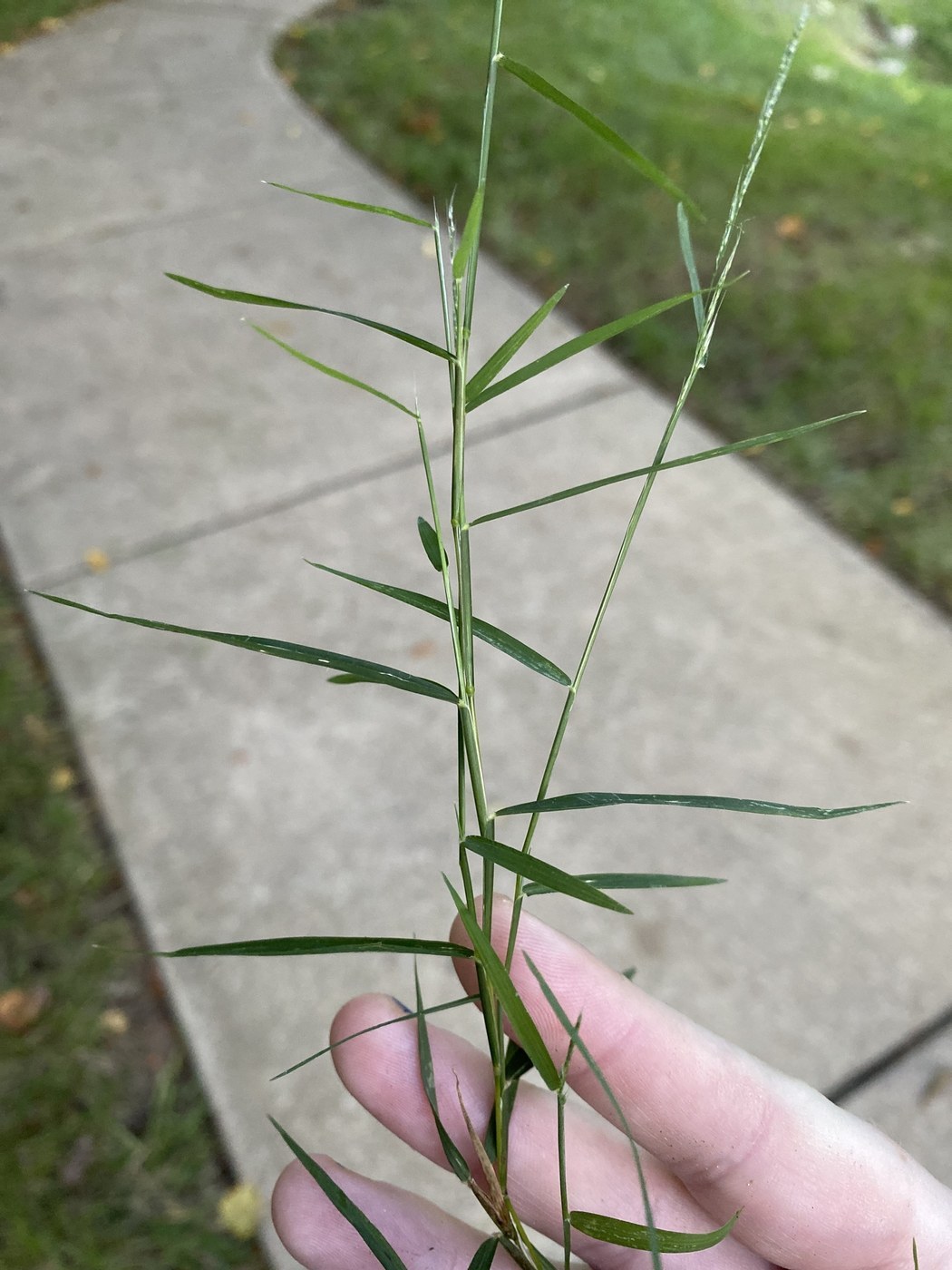
Nimblewill (Muhlenbergia schreberi) is a fine-textured, low, spreading perennial grass that forms soft mats of slender stems and delicate leaves, taking on warm tan tones as the season turns. It is an easy, adaptable grass suited to shaded, moist ground where finer turf grasses struggle.
Light
Nimblewill grows in part shade to full sun. It is notably shade-tolerant compared with many lawn grasses, thriving under trees and in dappled light, yet it also performs in open sun where soil moisture is adequate. This flexibility makes it useful for filling difficult, partly shaded areas.
Water
It prefers moist soils but tolerates dry spells once established. Keep the soil consistently moist for the lushest, greenest growth, watering during extended dry periods. During drought the grass may brown and go semi-dormant, then green up again when moisture returns, so it is forgiving of irregular watering.
Soil & Potting
Nimblewill adapts to a wide range of soils, from average garden loam to moist, somewhat compacted ground. It favors soils that hold some moisture but is not fussy about fertility. For any container or plug-establishment use, a standard well-draining mix that retains a little moisture works well.
Humidity & Temperature
This is a warm-season grass that greens up in the heat of summer and turns straw-colored as cool weather arrives, going dormant over winter and resprouting in late spring. It tolerates typical outdoor humidity and a broad temperature range within its hardiness limits.
Feeding
Nimblewill needs little feeding and grows readily in low-fertility ground. A light application of balanced fertilizer in the growing season can boost density and greenness where a fuller mat is wanted, but heavy feeding is unnecessary and may simply speed its vigorous spreading.
Propagation
It spreads readily on its own by creeping stems (stolons) that root at the nodes, as well as by seed. To propagate deliberately, divide rooted sections or transplant plugs in the growing season and keep them moist until established; the spreading stems quickly knit into surrounding soil.
Repotting / Pruning
In a managed setting, mow or trim to keep the mat low and neat. Because it spreads aggressively by stolons, edge and contain it to keep it from creeping into adjacent beds. Cut back tired top growth as it goes dormant, and refresh matted areas by thinning if needed.
Common Problems & Pests
The main challenge with Nimblewill is its vigorous spreading habit, which can crowd finer grasses and cross bed edges. It is otherwise tough and largely trouble-free, with few serious pests or diseases. Its late spring green-up and winter dormancy can look patchy alongside cool-season plants.
Seasonal Care Tips
Expect strong green growth through the warm months, when moisture and modest feeding keep it lush. As temperatures cool it turns tan and goes dormant, resprouting in late spring. Water during summer droughts for the best appearance, and edge regularly to control its spread.
Frequently asked questions
Does Nimblewill grow well in shade?
Yes. It is unusually shade-tolerant for a grass and does well under trees and in dappled light, though it also grows in full sun where the soil stays moist enough.
Why does my Nimblewill turn brown in late fall?
It's a warm-season grass that naturally turns straw-colored and goes dormant as cool weather arrives, then greens up again in late spring. The browning is seasonal, not a sign of poor health.
How do I keep Nimblewill from spreading too far?
It creeps by rooting stems, so install edging and trim the margins regularly to stop it crossing into beds and lawns. Thinning and containing it keeps the mat tidy.
How much water does Nimblewill need?
It likes consistently moist soil for lush growth but tolerates dry spells once established, browning during drought and recovering when moisture returns. Water during extended dry periods for the best look.