
Nimblewill Identification Guide
Identify nimblewill (Muhlenbergia schreberi), a wiry, mat-forming perennial grass, by its short bluish blades, creeping stems, and dormant straw-brown winter patches.
Read the full Nimblewill encyclopedia entry →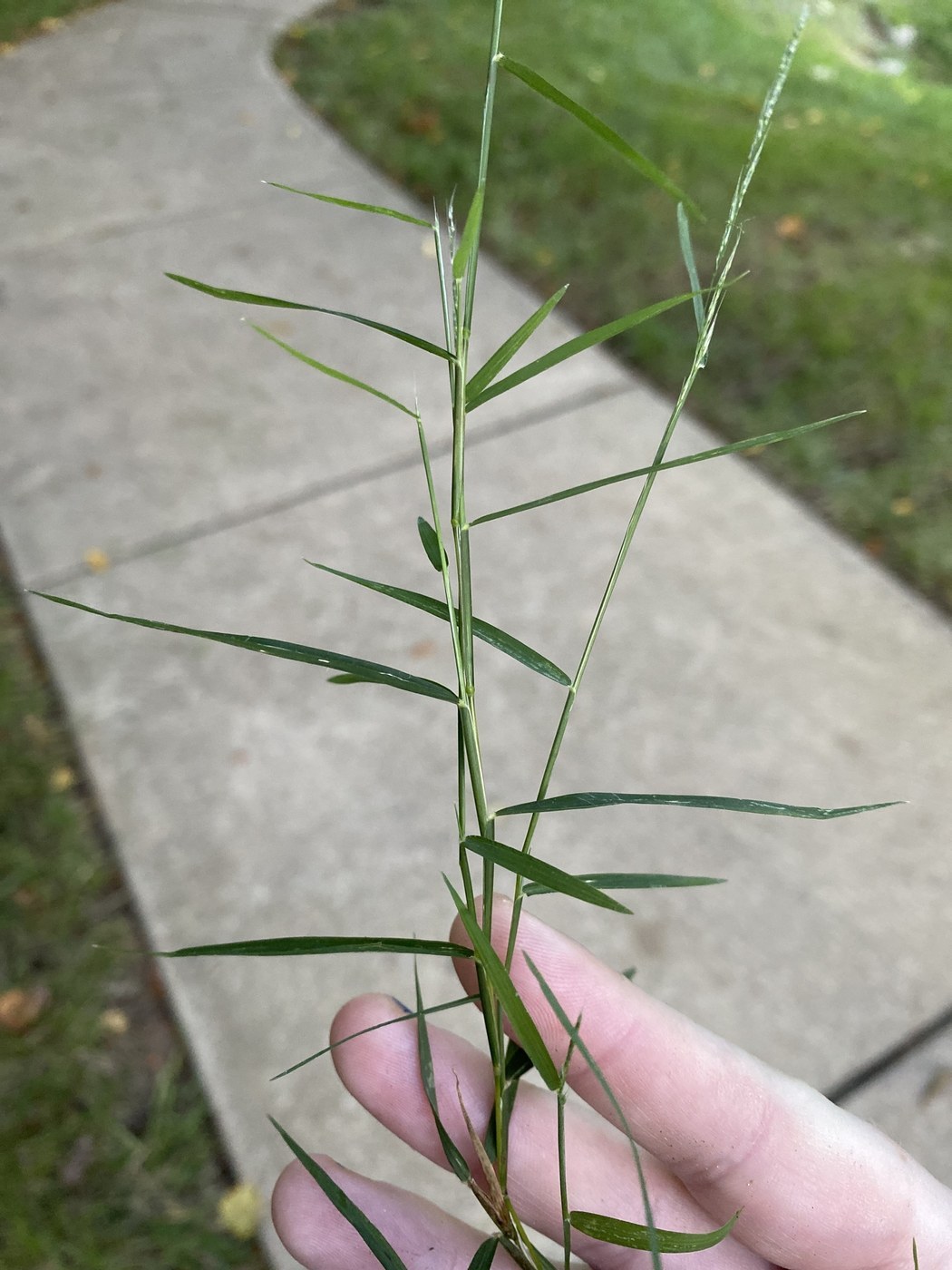
Key Identifying Features
Nimblewill (Muhlenbergia schreberi) is a fine-textured, mat-forming perennial grass native to North America that often invades shaded lawns. It is most noticeable in fall and winter, when its patches turn a distinctive straw-tan to whitish color while the surrounding cool-season turf stays green.
- Wiry, thread-like stems that creep and root along the ground
- Short, narrow, gray-green to bluish leaf blades held nearly horizontal
- Forms loose, sprawling patches rather than tight clumps
- Goes dormant early, leaving tan dead-looking patches
Leaves & Stems
Leaf blades are short (about 1-2.5 inches), narrow, and flat, with a slightly bluish or grayish-green cast. They spread out almost at right angles from the stem, giving sprigs a feathery, branched look. The ligule is a tiny membranous fringe at the leaf base.
Stems are slender, branching, and decumbent (lying along the ground then turning up). They root at the lower nodes, allowing the plant to spread by creeping stolon-like stems. There are no rhizomes, so plants pull up fairly easily in a sprawling mat.
Flowers & Fruit
Nimblewill flowers in late summer into fall. The seed head is a slender, open, spike-like panicle, narrow and wispy, often purplish-gray. The tiny spikelets bear short awns. Seed heads are delicate and easy to overlook, but the airy narrow panicle helps confirm the grass when present.
How to Tell It Apart from Look-Alikes
- Bermuda grass: also creeping, but Bermuda is a warm-season turf with a fringe of hairs at the ligule and tougher stolons; nimblewill is finer, bluish, and more shade-tolerant.
- Creeping bentgrass: similar fine texture and patchy habit, but bentgrass stays green longer and has a taller membranous ligule.
- Crabgrass: an annual that dies completely each winter; nimblewill is a perennial returning from the same creeping stems.
The key combination is fine bluish blades + creeping rooting stems + early straw-tan dormancy in shade.
Where You'll Find It
Nimblewill thrives in moist, shaded to partly shaded ground: lawns under trees, woodland edges, stream banks, paths, and disturbed soils. It is common throughout the eastern and central United States. Because it tolerates shade and competes with thin turf, it is a frequent lawn weed where grass struggles.
Quick ID Checklist
- Perennial grass forming loose creeping patches
- Short, narrow bluish-gray blades spreading at wide angles
- Wiry stems rooting at the nodes
- Slender open panicle seed head in late summer/fall
- Turns straw-tan early while surrounding turf stays green
- Common in shaded, moist lawns
Frequently asked questions
When is nimblewill easiest to spot in a lawn?
In fall and early spring, when nimblewill turns a pale straw-tan color and goes dormant while cool-season lawn grasses around it remain green, making the patches stand out clearly.
Is nimblewill a perennial or annual?
It is a warm-season perennial. It dies back at the top in cold weather but regrows each year from creeping stems that root at the nodes.
How do I tell nimblewill from bermuda grass?
Nimblewill has finer, bluish blades, is much more shade-tolerant, and lacks the tough rhizomes of bermuda grass. Bermuda has a hairy ligule and thrives in full sun.
Does nimblewill have rhizomes?
No. It spreads by slender above-ground stems (stolons) that root at the nodes rather than by underground rhizomes, so it lifts away in loose mats.