
How to Care for Noble Fir
Grow the stately Noble Fir for its blue-green needles and symmetrical form. A cool-climate conifer needing sun, moisture and sharp drainage.
Read the full Noble Fir encyclopedia entry →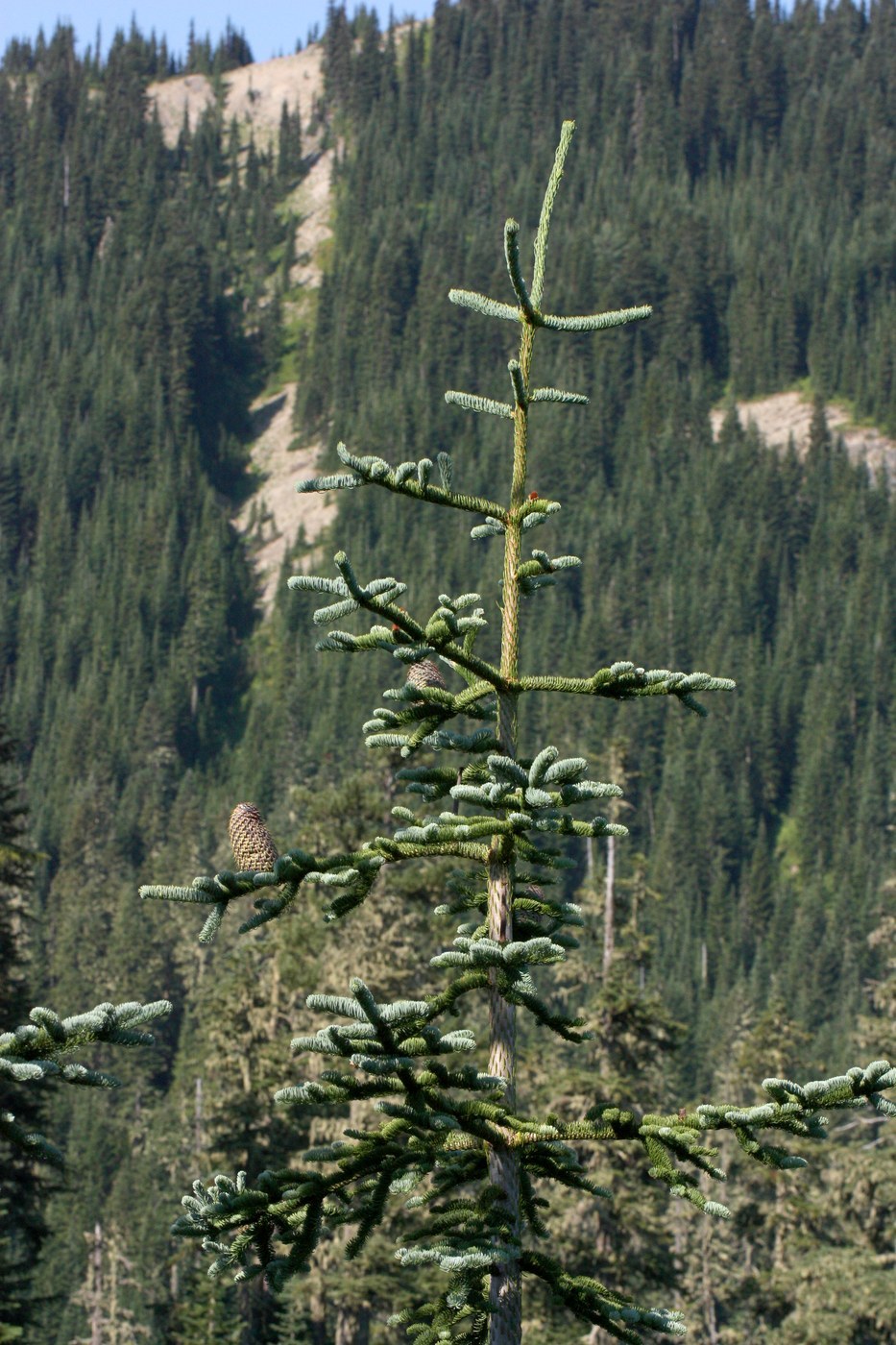
The Noble Fir (Abies procera) is a majestic evergreen conifer prized for its silvery blue-green needles, upright bluish cones, and beautifully symmetrical, tiered form. Native to cool, moist mountain forests of the Pacific Northwest, it is a moderate-difficulty tree that needs consistent moisture, sharp drainage, and a cool climate to thrive.
Light
Give Noble Fir full sun for the densest, most symmetrical growth and strongest color. It tolerates light shade when young but develops the best form in the open. Ample light keeps the tiered branching tight and the blue-green foliage vivid.
Water
Noble Fir needs moderate, consistent moisture combined with excellent drainage. Water young trees regularly so the root zone never dries out fully, particularly through dry summer spells. It dislikes both drought and waterlogging, so the goal is steadily moist but never soggy soil. Mulch to conserve moisture and keep roots cool.
Soil & Potting
Plant in deep, fertile, well-draining soil that is slightly acidic. It resents heavy, compacted, or alkaline ground and struggles in wet clay. Incorporate organic matter to improve moisture retention while ensuring water still drains freely. Good drainage plus steady moisture is the balance this fir demands.
Humidity & Temperature
Noble Fir is a cool-climate species that thrives in cold winters, mild summers, and moist mountain air. It is very cold hardy but struggles in hot, dry, or humid low-elevation climates. Choose a cool, airy site and avoid heat-trapped or arid locations where it will decline.
Feeding
Feed lightly if at all in good soil. A slow-release conifer fertilizer or acidic tree feed in early spring supports young trees, but avoid excess nitrogen. Established firs in suitable soil generally need no feeding beyond an annual mulch of organic matter over the root zone.
Propagation
Propagate from seed, which benefits from a period of cold, moist stratification before sowing in a well-draining seed mix. Keep seedlings cool, evenly moist, and lightly shaded when very young. Growth is slow at first; cuttings are difficult, so seed is the standard method.
Repotting / Pruning
Noble Fir needs minimal pruning; its natural symmetry is its beauty. Remove only dead, damaged, or competing leaders to maintain a single straight trunk. Prune in late winter if needed. Container specimens should be repotted in early spring into fresh, sharply draining acidic mix while young.
Common Problems & Pests
Root rot from poor drainage is the main risk, along with decline in hot, dry conditions. Aphids, adelgids, and spider mites can appear, especially on stressed trees, so keep the tree well-watered and sited in cool air. Needle-cast fungi may occur in damp, crowded plantings, so ensure good spacing and airflow.
Seasonal Care Tips
In spring, mulch and apply any light feeding as growth resumes. Through summer, water consistently to prevent drought stress, which this tree is sensitive to. In autumn, ease off watering as growth slows. In winter, the tree is fully hardy and needs no special protection in a suitable cool climate.
Frequently asked questions
Why is my Noble Fir struggling in my garden?
Noble Fir is a cool-climate mountain species. Hot, dry, or humid low-elevation conditions cause it to decline. It performs best in regions with cold winters and mild, moist summers.
How much water does a Noble Fir need?
It needs moderate, consistent moisture with excellent drainage. Keep young trees from drying out, especially in summer, but never let the soil become waterlogged.
Does Noble Fir need acidic soil?
Yes, it prefers deep, fertile, slightly acidic, well-draining soil. It struggles in heavy, compacted, or alkaline ground.
Do I need to prune a Noble Fir?
Very little. Its natural symmetry is its main appeal. Remove only dead or damaged wood and any competing leaders to keep a single straight trunk.