Orange Tree Identification Guide
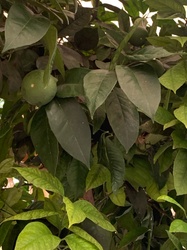
Identify the orange tree (Citrus sinensis) by its glossy evergreen leaves with winged petioles, fragrant white five-petaled blossoms, and round orange fruit.
Read the full Orange Tree encyclopedia entry →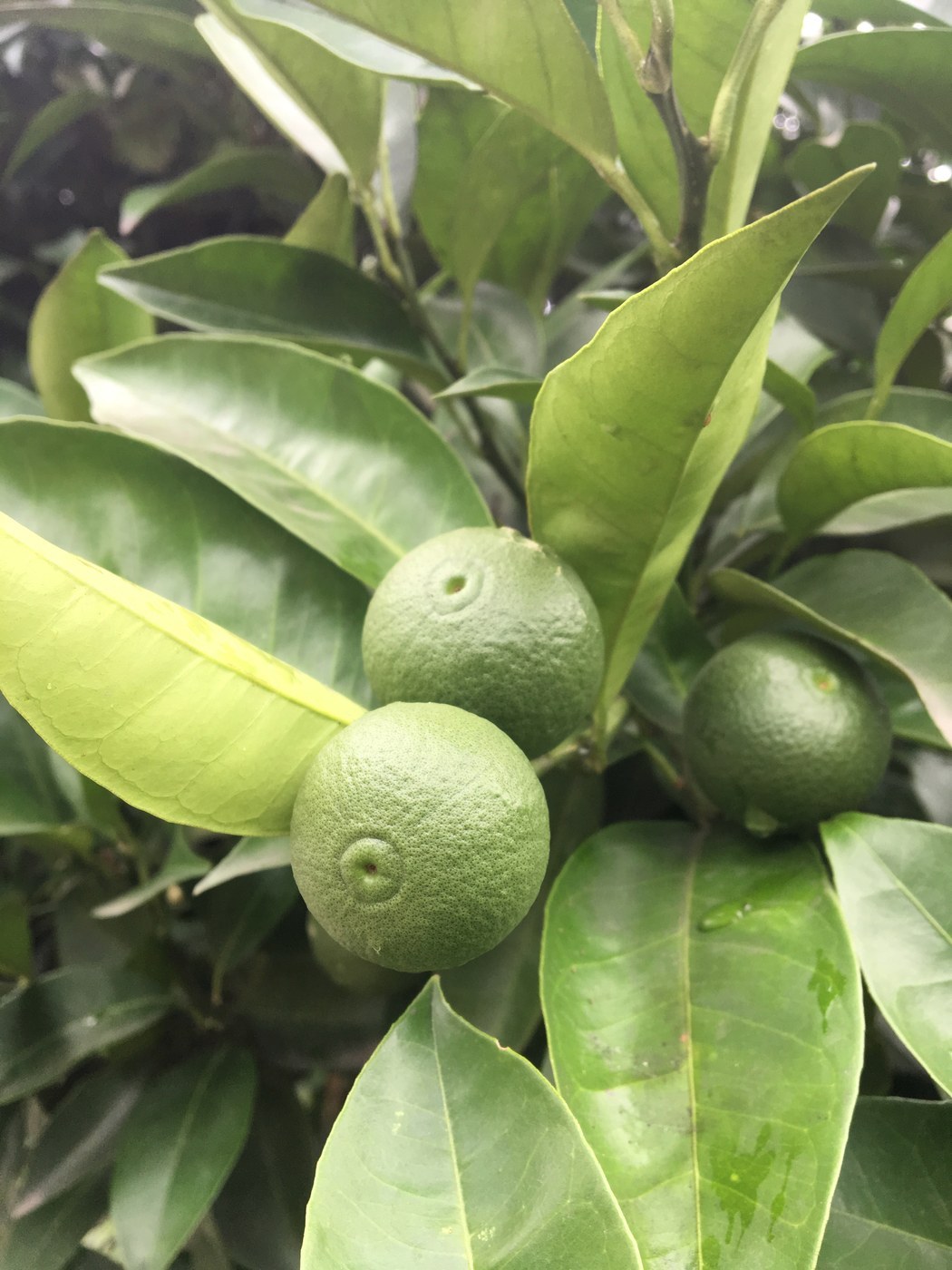
Key Identifying Features
The sweet orange tree (Citrus sinensis) is a small evergreen tree, 5-10 m tall, with a rounded, dense canopy. Recognize it by its glossy dark-green leaves with faintly winged leaf stalks, intensely fragrant white blossoms (orange blossom), and the familiar round orange fruit (hesperidium). Crushing a leaf or scratching the peel releases a strong citrus-oil aroma from tiny oil glands — a reliable confirmation.
Leaves & Stems
- Leaves are simple, alternate, oval to elliptical, 6-10 cm long, glossy dark green above, paler below.
- The petiole is narrowly winged (a small flange of leaf tissue), a classic Citrus sinensis feature — narrower than the broad wings of grapefruit.
- Hold a leaf to the light to see translucent oil dots; crushed leaves smell strongly of orange.
- Twigs are green and often bear small, slender thorns at the leaf bases, especially on young growth.
Flowers & Fruit
- Flowers are white, waxy, five-petaled, about 2-3 cm, intensely sweet-scented, single or in small clusters.
- They have many yellow stamens around a central pistil.
- Fruit is a round-to-slightly-oval orange, 6-10 cm, with a pebbled orange rind (green when unripe) and 10-13 juicy segments inside.
- The rind is tightly attached (unlike the loose skin of mandarins).
How to Tell It Apart from Look-Alikes
- Grapefruit (Citrus paradisi): Much larger fruit, broadly winged petioles, and bigger leaves.
- Lemon (Citrus limon): Elliptical fruit with a nipple, purple-tinged new growth, barely winged petioles, and stiffer thorns.
- Mandarin/tangerine (Citrus reticulata): Smaller fruit with loose, easily peeled skin and narrow, nearly wingless petioles.
- Bitter/Seville orange (Citrus aurantium): Strongly winged petioles and very bitter fruit; sweet orange has narrower wings and sweet pulp.
The combination of narrowly winged petioles + fragrant white five-petaled flowers + round tight-skinned orange fruit identifies the sweet orange.
Where You'll Find It
Orange trees are grown in subtropical and Mediterranean climates (USDA zones 9-11) — orchards, gardens, and as ornamental/patio trees in containers in colder regions. They need full sun, well-drained soil, and protection from frost. Flowers and fruit can appear on the tree at the same time.
Quick ID Checklist
- Small evergreen tree with dense rounded canopy
- Glossy dark-green leaves with narrowly winged petioles
- Translucent oil dots and strong orange scent when crushed
- Small thorns on young green twigs
- Fragrant white five-petaled blossoms
- Round, pebble-skinned orange fruit with tight rind
Frequently asked questions
How can I identify an orange tree when it has no fruit?
Check the leaves: they are glossy, dark green, with a narrowly winged petiole and translucent oil glands that smell strongly of orange when crushed. Small thorns on green twigs and, in season, fragrant white five-petaled flowers confirm it.
What is the winged petiole and why does it matter?
The petiole (leaf stalk) of citrus often has a small flange or 'wing' of leaf tissue at its base. The width helps tell species apart: sweet orange has narrow wings, grapefruit has broad wings, and lemons have almost none.
How do I tell an orange tree from a mandarin tree?
Orange fruit has a tight, hard-to-peel rind and the leaves have narrow winged petioles, while mandarins have loose, easy-peel skin and nearly wingless petioles. Mandarin fruit is also typically smaller and flatter.
Why does my orange tree have flowers and fruit at the same time?
Citrus trees often carry maturing fruit from the previous bloom while new fragrant blossoms open, which is normal for evergreen oranges in warm climates.
Orange Tree identified by the community
Recent Orange Tree specimens identified with Plant Identifier.