
Pacific Silver Fir Identification Guide
How to identify Pacific Silver Fir (Abies amabilis) by its silvery-white needle undersides, forward-pointing needles that hide the twig, and upright purple cones. Covers Pacific Northwest habitat.
Read the full Pacific Silver Fir encyclopedia entry →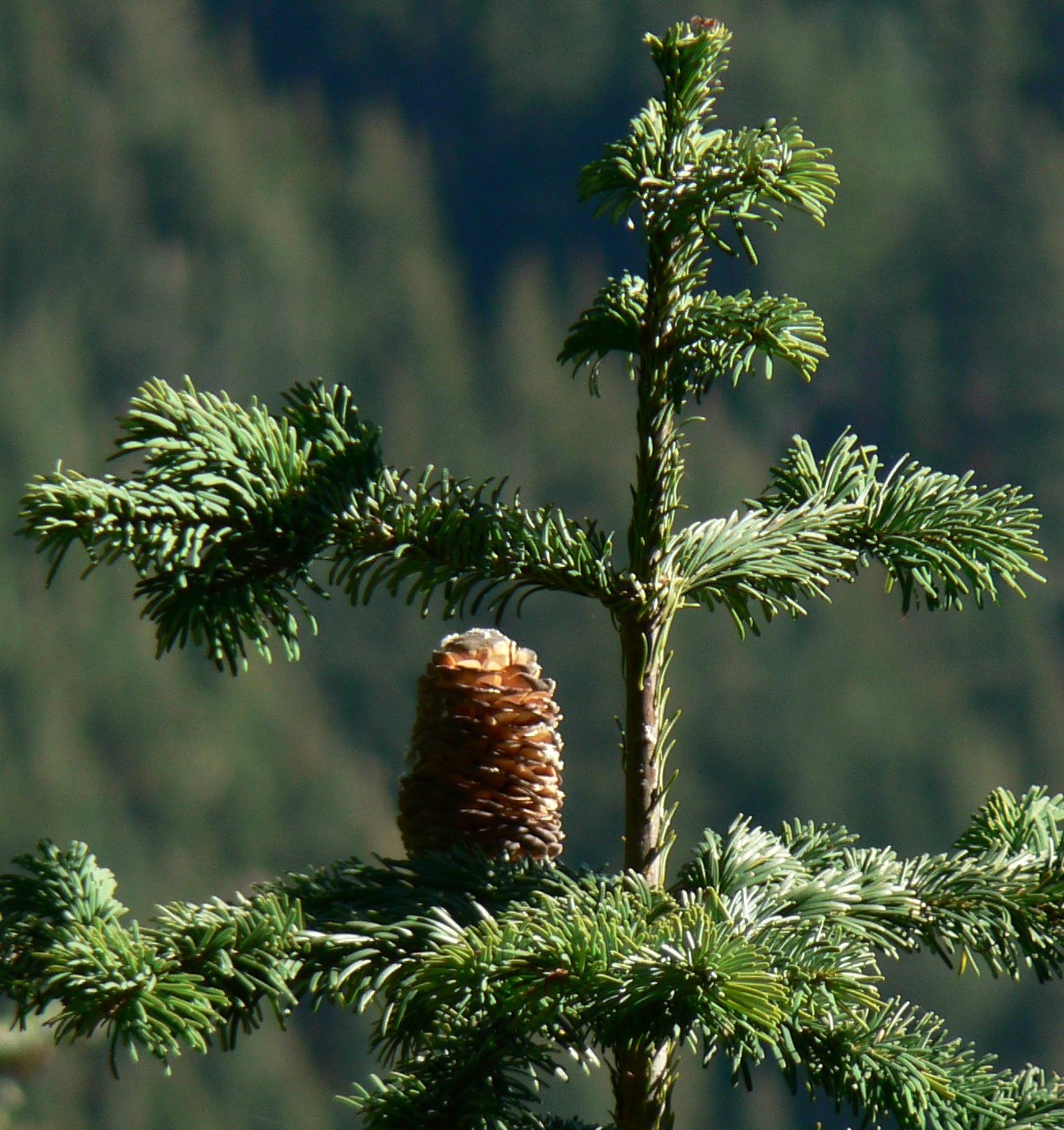
Key Identifying Features
Pacific Silver Fir (Abies amabilis), also called silver fir or lovely fir, is recognized by the brilliant silvery-white undersides of its needles and the way the needles point forward and lie flat over the top of the twig, largely hiding it from above. Combined with upright purple cones and smooth grayish bark, these traits distinguish it among Pacific Northwest firs.
Leaves & Stems
- Needles flat, glossy dark green above, with two vivid silvery-white bands beneath — strikingly bright when you flip a spray over.
- Distinctive arrangement: needles on the upper twig point forward and lie flat, while lower needles spread sideways, so the top of the shoot looks covered and tidy.
- Needle tips rounded or notched, not prickly; length about 0.75 to 1.5 inches.
- Bark smooth, ashy-gray, with resin blisters when young; develops scaly plates with age.
Flowers & Fruit
- Seed cones upright, 3.5 to 6 inches long, deep purple when developing, borne high in the crown.
- Cones disintegrate on the tree at maturity, leaving erect central spikes.
- Among the larger fir cones of the region, conspicuously purple before ripening.
How to Tell It Apart from Look-Alikes
- Grand Fir has needles in two flat horizontal rows and a citrus smell; Silver Fir's upper needles point forward and cover the twig, and undersides are more vividly silver.
- Noble fir has four-sided, upswept needles with a grooved upper surface and huge cones with protruding bracts.
- Subalpine fir has a narrow spire crown and silvery needles on both surfaces.
- Douglas-fir has hanging cones with three-pointed bracts and needles all around the twig.
Where You'll Find It
Cool, moist, high-rainfall forests of the Pacific Northwest — the Cascades and Coast Ranges of Washington, Oregon, British Columbia, and southeast Alaska — generally at mid to high elevations where it can dominate shady, snowy slopes. A shade-tolerant climax species.
Quick ID Checklist
- Needle undersides brilliant silvery-white
- Upper needles point forward and lie flat, hiding the twig
- Tips rounded/notched, glossy green above
- Upright purple cones, 3.5 to 6 inches, in the high crown
- Moist, cool, snowy Pacific Northwest mountain forests
Frequently asked questions
Why is it called Pacific Silver Fir?
The undersides of its flat needles carry two vivid silvery-white bands, giving sprays a bright silver flash when turned over.
How are its needles arranged?
Needles on top of the twig point forward and lie flat, covering the shoot, while lower needles spread to the sides. This forward-pointing layout helps separate it from Grand Fir.
What do the cones look like?
Upright cones 3.5 to 6 inches long, deep purple while developing, that fall apart on the tree rather than dropping whole.
How do I tell it from Grand Fir?
Grand Fir needles lie in two flat horizontal rows and smell of citrus; Pacific Silver Fir's upper needles point forward over the twig and the undersides are more intensely silver.