
Painted Daisy Identification Guide
Identify painted daisy (Tanacetum coccineum) by its finely cut ferny foliage and large single daisy flowers in pink, red, or white with a yellow center.
Read the full Painted Daisy encyclopedia entry →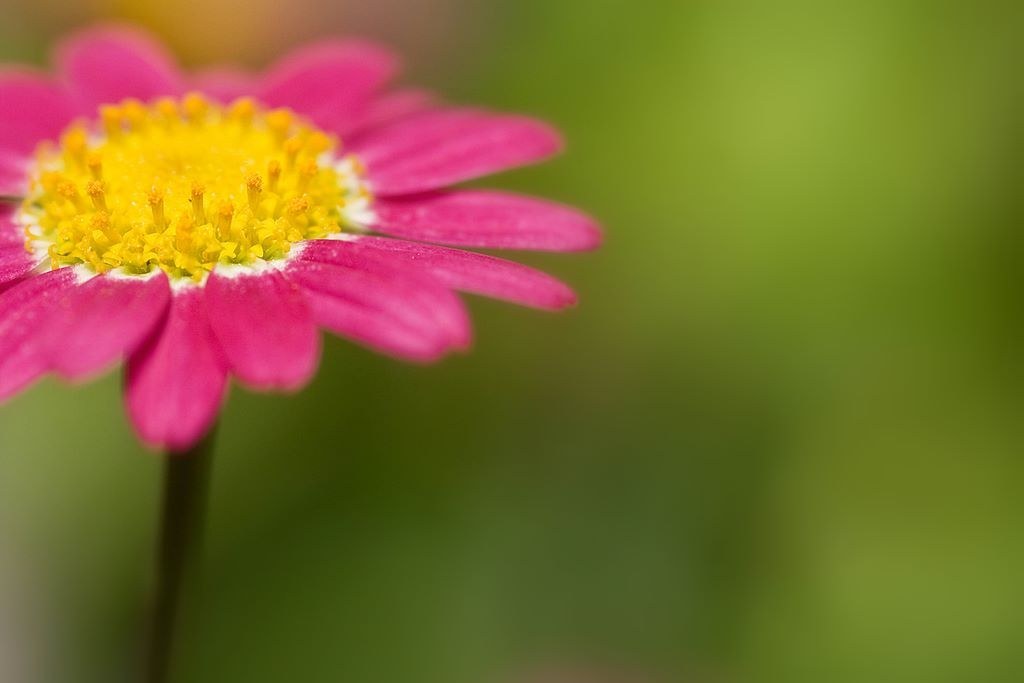
Key Identifying Features
Painted daisy (Tanacetum coccineum, formerly Pyrethrum or Chrysanthemum coccineum), also called pyrethrum daisy, is a clump-forming perennial in the aster family grown for its classic large single daisies in vivid pink, rose, red, or white, each with a bright yellow central disk. It is prized for cut flowers and as the natural source of the insecticide pyrethrum. Plants reach 1.5–3 feet with attractive, finely divided ferny foliage.
- Upright, clumping perennial, 1.5–3 ft
- Large single daisy flowers (~2–3 in)
- Petals pink, rose, red, or white; yellow center
- Fern-like, finely cut aromatic foliage
Leaves & Stems
Leaves are alternate and deeply, finely divided (pinnately dissected) into many narrow segments, giving a feathery, fern-like appearance, bright to medium green. The foliage is aromatic when crushed. Stems are slender but sturdy, mostly unbranched, each typically carrying a single flower head on a long stalk that makes the blooms excellent for cutting.
Flowers & Fruit
Flower heads are solitary, daisy-shaped, and 2–3 inches across, with a single ring of broad ray florets in pink, red, or white surrounding a flat yellow disk of tiny tubular florets. Bloom comes in late spring to early summer, with a possible rebloom if cut back. The dried flower heads of this and related species are the source of pyrethrins, natural insect repellents. Small dry seeds follow.
How to Tell It Apart from Look-Alikes
- Shasta daisy (Leucanthemum) has white petals only and simple, toothed (not ferny) leaves; painted daisy is colorful with finely dissected foliage.
- Cosmos has similarly ferny leaves but daisy flowers in pink/white with a softer, looser annual habit and yellow center; cosmos leaves are even more thread-like.
- Coreopsis is yellow-flowered with different foliage.
- The colored petals + ferny aromatic leaves + single yellow-centered daisy combination identifies painted daisy.
Where You'll Find It
Painted daisy is grown in perennial borders and cutting gardens in full sun and well-drained soil, preferring cooler summers. It is hardy and returns each year from its clump. Native to southwestern Asia (the Caucasus and Iran), it is widely cultivated and occasionally naturalizes in temperate gardens.
Quick ID Checklist
- Clumping perennial, 1.5–3 ft
- Ferny, finely divided aromatic leaves
- Large single daisies in pink, red, or white
- Bright yellow central disk
- Late spring/early summer bloom; source of pyrethrum
A clumping perennial with ferny aromatic foliage and big pink-to-red single daisies with yellow centers is the painted daisy.
Frequently asked questions
How is painted daisy different from a Shasta daisy?
Painted daisy has colorful pink, red, or white petals and finely cut ferny aromatic foliage, while Shasta daisy has white petals only and simple, toothed leaves.
Is painted daisy the source of pyrethrum insecticide?
Yes. The dried flower heads of Tanacetum coccineum and close relatives contain pyrethrins, natural insecticidal compounds, which is why it is also called pyrethrum daisy.
Is it an annual or perennial?
It is a hardy clump-forming perennial that returns each year, blooming mainly in late spring to early summer.
Why does the foliage look like ferns?
Its leaves are deeply and finely divided into many narrow segments, giving a feathery, fern-like texture that is aromatic when crushed.