
Pansy Identification Guide
Learn to identify pansies by their large flat five-petaled flowers with a central face-like blotch, low mounding habit, and cool-season bloom.
Read the full Pansy encyclopedia entry →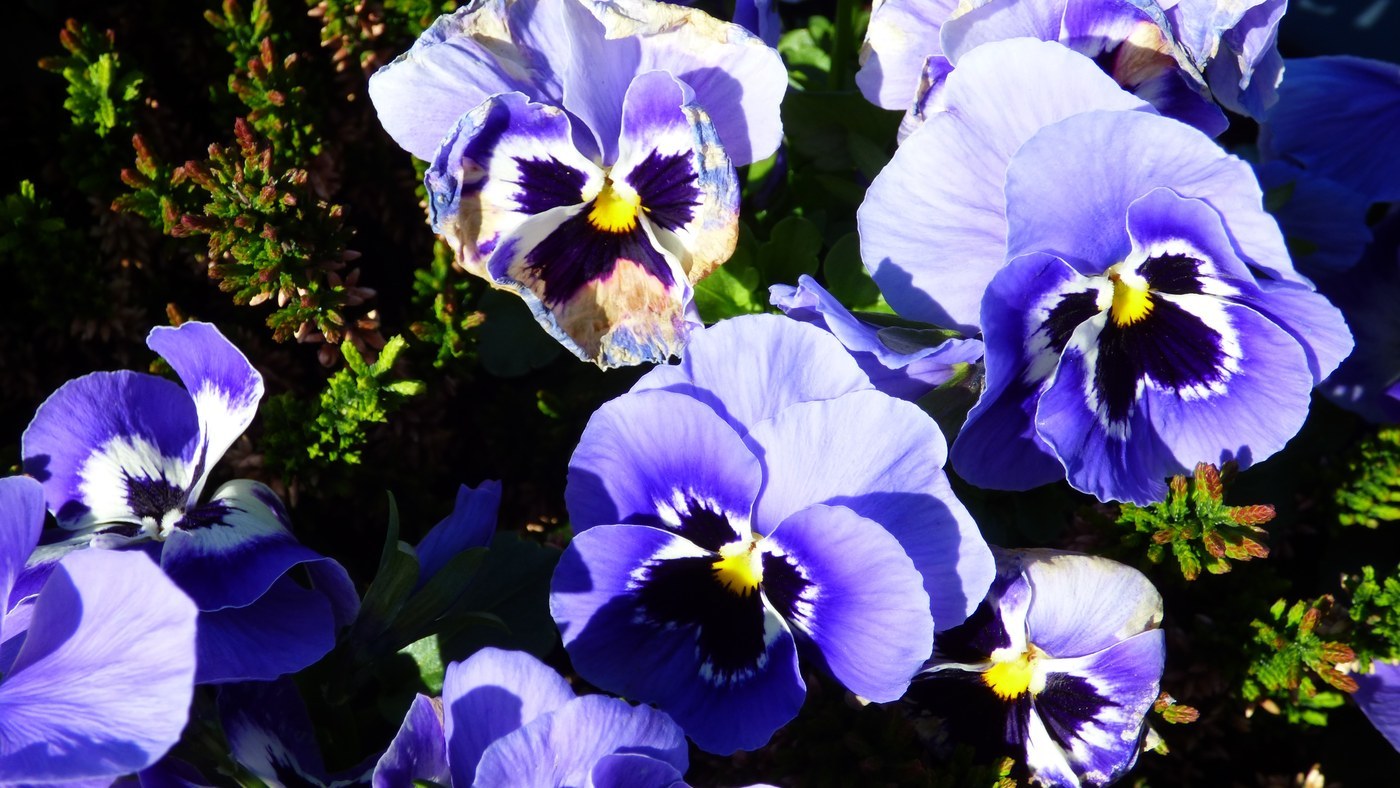
Key Identifying Features
Pansies (Viola × wittrockiana) are cool-season members of the violet family (Violaceae). They are instantly recognizable by:
- Large, flat, rounded flowers with five overlapping petals, typically 2–3 inches across.
- A central "face" — dark blotches and radiating lines that look like markings on a small face.
- A low, compact mounding habit, usually 6–9 inches tall.
Leaves & Stems
Pansy leaves are oval to heart-shaped with scalloped or bluntly toothed margins, mid-green and slightly glossy. They are arranged alternately along short, slightly succulent stems and form a low rosette-like clump. The whole plant stays compact and bushy, rarely sprawling. Stems are soft, green, and brittle. Foliage has no notable scent.
Flowers & Fruit
The flower has five velvety petals: two upper, two side, and one broad lower petal, with the lower three usually bearing a dark central blotch and fine radiating veins (the face). Colors are extremely varied — purple, yellow, white, blue, orange, red, near-black, and countless bicolors and tricolors. A short spur projects backward from the lower petal. Flowers face outward on individual slender stalks. After bloom a small three-valved capsule splits to scatter seeds. Pansies bloom most heavily in cool spring and fall and through mild winters.
How to Tell It Apart from Look-Alikes
- Violas (Johnny-jump-ups): Same genus but flowers are much smaller (under 1.5 inches) and more numerous; pansies have larger, fewer blooms per plant.
- Sweet violet (Viola odorata): Smaller, often fragrant flowers and a clumping wild habit without the bold central face.
- Petunia: Has fused trumpet flowers and sticky foliage — quite different from the flat, separate-petaled pansy.
The large flat face with a dark central blotch and rear spur is the definitive pansy combination.
Where You'll Find It
Pansies are popular bedding and container plants for cool seasons, widely planted in fall and early spring displays, borders, and window boxes. They tolerate light frost and prefer full sun to part shade in cool weather, fading in summer heat. They are a staple of public landscapes and home gardens during the cooler months.
Quick ID Checklist
- Flat, rounded flower 2–3 inches wide with five petals
- Central face of dark blotch and radiating veins
- Short backward-pointing spur behind the flower
- Heart- to oval-shaped scalloped leaves
- Low, compact mounding plant
- Peak bloom in cool spring and fall
Frequently asked questions
What's the difference between a pansy and a viola?
They are closely related Violas. Pansies have larger flowers (2–3 inches) with fewer blooms, while violas have smaller flowers (under 1.5 inches) but many more of them. Both share the same face-like markings.
Why do pansies have a face?
The dark central blotch and radiating veins on the lower petals resemble a small face. These markings guide pollinators and are a hallmark identification feature of pansies.
When do pansies bloom best?
Pansies are cool-season flowers that bloom most heavily in early spring and fall, and through mild winters. They tend to decline and stop flowering in summer heat.