
Papaya Tree Identification Guide
Identify the papaya (Carica papaya) by its single hollow trunk, umbrella of deeply lobed leaves, milky latex, and large melon-like fruit clustered at the top.
Read the full Papaya Tree encyclopedia entry →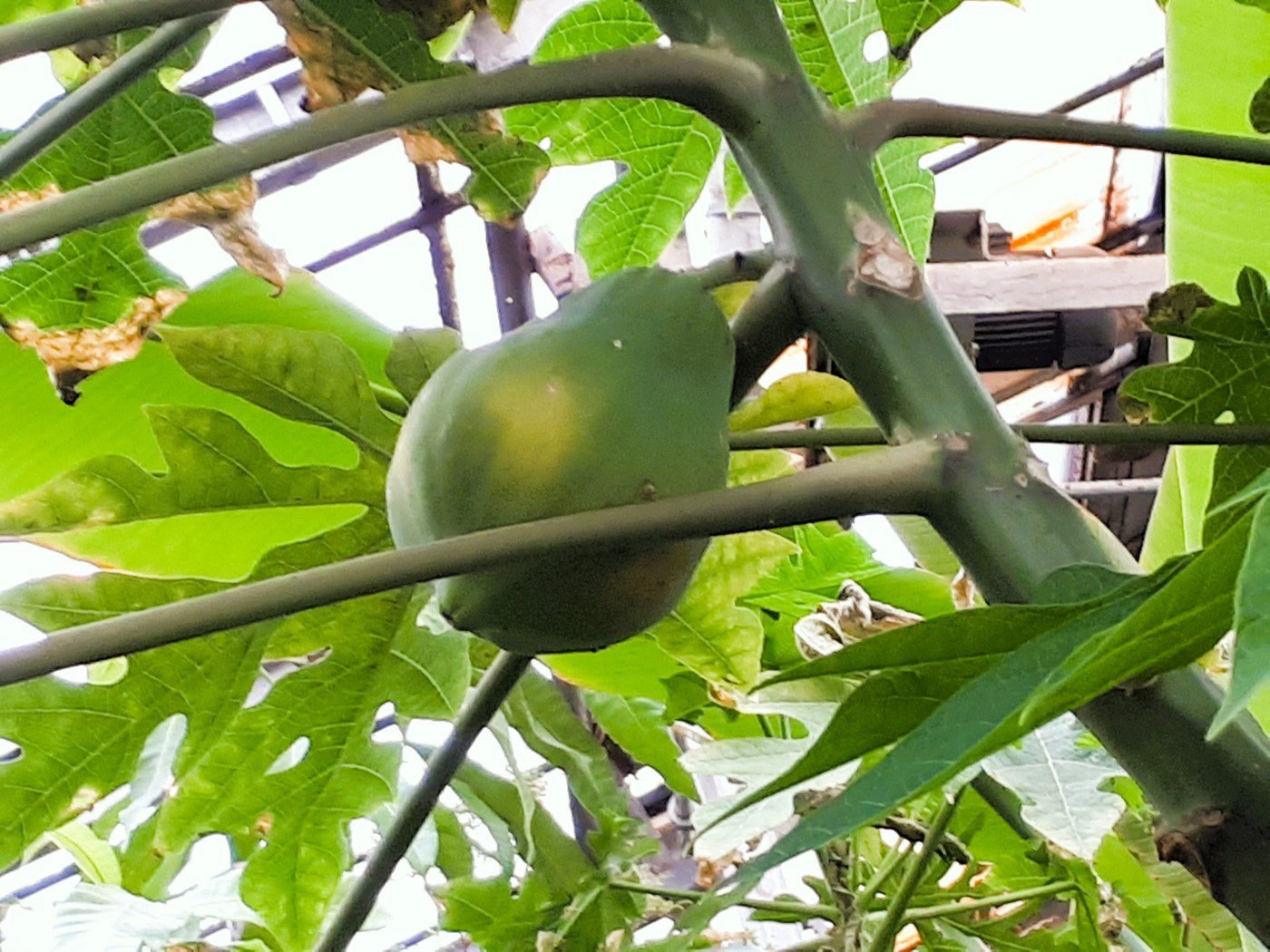
Key Identifying Features
The papaya (Carica papaya) is a fast-growing, short-lived, tree-like herb rather than a true woody tree. It has a single, soft, hollow, unbranched trunk topped by a crown of large, deeply lobed palmate leaves, with fruit clustered directly on the trunk beneath the leaves. All parts ooze milky latex. Plants reach 2-10 m in a few years.
Leaves & Stems
- The trunk is straight, greenish to gray, soft and hollow, ringed with prominent leaf scars where old leaves have dropped.
- Leaves are very large (up to 70 cm across), palmately and deeply 5-9 lobed, each lobe further cut, carried on long hollow petioles up to 1 m.
- New leaves emerge only at the apex, forming an umbrella-like crown; lower trunk is bare.
- Cut surfaces release white latex.
Flowers & Fruit
- Plants are usually male, female, or bisexual (dioecious or hermaphrodite).
- Female flowers are large, creamy white, borne close to the trunk in leaf axils; male flowers hang in long, slender branched sprays.
- Fruit is a large berry, pear- to melon-shaped, 7-45 cm, ripening yellow to orange, clustered around the upper trunk.
- Flesh is orange to reddish, soft and sweet, with a central cavity full of round black peppery seeds.
How to Tell It Apart from Look-Alikes
- Castor bean (Ricinus communis): also has big palmate lobed leaves, but it is branched, woodier, with spiny seed capsules, not a single trunk with melon fruit.
- Fig (Ficus) and cassava: have lobed leaves and milky sap, but lack the single hollow trunk topped with a leaf umbrella and trunk-borne fruit.
- Tree fern/palm: superficially similar silhouette, but palms have fronds, no latex, and no melon-like fruit on the trunk.
- The soft hollow single trunk + crown of giant lobed leaves + latex + clustered melon fruit combo is unique.
Where You'll Find It
Papaya is grown throughout the tropics and frost-free subtropics worldwide, in gardens, smallholdings, and plantations. It often appears as a volunteer in disturbed ground, compost heaps, and roadsides where seeds are dispersed. It demands warmth, full sun, and well-drained soil, and is killed by frost.
Quick ID Checklist
- Single soft, hollow, unbranched trunk with ringed leaf scars
- Umbrella crown of huge deeply lobed palmate leaves on long hollow stalks
- Milky latex in all parts
- Fruit clustered on the upper trunk, pear/melon-shaped, orange flesh
- Central cavity of round black seeds
Frequently asked questions
Is a papaya a tree or a giant herb?
Botanically papaya is a large herbaceous plant, not a true tree. Its trunk is soft and hollow rather than woody, even though it can grow several meters tall and looks tree-like.
How do I identify a papaya plant that isn't fruiting yet?
Look for a single, unbranched, soft trunk marked with ring-like leaf scars, topped by an umbrella of very large, deeply lobed palmate leaves on long hollow stalks. Cutting any part releases milky latex.
Why does my papaya have no fruit?
Papayas can be male, female, or bisexual. A male plant produces only long hanging flower sprays and no fruit; you need a female or bisexual plant (and a pollinator) to get fruit.
What does papaya fruit look like inside?
Ripe papaya has soft orange to reddish flesh and a hollow central cavity lined with many round, glistening black seeds that have a peppery taste.