
How to Care for Peanut Cactus
Peanut Cactus forms trailing clusters of finger-like stems topped with vivid orange blooms; give it bright light and sparing water.
Read the full Peanut Cactus encyclopedia entry →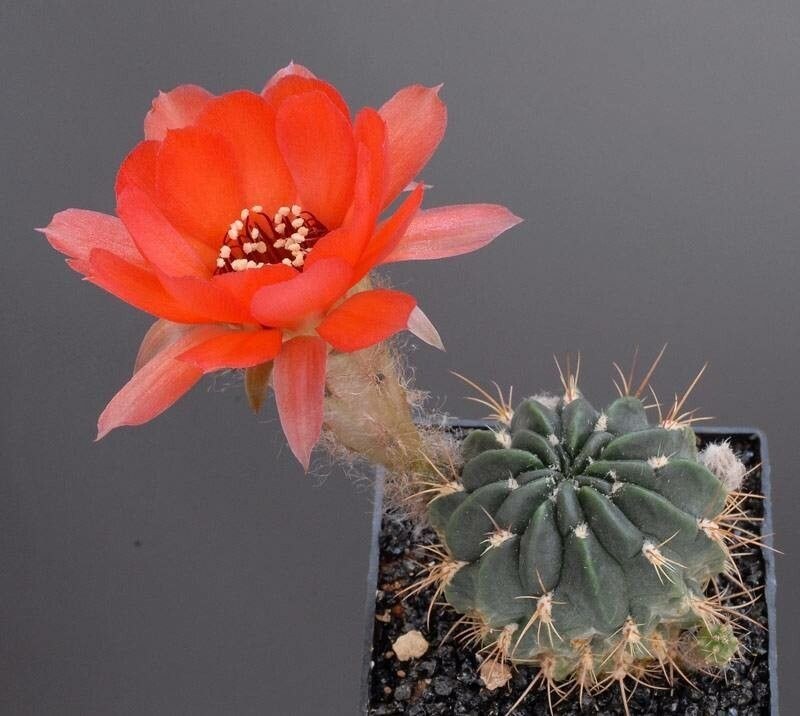
Peanut Cactus (Echinopsis chamaecereus) is a charming, easy small cactus that forms sprawling clusters of soft, finger-shaped stems and produces surprisingly large, vivid orange-red flowers. Its trailing, clumping habit makes it a favorite for pots, hanging displays, and sunny windowsills.
Light
Give Peanut Cactus bright light to full sun. A south- or west-facing window indoors, or a sunny spot outdoors, brings out the best growth and encourages flowering. Ample light keeps the stems compact and healthy; too little light makes them stretch, thin out, and pale. Acclimate gradually to intense summer sun to prevent scorching after a shaded winter.
Water
Water sparingly, allowing the soil to dry out completely between waterings. During the active growing season in spring and summer, water thoroughly when the mix is dry, then let it dry again. This cactus stores water in its stems and is very sensitive to overwatering, which causes rot. In winter, keep it nearly dry.
Soil & Potting
Use a gritty, fast-draining cactus and succulent mix. Amend standard potting soil with plenty of coarse sand, perlite, or pumice to ensure water drains freely. A pot with drainage holes is essential; terracotta is ideal because it wicks away moisture. A shallow, wide pot suits its spreading, clumping habit.
Humidity & Temperature
Peanut Cactus prefers warm temperatures and dry air during the growing season, thriving in normal room conditions and hot summer weather. It requires a cool, dry winter rest between roughly 40 and 50 degrees Fahrenheit to initiate spring flowering. It can tolerate brief cold if kept bone dry, but avoid freezing wet conditions. Low humidity is fine and preferred.
Feeding
Feed lightly during the growing season with a diluted low-nitrogen cactus fertilizer, about once a month from spring through summer. Excess nitrogen produces soft, weak growth and discourages flowering. Do not feed during the winter rest period.
Propagation
Propagation is extremely easy. The finger-like stems detach readily; simply break off a segment, let the cut end callus over for a day or two, then set it on or just into dry cactus mix. Roots form quickly, especially in the warm growing season. Offsets that root while still attached can also be lifted and potted individually.
Repotting / Pruning
Repot every couple of years in spring, or when the clump outgrows its container, moving to a slightly larger, wide pot. Handle carefully, as the stems snap off easily. Little pruning is needed beyond removing shriveled, damaged, or overcrowded stems to keep the clump tidy and airy. Removed healthy segments can be used for propagation.
Common Problems & Pests
Overwatering is the leading problem, causing soft, brown, mushy stems from rot; correct by withholding water and improving drainage. Stretched, pale, floppy stems indicate insufficient light. Watch for mealybugs nestled among the stems and root mealybugs in the soil, plus spider mites in hot dry conditions; treat with insecticidal soap or by isolating and cleaning the plant. Lack of flowers usually means the plant did not get its cool, dry winter rest.
Seasonal Care Tips
In spring, resume watering and feeding as growth restarts, and enjoy the flush of bright blooms. Through summer, provide strong light and water when dry. In fall, taper off water and feeding. In winter, give the plant a cool, bright, dry rest, watering only minimally or not at all; this dormancy is essential to trigger the following spring's spectacular flowering.
Frequently asked questions
Why won't my Peanut Cactus flower?
The most common reason is a lack of proper winter rest. Peanut Cactus needs a cool, dry, bright dormancy around 40 to 50 degrees Fahrenheit in winter to set buds. Plenty of bright light in the growing season also helps.
How often should I water a Peanut Cactus?
Water sparingly, only when the soil has dried out completely, roughly every week or two in the growing season. In winter keep it nearly dry. Overwatering is the top cause of rot in this cactus.
Why are the stems on my Peanut Cactus thin and stretched?
Thin, elongated, pale stems mean the plant is not getting enough light. Move it to a brighter spot with several hours of direct sun to keep the stems plump, compact, and healthy.
How do I propagate Peanut Cactus?
It could not be easier. Snap off one of the finger-like stems, let the cut end callus for a day or two, then place it on dry cactus mix. Roots form quickly, especially during warm spring and summer growth.