
How to Care for Pencil Cactus
Grow the striking Pencil Cactus (Euphorbia tirucalli) with abundant light, sharp drainage, and sparing watering for easy, sculptural growth.
Read the full Pencil Cactus encyclopedia entry →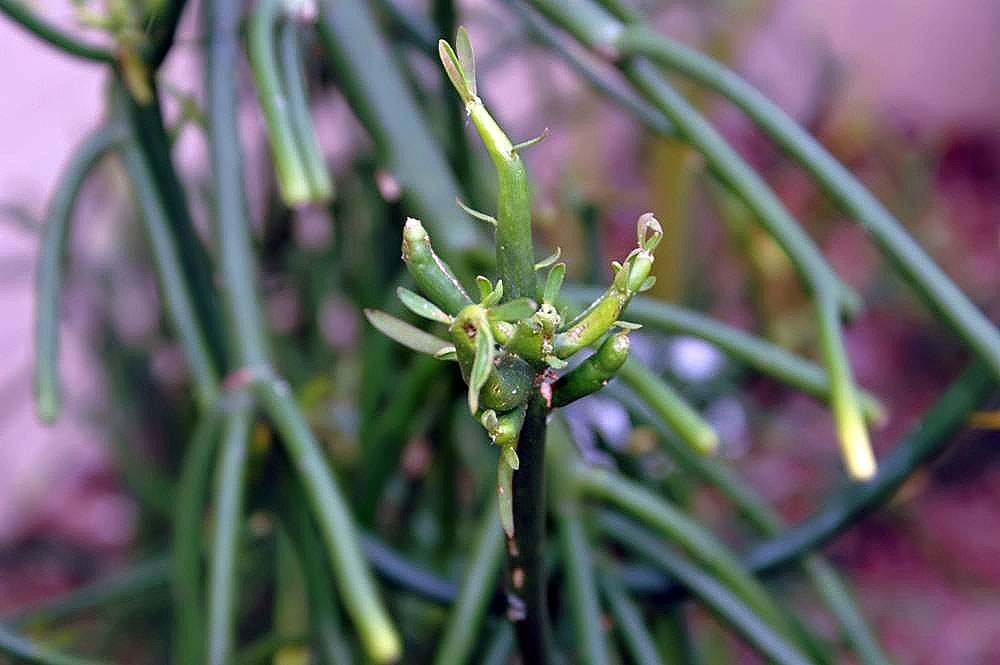
The Pencil Cactus is not a true cactus but a succulent Euphorbia, forming an upright, branching thicket of slender, pencil-thick green stems. Nearly leafless and architecturally bold, it is an easy, fast-growing houseplant or landscape shrub in warm climates. Wear gloves and avoid contact with its milky sap when handling or pruning.
Light
Give Pencil Cactus full sun to bright light. Indoors, place it in the sunniest window available, ideally south-facing, where it develops sturdy, upright stems. In strong light, some varieties flush attractive reddish or coral tones on the stem tips. Too little light causes weak, floppy, overly spaced growth. Acclimate gradually before moving it into intense direct sun outdoors.
Water
Water sparingly and let the soil dry out fully between waterings. During spring and summer growth, a deep soak every two to three weeks is usually enough; in winter, water only occasionally, roughly monthly or less. This drought-adapted succulent stores water in its stems and rots quickly if kept wet. Always empty the drainage saucer after watering.
Soil & Potting
Use a gritty, fast-draining cactus and succulent mix, amended with extra pumice, perlite, or coarse sand. A pot with a drainage hole is essential. Because Pencil Cactus grows tall and can become top-heavy, choose a stable, heavy pot such as terracotta to keep it upright and to help wick excess moisture from the soil.
Humidity & Temperature
Pencil Cactus thrives in warm, dry conditions and normal household humidity. Ideal temperatures are 65 to 85 F (18 to 29 C). It is frost-tender and should be kept above about 50 F (10 C); protect it from cold drafts and freezing. In frost-free climates it can grow outdoors year-round as a large shrub.
Feeding
Feed lightly during the growing season. A diluted, balanced or low-nitrogen succulent fertilizer applied once a month from spring through summer supports steady growth. Do not feed in fall and winter when growth slows. Overfeeding produces weak, floppy stems.
Propagation
Propagate from stem cuttings. Wearing gloves and eye protection, cut a segment with a clean blade, then stop the flow of milky sap by dipping the cut end in water or blotting it. Let the cutting callus over for several days to a week in a dry, shaded place, then plant it in barely moist succulent mix. Roots form within a few weeks in warmth.
Repotting / Pruning
Repot every two to three years or when roots fill the container, moving up one pot size. Prune to control height and shape, cutting stems back to a branch point; always wear gloves and protect skin and eyes from the irritating sap, and work in a ventilated area. Pruning also encourages a bushier, more branched form.
Common Problems & Pests
Overwatering and poor drainage cause soft, yellowing, mushy stems and root rot, the most common problems. Stems that pucker or shrivel indicate underwatering. Watch for mealybugs and spider mites in dry indoor conditions, treating with insecticidal soap or dabs of isopropyl alcohol. Sudden leaf or stem drop often follows cold exposure or a big change in light.
Seasonal Care Tips
Grow actively and water more regularly in spring and summer, when light feeding is most useful. Taper watering in autumn and keep the plant warm, bright, and mostly dry through winter. Move outdoor container plants back inside before the first frost, and resume normal watering as new growth appears in spring.
Frequently asked questions
How often should I water a Pencil Cactus?
Water only when the soil has dried out completely, roughly every two to three weeks in spring and summer and about monthly or less in winter. It stores water in its stems and rots easily if kept too wet.
Why are my Pencil Cactus stems turning yellow and soft?
Soft, yellowing, mushy stems are a sign of overwatering and root rot. Let the soil dry fully, move the plant to a gritty fast-draining mix, ensure the pot drains freely, and cut away any rotted sections back to firm tissue.
How do I propagate a Pencil Cactus safely?
Wear gloves and eye protection, take a stem cutting with a clean blade, stop the milky sap by dipping the cut in water, then let it callus for several days before planting in barely moist succulent mix. Always avoid contact with the sap.
Why is my Pencil Cactus growing thin and floppy?
Weak, floppy, widely spaced stems mean it isn't getting enough light. Move it to full sun or the brightest window you have, and it will grow sturdier, more upright stems.