
Peperomia Identification Guide
Identify Peperomia by its small, thick, often succulent leaves and distinctive rat-tail flower spikes, across a highly varied genus.
Read the full Peperomia encyclopedia entry →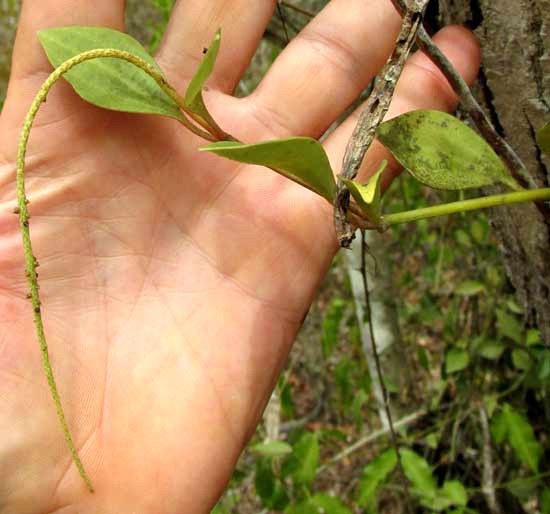
Key Identifying Features
Peperomia is a huge genus (over 1,000 species) of small, compact, semi-succulent plants in the pepper family (Piperaceae). Despite wide variety, key shared traits are:
- Thick, often fleshy or succulent leaves holding water
- Compact, low, mounding or trailing habit (usually under 30 cm tall)
- Slender, erect, rat-tail flower spikes with no petals
- A neat, clumping form that stays small
Leaves & Stems
Leaf shape and texture vary enormously, which is why the flower spike is the most reliable genus-level ID. Popular species show distinctive foliage: P. obtusifolia (Baby Rubber Plant) has rounded, thick, glossy leaves; P. argyreia (Watermelon Peperomia) has teardrop leaves with silver-and-green watermelon-like stripes; P. caperata (Emerald Ripple) has deeply corrugated, quilted heart-shaped leaves; P. prostrata (String of Turtles) trails with tiny patterned round leaves.
Stems are usually short and fleshy; many species are nearly stemless rosettes, while others mound or trail. The semi-succulent leaves store water, so peperomias need infrequent watering.
Flowers & Fruit
Flowers are unmistakable: thin, erect, greenish-white to cream spikes that look like a rat's tail or a spike of unbranched cord, often held well above the foliage. They lack showy petals (typical of the pepper family). These spikes are a strong confirming trait. Fruit consists of tiny seeds along the spike; they are insignificant ornamentally.
How to Tell It Apart from Look-Alikes
- Pilea (e.g., Pilea peperomioides): superficially similar fleshy leaves, but Pilea peperomioides has round coin leaves on long central petioles and produces tiny flower clusters, not the rat-tail spikes.
- Hoya: also thick-leaved, but Hoya produces showy star-shaped flower umbels and woody vining stems, unlike peperomia's rat-tail spikes.
- Succulents (e.g., jade): many peperomias are semi-succulent but stay softer and produce the diagnostic flower spike.
When in doubt, the slim erect rat-tail flower spike + small fleshy leaves + compact habit confirm Peperomia.
Where You'll Find It
Native mostly to tropical Central and South America, peperomias are popular compact houseplants ideal for desks, terrariums, and small shelves. They prefer bright indirect light, well-drained airy soil, and moderate humidity. Most are epiphytic or grow in leaf litter in the wild, so they like to dry slightly between waterings.
Quick ID Checklist
- Thick, fleshy, semi-succulent leaves
- Compact mounding, rosette, or trailing form under ~30 cm
- Slender erect rat-tail flower spikes (no petals)
- Highly varied leaf patterns (watermelon, quilted, round)
- Short fleshy stems or nearly stemless
Frequently asked questions
What is the easiest way to confirm a plant is a Peperomia?
Look for the flower spike. Peperomias produce thin, erect, greenish-white spikes that resemble a rat's tail or cord, with no petals. Combined with thick fleshy leaves and a compact habit, that confirms the genus.
How is a Watermelon Peperomia different from other peperomias?
Watermelon Peperomia (P. argyreia) has teardrop leaves with silver and dark-green stripes resembling a watermelon rind, on reddish stalks. It is one species in a very diverse genus that also includes quilted and trailing types.
How do I tell Peperomia from Pilea peperomioides?
Pilea peperomioides has round, coin-shaped leaves on long petioles attached to the leaf center, while peperomias have varied fleshy leaves and produce distinctive rat-tail flower spikes rather than Pilea's tiny branched flower clusters.