
Philodendron Gloriosum Identification Guide
Identify Philodendron gloriosum by its large velvety heart-shaped leaves with bright white veins and its creeping, ground-crawling rhizome.
Read the full Philodendron Gloriosum encyclopedia entry →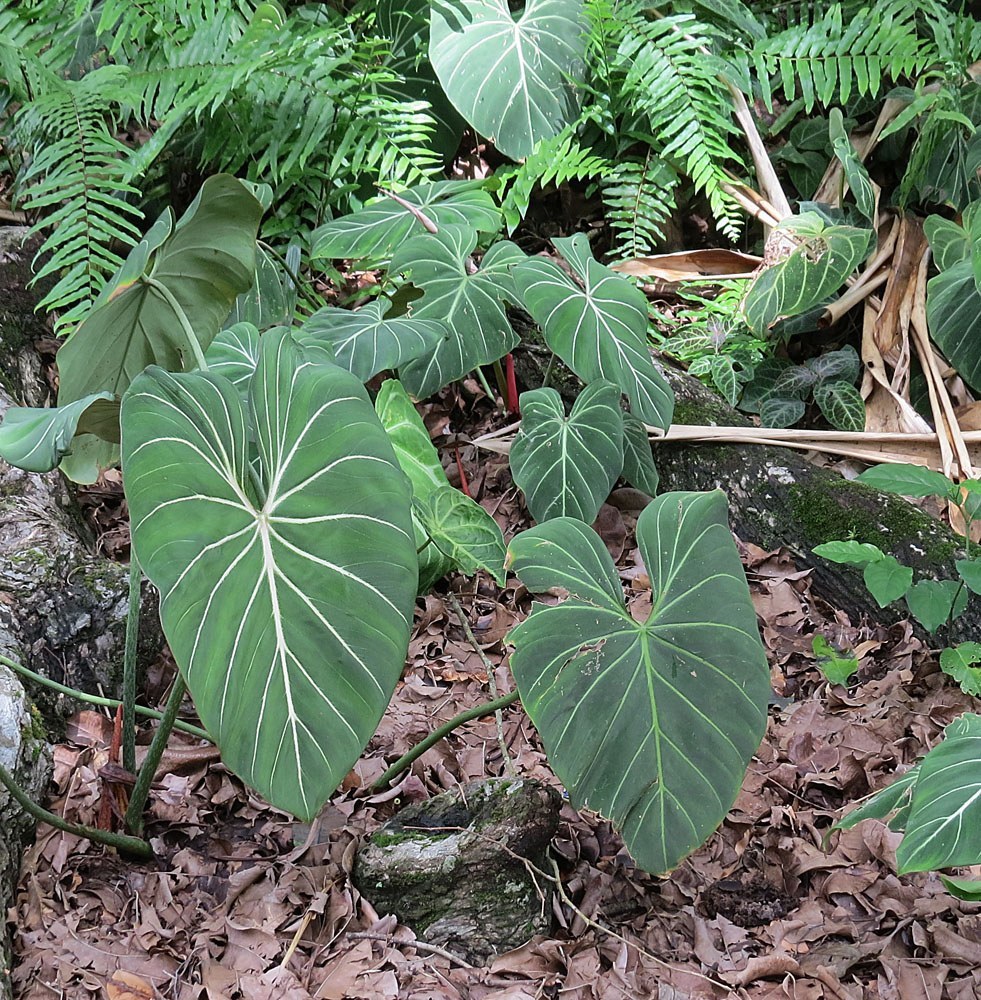
Key Identifying Features
Philodendron gloriosum is a prized crawling aroid grown for its velvety foliage. Identify it by:
- Large, velvety, heart-shaped leaves in deep green
- Bold, contrasting white-to-pale-pink veins
- A creeping (crawling) rhizome that grows horizontally along the soil surface — NOT a climbing vine
- Often a pinkish leaf margin on new growth
The velvet heart leaf with white veins on a soil-crawling rhizome sets it apart from climbing philodendrons.
Leaves & Stems
Leaves are broadly heart-shaped (cordate), up to 1-3 feet long in mature plants, with a soft, matte-velvet texture and a rich emerald-green surface. The primary veins are bright white to silvery (sometimes pale pink), fanning boldly across the leaf. New leaves may emerge with a subtle pink/red edge. Crucially, the stem is a thick rhizome that creeps horizontally on top of the soil, sending leaves upward at intervals — so it spreads outward rather than climbing. For this reason it's often grown in wide, shallow planters.
Flowers & Fruit
Flowering is rare in cultivation: a typical philodendron green-to-white spathe around a spadix. It's grown entirely for foliage.
How to Tell It Apart from Look-Alikes
- Philodendron melanochrysum has elongated, narrow velvet leaves and is a climber, not a crawler.
- Philodendron 'Glorious' (gloriosum × melanochrysum) has longer, more elongated heart leaves — gloriosum's are rounder/broader.
- Philodendron mamei has green-on-green mottled (not white-veined) heart leaves on a creeping rhizome.
- Anthurium clarinervium is similar in pattern but is a stiff, clumping rosette with rigid cardboard leaves, not a velvety crawler.
The broad velvety heart leaf with white veins on a horizontal creeping rhizome confirms gloriosum.
Where You'll Find It
Native to Colombia and Central America, it grows as a terrestrial creeper on the rainforest floor. As a houseplant it needs warmth, high humidity, a chunky airy mix, and a wide shallow pot to accommodate the crawling rhizome.
Quick ID Checklist
- Large velvety heart-shaped leaves
- Bold white/silver (sometimes pink) veins
- Creeping horizontal rhizome on the soil surface (crawler, not climber)
- Pinkish margin on some new leaves
- Matte, soft velvet leaf texture
- Grown in a wide, shallow planter
Match these and you have Philodendron gloriosum. The crawling rhizome is the key behavioral clue — if your velvet-leaved, white-veined philodendron climbs upward instead of crawling, it's likely melanochrysum or a hybrid.
Frequently asked questions
Does Philodendron gloriosum climb or crawl?
It crawls. Its thick rhizome grows horizontally along the soil surface, sending up leaves at intervals, which is why it's grown in wide, shallow pots rather than on a pole.
How is it different from melanochrysum?
Gloriosum has broad, rounded velvet heart leaves and a crawling rhizome, while melanochrysum has long, narrow velvet leaves and climbs vertically.
Why are the veins white?
The bright white-to-silver primary veins contrast against the deep velvet-green leaf, a natural feature of the species; new leaves can also show pink-tinged margins and veins.
How do I tell it from Anthurium clarinervium?
Both have white-veined heart leaves, but gloriosum is a soft velvety crawler on a horizontal rhizome, while clarinervium is a stiff 'cardboard' clumping rosette.