
How to Care for Philodendron Melanochrysum
Grow Philodendron melanochrysum, the black-gold climber with velvety heart leaves that lengthen dramatically when given a moss pole to climb.
Read the full Philodendron Melanochrysum encyclopedia entry →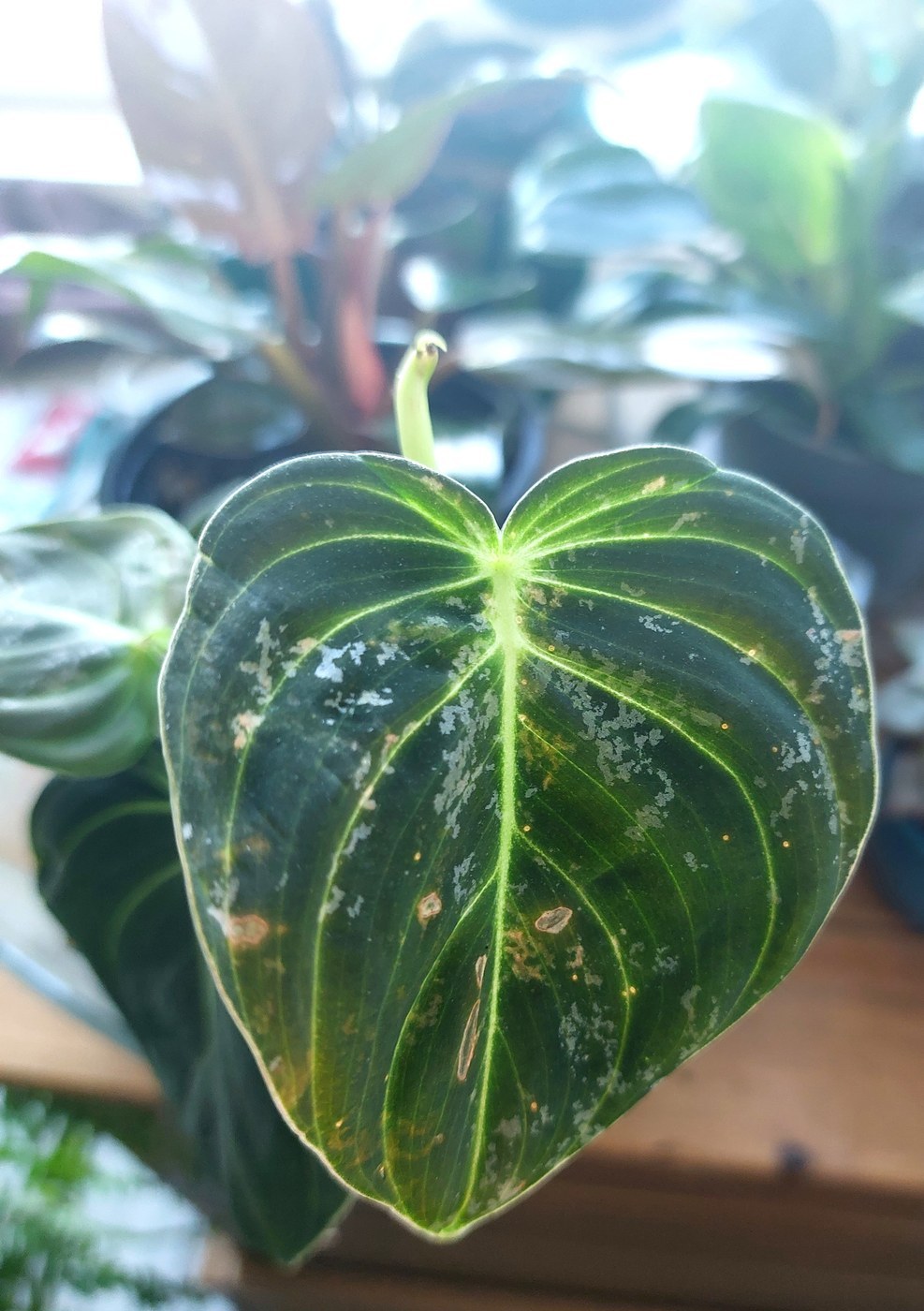
Philodendron melanochrysum, the black-gold philodendron, is a prized climbing aroid grown for its long, velvety, dark-green leaves veined in pale gold. It is a moderate-difficulty houseplant that rewards steady warmth, humidity, and a support to climb.
Light
Provide bright, indirect light. An east window or a few feet back from a bright south or west window is ideal. Direct midday sun scorches the velvety leaf surface, while deep shade produces small, dull leaves and leggy internodes. Steady bright indirect light gives the largest, darkest foliage.
Water
Water when the top inch of the mix dries out, then water thoroughly until it drains freely. This aroid likes even moisture but resents soggy roots, so let that top layer dry between waterings. Reduce frequency in winter when growth slows. Consistent slight moisture, never waterlogged, keeps the fine roots healthy.
Soil & Potting
Use a chunky, airy aroid mix: bark, perlite, coco coir, and a little compost. The mix must drain fast while holding some moisture, and roots need plenty of air. Always plant in a pot with drainage holes. A loose medium prevents the root rot this species is prone to in dense soil.
Humidity & Temperature
Melanochrysum loves warmth and high humidity, ideally 60 percent or more and temperatures of 18 to 27 Celsius. Keep it away from cold drafts and never let it sit below about 13 Celsius. Low humidity causes crispy leaf edges and stalled new growth, so a humidifier or pebble tray helps in dry rooms.
Feeding
Feed with a balanced dilute liquid fertilizer every two to four weeks during the spring and summer growing season. Ease off in autumn and stop in winter. This is a hungry grower when climbing vigorously, but over-feeding causes salt buildup, so flush the mix occasionally with plain water.
Propagation
Propagate from stem cuttings, each with at least one node and ideally an aerial root. Root cuttings in water, sphagnum moss, or a light airy mix, keeping them warm and humid. New roots appear within a few weeks. Nodes are the key: a cutting without a node will not grow.
Repotting / Pruning
Repot every one to two years or when roots fill the pot, moving up one size. Provide a moss pole or plank, since climbing dramatically increases leaf size. Prune to control length or shape, and use the trimmings as cuttings. Keep the aerial roots attached to the support to fuel bigger leaves.
Common Problems & Pests
Watch for spider mites, thrips, and mealybugs, especially in dry indoor air; inspect the leaf undersides regularly. Yellowing leaves usually mean overwatering, while brown crispy edges signal low humidity. Root rot follows dense, soggy soil, so correct the mix and watering rather than just the symptom.
Seasonal Care Tips
In spring and summer, feed regularly, keep humidity high, and secure new growth to its pole. In autumn, reduce feeding as growth slows. In winter, water less, keep the plant warm and away from cold windows, and expect little new growth until the days lengthen again.
Frequently asked questions
Why are my melanochrysum leaves staying small?
This species produces its large, dramatic leaves only when climbing. Give it a moss pole or plank to attach its aerial roots to, plus bright indirect light and high humidity, and successive leaves grow noticeably longer.
How much humidity does it need?
It prefers 60 percent or higher. In drier rooms use a humidifier or pebble tray; low humidity causes crispy leaf edges and stalled growth.
Why are the leaf edges turning brown and crispy?
That is almost always low humidity or inconsistent watering. Raise humidity, keep the top inch lightly moist rather than bone dry, and keep the plant away from heating vents and cold drafts.
Can I propagate it from a cutting?
Yes. Take a stem cutting with at least one node, ideally with an aerial root, and root it in water, sphagnum moss, or a light airy mix kept warm and humid.